 Call Us
 18002099100



0 0 There is a particular kind of silence that falls over you the first time the sky turns green above your head. It is not something a screen can prepare you for. That unforgettable moment is what makes Northern […]

Table of contents
Venturing into the mystical terrains of Kailash Mansarovar is nothing short of a profound journey into spiritual awakening and natural splendour. This sacred site, nestled high in the Himalayas, is revered by the Hindus, Buddhists, Jains, and followers of the Bon religion and offers more than just scenic beauty—it promises a path to spiritual enlightenment.
If you’re preparing for this transformative experience, understanding the Kailash Mansarovar weather is crucial for choosing the best time to embark on this pilgrimage. Let’s explore the key seasons and dates that make for an ideal visit.
1. Understanding Kailash Mansarovar Weather Patterns

kailash mansarovar
Kailash Mansarovar weather plays a pivotal role in determining the feasibility and comfort of your pilgrimage. Situated at a high altitude, this region experiences significant variations in weather, affecting accessibility and activity options for pilgrims.
The area is predominantly cold throughout the year, with temperatures that can vary dramatically between day and night. The weather is most stable from May to September, offering clearer skies and relatively warmer days. The weather is most stable from May to September, offering clearer skies and relatively warmer days. During these months, daytime temperatures range between 5°C and 21°C, while nights can drop to 0°C to -6°C. This period avoids the harsh winter when temperatures plummet, and heavy snowfall can block access routes.
Tibet has extreme weather fluctuations—always carry warm clothes, even in summer.
2. Best Time to Visit Kailash Mansarovar
The consensus among seasoned travellers and local guides is that the best time to visit Kailash Mansarovar is between May and September. During these months, you benefit from the most conducive weather for trekking and outdoor rituals. Here’s a breakdown of what you can expect month by month:
- May: The onset of warmer weather makes May a preferred time for starting your journey. The snow begins to thaw, revealing the rugged beauty of the landscape.
- June: As the region enters summer, June offers long daylight hours and stable conditions ideal for trekking.
- July and August: These months might see occasional rainfall but usually present good conditions. Pilgrims should be prepared for sudden weather shifts.
- September: Marking the end of the high season, September often has fewer pilgrims and excellent visibility, making it an appealing choice for those seeking a more solitary experience.
3. Kailash Mansarovar Yatra & Full Moon Dates
kailash mansarovar 2
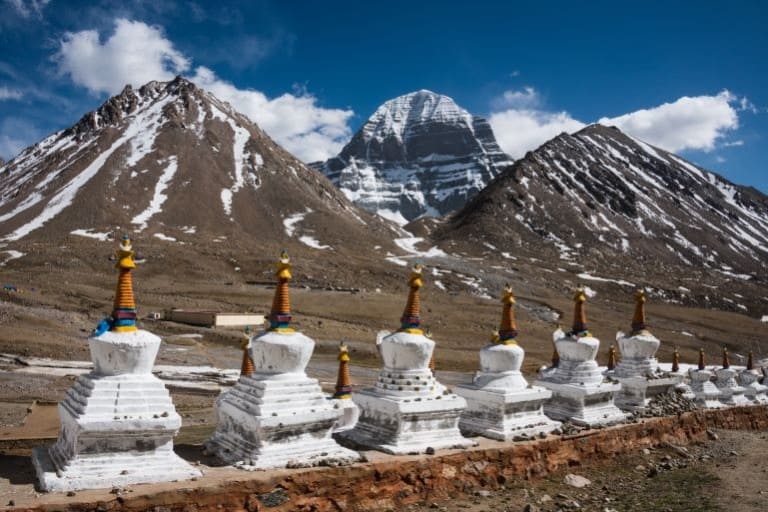
Visiting Mount Kailash and Lake Mansarovar during a full moon (Purnima) is considered highly auspicious.
Upcoming Full Moon dates in 2025 during the Kailash Manasarovar yatra period are May 12, June 10, July 11, August 9, September 7.
Why Visit During the Full Moon?
- Sacred Kora: Completing the Kailash Parikrama during a full moon is believed to enhance spiritual merit.
- Purification Ritual: Bathing in Lake Mansarovar on this night is said to cleanse sins from 100 lifetimes (access to lake water with a bucket for bathing is permitted to protect the lake).
- Breathtaking Scenery: The moonlit reflection of Mount Kailash and Lake Mansarovar is a sight of profound spiritual significance.
The Saga Dawa Festival, marking Buddha’s birth, enlightenment, and parinirvana, is another key event celebrated on the full moon of the fourth lunar month (May–June), making it an especially meaningful time for the Yatra.
4. Practical Tips for Planning Your Trip
Proper planning can turn a challenging pilgrimage into a rewarding experience. Here are essential tips:
- Travel Documents: Ensure your visa and travel permits are in order well ahead of your departure.
- Health Preparations: Visit your doctor for a health check-up. Considering altitude sickness remedies is advisable as Kailash Mansarovar is located at over 4,500 meters above sea level.
- Packing Essentials: Dress in layers. Include thermal wear, waterproof clothing, comfortable trekking boots, sunglasses, sunscreen, and lip balm in your backpack.
- Local Guidance: Hiring local guides not only supports the community but also enhances safety with their knowledge of the terrain and weather changes.
5. Accommodation Options Near Kailash Mansarovar
Accommodation around Kailash Mansarovar is basic due to the region’s remote nature. Options include hotels, guesthouses, and campsites, varying in comfort and availability.
- Hotels: Limited to towns like Darchen and Kerung, offering modest amenities.
- Guesthouses: Dormitory-style lodging with shared bathrooms and bedding. Available at key points like Mansarovar, Dirapuk, and Dzuthulpuk.
- Camping: An option for trekkers who prefer a more adventurous experience.
Things to Note:
- Most accommodations operate only during the Yatra season (May–September).
- Room sharing (twin/triple/multi-sharing) is standard.
- Bringing a sleeping bag, earplugs, and an eye mask is recommended for added comfort.
Booking in advance is advisable due to limited infrastructure and high demand during the pilgrimage season.
Your Kailash Mansarovar Journey Awaits
Each season offers a unique experience of Kailash Mansarovar’s sacred beauty. Planning your journey during optimal weather conditions ensures both comfort and spiritual fulfillment.
For a seamless pilgrimage, explore Thomas Cook Kailash Manasarovar tour packages designed to provide expert guidance and hassle-free logistics.
Embark on your spiritual quest with confidence. Choose the best time, prepare well, and experience a journey that transcends sightseeing—offering a deep and transformative connection.
---->
Recommended Articles for you

Cherry Blossom Festival in Japan – The Ultimate Spring Escape
0 0 If there is one country that can consistently surprise you, enchant you and make you feel blessed about life, it has to be Japan. From retaining deep-rooted cultural beliefs to staying ahead in technology and being a pioneer […]

Sakura Cherry Blossom – Witness Japan’s Pink Spring
0 0 Every year, Japan’s gardens, trees and parks turn from a glorious green of jade to the soft pink of a blushing bride. That’s right, the cherry blossoms are ready to bloom, bringing with it the promise of a […]

Places to Visit in India in December
0 0 December marks the beginning of the peak travel season in India. From the North of the country to the South, every region has pleasant weather and clear skies, perfect for sightseeing. After the hot summer and muggy monsoon, […]
12 Best Places To Visit In November In India In 2026
0 0 November is a month of vibrant transitions in India, offering an array of travel experiences from the cool Himalayan foothills to the warm beaches of the south. If you’re planning your travel itinerary for November 2026, India presents […]

What is the average cost of living in Singapore in 2026?
0 0 The Cost of Living in Singapore At A Glance Average monthly budget: A single person may need S$1505 every month excluding accommodation. The rest of the budget depends on lifestyle and location. Biggest expense: Accommodation is the largest […]
Top Universities in Germany for International Students
0 0 Germany universities for international students have been one of the most preferred destinations for many years. Public universities charge little to no tuition fees, offering excellent opportunities for globally valued research and English-taught programs across engineering, business, and […]
RBI Forex Guidelines for Foreign Exchange Transactions in India
0 0 What Do RBI Forex Guidelines Say? FEMA oversees the legal mechanism governing foreign exchange transactions in India. All Indian residents should deal in forex only through RBI-authorised persons and for permitted purposes. Under the Liberalised Remittance Scheme (LRS), […]
Cost of Living Index by Country: Compare Living Expenses Around the World (2026 Guide)
0 0 No two countries charge the same price for everyday life. A coffee that costs $2 in Hanoi can cost $7 in Zurich, and a one-bedroom apartment renting for $300 in Cairo might command $3,000 in Manhattan. These gaps […]
Delhi To Haridwar distance: Best Route, Train Timings & Travel Guide
0 0 Delhi to Haridwar At A Glance Haridwar is an integral religious destination for Hindus. In 2025, 3.4 crore people visited Haridwar, and that number is only expected to be higher at the end of 2026. If you are […]
Delhi to Kedarnath distance: Best Route, Train Timings & Travel Guide
0 0 Delhi to Kedarnath cannot be called a road trip, but it is a journey where the destination is sacred, so every part of the journey becomes a kind of storytelling. Most of the people ask, “Delhi to Kedarnath […]
Jodhpur to Udaipur journey is an ultimate Rajasthan travel journey.
0 0 These two destinations have completely different personalities, but the journey between the two destinations is mesmerising. Imagine yourself waking up to the blue-painted buildings of Jodhpur, covered with mighty forts and surrounded by beautiful desert vibes. And then […]
Kullu to Manali distance: Best Route, Train Timings & Road Trip Guide
0 0 Kullu to Manali At a Glance Kullu and Manali sit in the same valley, so this isn’t really a “journey” in the way Delhi to Manali is; it’s more of a short hop most travellers do on their […]
Everything You Need to Know About Mumbai to Goa Distance
0 0 Mumbai to Goa At a Glance Goa is one of the most happening places in India. It offers nature, partying, waterfalls, trails, water activities, and whatnot. Goa sees millions of tourists every year from all across the globe, […]

Varanasi to Haridwar distance: Best Route, Train Timings & Travel Guide
0 0 Varanasi to Haridwar at a Glance Here are the numbers, before anything else. People do this route mostly for one reason: both cities run a daily Ganga aarti, and pilgrims like pairing them into one circuit. Road: roughly […]
Ride the World’s Longest Cable Car to Hon Thom Island: Your Complete Phu Quoc Travel Guide
0 0 The Hon Thom cable car in Phu Quoc is renowned for its Guinness World Record as the longest sea-crossing cable car. Offering a great view of the Gulf of Thailand, this cable car ride stretches across 7.9 km. […]
Longest Bridge in the World: Where Record-Breaking Engineering Meets Stunning Landscapes
0 0 Ask most people to name the world’s longest bridge, and you’re likely to get a confident answer like the Golden Gate Bridge or the Brooklyn Bridge or some other famous landmark plastered across postcards and movies. But the […]
World’s Largest Waterfall: Experience the Majestic Beauty of Angel Falls Like Never Before
0 0 Angel Falls in Venezuela is the highest waterfall in the world. It is 979 metres high. The falls are in a large forest area called Canaima National Park. Getting there takes time, but the views are amazing. You […]
Visit the Largest Mall in the World: Everything You Need for the Perfect Shopping Trip
0 0 Largest Mall In The World Iran Mall in Tehran, Iran, is the world’s biggest mall by total reported area. The mall is approximately 1.95 million square metres, or 21 million square feet. Note: The discussion of the biggest […]
Top 10 Highest Railway Bridges in the World: Discover the Tallest Train Bridges and Their Incredible Stories
0 0 The world’s highest railway bridges are mostly in China and India. India’s Chenab Bridge is the tallest railway arch bridge at 359 metres, which is even higher than the Eiffel Tower. China’s Najiehe Bridge, at 310 metres, still […]