 Call Us
 18002099100




0 0 Planning your international Dubai Packages? Here are the must see places in Dubai. Must Do Things in Dubai 1. Ride through the sunset on an at the picturesque Dubai creek, and all for just one dirham. Close your eyes […]
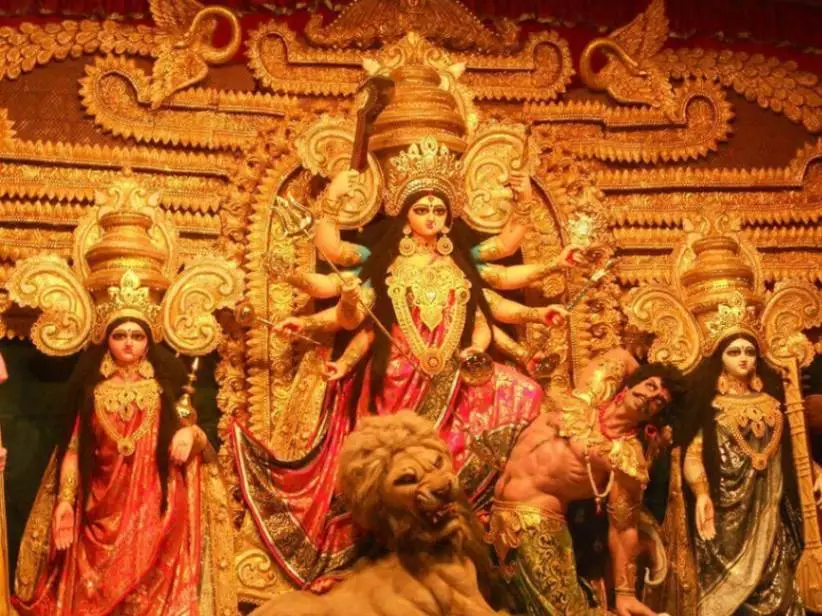
Table of contents
Durga Puja in India Celebrations
Ready for the Pandal Hopping?
- Durga Puja 2026 runs from Mahalaya on 10th October to Vijaya Dashami on 21 October, with the main seven days from 15 to 21 October, with 2 Saptami this year.
- Kolkata remains the beating heart of the Durga puja celebrations, with pandals in both north and south Kolkata drawing lakhs of visitors nightly.
- Expect pandal hopping, dhunuchi dance, sindoor khela, and a proper food trail of khichuri, kosha mangsho and street sweets.
- Book your stay early, wear comfortable shoes, and go at odd hours if you want to dodge the worst of the crowds.
Durga Puja 2026
You know it’s close when the smell changes first, before you see a single pandal going up. Somewhere around late September, Kolkata starts smelling of shiuli flowers and fresh paint, and someone’s uncle switches on Mahishasuramardini at 4 am on the radio. That’s Durga Puja 2026 announcing itself, slowly, the way it always does. Ask any Bengali what “pujor gondho” means, and they’ll know exactly what you’re on about, even though it’s not really a smell you can bottle.
By the time Shashthi arrives, the whole city has rearranged itself around the Durga puja festival in Kolkata.
Roads you’d normally cross in two minutes take twenty, and everyone’s wearing something new because “notun jama” is non-negotiable, even for people who swear they don’t care about clothes the rest of the year.
During the Maa Durga festival in Kolkata, strangers offer you bhog on the street like you’re family, and the first time it happens, you’ll just stand there confused, unsure whether it’s rude to say no. There’s a particular exhaustion that comes from walking twelve kilometres in one evening just to see three pandals, arguing the whole way about whether Maddox Square is worth the crowd this year, and somehow you’d do it again the next night.
Why is Durga Puja Celebrated?
As a first-timer to this grand occurrence, you might be asking yourself, “Why is Durga Puja celebrated?” At its core, Durga Puja celebrations mark good triumphing over evil, but the festival carries more layers once you look closer.
Durga Puja – About & History
Durga Puja history goes back further than most assume, with references to autumn worship of the goddess appearing as early as the medieval period in Bengal. The Durga Puja festival in Kolkata most of us recognise today really took shape in the sixteenth century, when landed families such as the Sabarna Roy Chowdhurys began organising elaborate household pujas. Kolkata is said to have hosted its first proper celebration around 1610, older than most of the buildings you’ll walk past this October.
What started as a private affair inside zamindar courtyards eventually spilt onto the streets. By the early twentieth century, community pujas, known as ‘barwari’ or ‘sarbojonin’ puja, had become the norm, funded by neighbourhoods rather than single wealthy families. That shift is really the whole Durga Puja history: about accessibility, turning a domestic ritual into something the entire city, regardless of class or background, could walk into and belong to.
Durga Puja Story
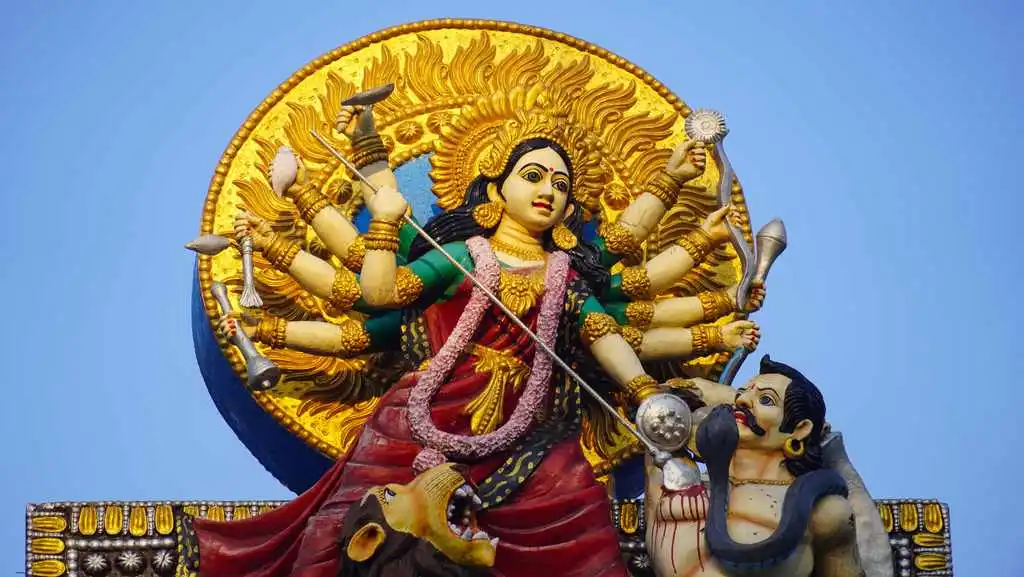
The Durga Puja story that everyone tells centres on Mahishasura, a demon who’d won a boon making him unbeatable by any man or god. He got greedy and started terrorising heaven, and the gods realised their mistake too late. So Brahma, Vishnu and Shiva pooled their power, and out of that combined energy came Durga, ten-armed, riding a lion, armed with weapons each god had handed her.
Mahishasura didn’t go down easily; that’s the bit people forget. He shape-shifted through the battle, buffalo to lion to elephant to man, trying every trick to survive her. Durga matched him at every turn, and on the tenth day, she beheaded him in his original buffalo form. That’s the moment Vijaya Dashami marks: victory on the tenth day.
There’s a quieter myth alongside this one too. The Durga puja story where Ma Durga is simply visiting her parents’ home before returning to Kailash with Shiva, partly why the festival feels less like solemn worship and more like a daughter coming home, tantrums and all.
Durga Puja Importance in India
Durga Puja importance stretches well past religion at this point. In West Bengal, it’s the single biggest event of the year economically, culturally, and socially, bigger than any election or cricket match. UNESCO added Kolkata’s Durga Puja celebrations to its Intangible Cultural Heritage list in 2021.
Thousands of pandals go up across Kolkata alone, employing artisans, lighting technicians, tailors, and idol makers from Kumartuli, the potters’ quarter that basically runs on Durga Puja orders for half the year. Walk through there in September, and every workshop has a half-finished Durga staring out at the lane, eyes not painted in yet, like she’s waiting for permission to wake up.
Caste, class, religion, none of it holds up the way it does the rest of the year, at least for these ten days. That’s it, the Durga puja importance. You’ll see people from every background standing in the same anjali queue at dawn, and stand in that queue once and tell me it doesn’t feel like the city belongs to everyone equally.
When is Durga Puja 2026 Held – Dates & Schedule
Here’s the full Durga Puja 2026 calendar, from the earliest rituals right through to immersion. Write these down; hotels and train tickets vanish faster than you’d think.
Festival | Date (2026) | Day |
Mahalaya | 10 October 2026 | Saturday |
Maha Panchami | 15 October 2026 | Thursday |
Maha Shashthi | 16 October 2026 | Friday |
Maha Saptami | 17 October 2026 | Saturday |
Maha Saptami | 18 October 2026 | Sunday |
Maha Ashtami | 19 October 2026 | Monday |
| Maha Navami | 20 October 2026 | Tuesday |
| Vijaya Dashami (Visarjan) | 21 October 2026 | Wednesday |
Mahalaya
Mahalaya of Durga Puja this year falls on 26 September 2026, a Saturday. This is when the goddess’s journey to earth is believed to begin, marked with pre-dawn Chandi Path recitations on the radio. Your grandmother may just set an actual alarm for this, 4 am, every single year.
Shashthi
16 October 2026, a Saturday. The goddess’s face is unveiled, and pandal hopping properly begins; Shashthi evening is when the city actually switches on to celebrate Durga Puja.
Saptami
This year, another day gets added to the fun fest of Durga Maa, due to the overlapping of the Hindu Tithi system. So this year Saptami is the 17th and 18th of October 2026, Saturday and Sunday. The Nabapatrika, nine sacred plants tied together representing the goddess, gets its ceremonial bath before sunrise. Crowds start thickening from this evening.
Ashtami
19 October 2026, Monday. Widely considered the most sacred day, and the most exhausting one too. Anjali happens across the city in the morning, and Sandhi Puja, the transition between Ashtami and Navami, is timed to the minute; if you’re late, you’ve missed it. This is also the day Kumari Puja happens in many pandals, where pre-pubescent girls are worshipped as the manifestation of Ma Durga herself.
Navami
The Navami homa and final bhog distribution happen on the 20th evening, Tuesday. Pandals stay packed till the small hours.
Dashami (Vijaya Dashami)
21 October 2026, Wednesday. Married women perform sindoor khela, idols are carried out for immersion, and the goodbyes get properly emotional. You would get to see grown men who’d swear they don’t cry, absolutely losing it near the ghat.
Durga Puja Celebrations 2026
Durga Puja festival celebrations follow a rhythm that repeats every year, yet somehow never feels repetitive once you’re in the thick of it.
Pandal Hopping
This is the main event for most visitors during the Durga Puja festival, wandering from one elaborately themed pandal to another, often till 3 am. Locals plan routes like military operations, hitting the biggest names first before the queues turn unbearable by 8 pm.
Durga Idol Worship
Priests perform daily rituals in front of the clay idol, from the ceremonial eye painting weeks before to daily aarti through the festival. Watching an early morning puja, before the crowds arrive, feels completely different to seeing the same idol at midnight.
Cultural Programs
Neighbourhood pujas host everything from classical dance recitals to amateur rock bands on makeshift stages. It’s a bit chaotic, sometimes genuinely brilliant, and worth ten minutes of your evening.
Dhunuchi Dance
Performed with clay incense burners balanced on the hands, sometimes even the head, to the beat of the dhaak. Looks effortless. It is not. You realise how much smoke you can inhale before your eyes give up on you.
Sindoor Khela
Married women smear vermilion on the goddess and then on each other on Dashami morning, red powder covering saris and faces alike. What surprises first timers most is how joyful, almost riotous, it gets, more like a colour fight than a farewell ritual.
Immersion Ceremony (Visarjan)
Idols are carried in processions, often with drummers leading the way, to the Hooghly and other water bodies; Babughat turns into an absolute sea of people on the last day. There’s a strange mix of celebration and heartbreak in the air, people dancing one moment and wiping tears the next.
What to Expect During Durga Puja?
It’s a buffet of calm and chaos, to be honest:
- Expect crowds, properly enormous ones, especially on Ashtami evening when even locals avoid stepping out unless they must.
- There’s a running joke every year about surprise rain ruining someone’s brand new saree; bring an umbrella you don’t mind losing.
- Expect noise too, dhaak drums, loudspeakers, traffic that barely moves.
- Food stalls line practically every street corner, egg rolls to phuchka to fresh jalebi.
- Shops stay open till absurd hours; you can buy a rossogolla at 2 am near Shyambazar, and the shopkeeper will definitely look more awake than you.
- Public transport runs overnight on the big days.
- Bring cash, comfortable footwear, and patience; queues for the famous pandals can run past two hours easily.
Best Places to Celebrate Durga Puja in India
While Kolkata leads by a distance, several other cities put on celebrations of the Durga festival worth building a trip around.
Kolkata
The undisputed capital of Durga festival celebrations, no contest, where entire neighbourhoods compete on artistry, theme, and scale, drawing visitors from across the world every October.
Mumbai
North Bombay Sarbojanin and a handful of South Mumbai pujas keep Bengali traditions alive, drawing homesick Bengalis and curious Mumbaikars alike.
Delhi
CR Park, the capital’s Bengali pocket, runs genuinely serious pujas, with community pandals that rival smaller Kolkata neighbourhoods for effort and crowd size. Feels like a slice of Kolkata airlifted into south Delhi. This beautiful city also takes part in Navaratri Durga puja, which, albeit with a different origin, brings that same kind of emotion to the surface.
Bengaluru
The city’s growing Bengali population has built up pujas in areas like Kaikondrahalli, blending tradition with a distinctly software city energy. Some also spend those days with Durga puja Navratri, a different tradition, but similar emotions.
Bhubaneswar
Odisha’s capital hosts pujas with strong classical dance elements woven through the cultural programming.
Guwahati
Assam’s version leans into local flavour, with idols often reflecting regional artistic styles rather than copying Kolkata’s aesthetic.
Patna
Bihar’s celebrations centre around a handful of historic pujas, some over a century old, with a more traditional, less commercialised atmosphere.
Other States
This is also the time when other states like Maharashtra and Gujarat celebrate their version of the Goddess with Navratri. Their celebration is adorned with dandiya, garba nights, and so many other functions!
Visit Kolkata’s Goddess Durga Puja Pandals
For the famous Durga Puja in Kolkata, certain names come up every single year, and for good reason once you’ve actually stood in front of them.
The Pandals Worth Your Evening
Now here are some pandals that are worth spending your breath over:
Bagbazar:
Bagbazar Sarbojonin in the north Kolkata Durga puja pandal circuit sticks to a traditional idol every year rather than chasing themes, something almost stubborn about it in a good way.
College Square:
College Square, also in the north Kolkata Durga puja pandal circuit, sets its idol beside the illuminated lake; the reflection shot is worth the ridiculous queue that forms by 9 pm, though it barely moves and you WILL question your life choices around hour two.
Kumartuli:
Kumartuli Park, near where the idols are made, gives you a peek at the craft itself. For the best Durga Puja in Kolkata without the worst queues, aim for weekday mornings.
Ekdalia:
Ekdalia Evergreen in Durga Puja in South Kolkata usually goes big on concept and lighting, though it gets suffocating by 10 pm on Ashtami.
Traditional Food During Durga Puja
Food is basically half the festival, arguably more if you ask certain relatives of yours.
Khichuri:
Khichuri, a soft rice and lentil dish flavoured with ghee and whole spices, is the standard bhog served at most Durga Puja Kolkata pandals, alongside labra, a mixed vegetable curry, and a sweet chutney. Simple food, nothing fancy on paper, but it tastes better cross-legged on a pandal floor than it ever does at home.
Chicken:
Kosha mangsho, slow-cooked mutton in a thick, dark gravy, is what most Bengali households build their Ashtami lunch around.
Street Food:
Street food takes over the evenings: egg rolls, phuchka, and Kolkata’s own biryani, lighter on spice but heavier on potato than its Lucknow cousin.
Sweet:
Near Bagbazar, there’s a sweet shop doing an exceptional nolen gur sandesh during the season, worth the small detour during your Durga Puja Kolkata pandal hopping.
What to Wear During Durga Puja?
Dhoti kurta for men and sarees for women remain the traditional choice, particularly on Ashtami and Navami when even younger crowds dress up properly, teenagers who normally live in jeans suddenly showing up in full silk.
Red and white, the colours associated with the Kolkata Durga maa, dominate the streets on Dashami.
Practically speaking though, you’re walking for hours, so comfort matters more than tradition most nights. Most learn that the hard way, in a stiff new saree by pandal number four.
Cotton sarees or simple kurtas work far better than heavy silk once you’re six pandals deep. Save the elaborate outfits for Ashtami morning anjali or Dashami. Flat sandals, always; your future self at midnight will thank you.
Travel Tips for Durga Puja 2026
Calcutta Durga Puja is wonderful, genuinely one of the best things you’ll ever be a part of, but it rewards a bit of planning.
Best Time to Book:
- Hotels near central and south Kolkata fill up by August; lock in accommodation six to eight weeks ahead. You’ll see people scrambling in late September, paying triple for a room above a sweet shop.
- Flights into Kolkata around mid-October carry a price bump; book early if your dates are fixed.
Local Transportation:
- The metro runs extended hours through the main days and is the fastest way to move between pandal clusters.
- Cabs get expensive and slow once evening crowds build up; walking often beats sitting in traffic for twenty minutes to cover half a kilometre.
Crowd Management Tips
- Leave for the big pandals by 4 pm if you want to see them before queues stretch past ninety minutes; Ashtami evening is the worst of the lot.
- Weekday mornings are quieter than any evening, especially for photography.
Safety Tips
- Keep valuables minimal and zipped away; you will find so many people who lost their phone near a packed south Kolkata puja pandal.
- Agree on a meeting point before entering any big pandal; phone signal drops badly in dense crowds, and you will get separated.
- Carry water and a light snack; some queues run over two hours with no shops nearby.
The Feeling That Stays
That smell of shiuli and fresh paint you noticed weeks earlier fades eventually, replaced by incense, diesel, and the smoky sweetness of a hundred dhunuchis burning at once. By Dashami evening, when the last idols head towards the river, something in the city goes quiet again, just for a moment, genuinely quiet, which for Kolkata in October is saying something. Then someone starts playing the dhaak one more time, and you understand exactly why everyone comes back the following October.
Recommended Articles for you
Flower Shows Around the World: A Celebration of Flowers and Fragrances
0 0 When God created the world, his most beautiful imagination led to the creation of flowers. If we take a close look at our lives we can see that the most special celebrations of our lives are adorned with […]
Guide to Visiting the Temples of Angkor Wat
0 0 A Guide to Temples of Angkor Wat at a Glance Angkor Wat Cambodia is one of the world’s most remarkable temple complexes. It is also the world’s most famous historical landmark. There are hundreds of ancient monuments in […]
Guide to Exploring Busan in South Korea
0 0 A Guide to Exploring Busan at a Glance Busan is known for: beaches, seafood markets, temples, colourful neighbourhoods and lively urban culture. Best places to visit in Busan: Haeundae Beach, Gamcheon Culture Village, Gwangalli Beach, Haedong Yonggungsa Temple, […]
7 Wonders of the World: Amazing Facts About the World’s Greatest Wonders
5 0 Seven Wonders of the World at a Glance The seven wonders of the world are part of the history that everyone should witness at least once. Here’s some information about them: The 7 Wonders of the World: Great […]

Italian Cuisine: Famous Dishes, Regional Specialities & Food Culture
0 0 From creamy northern risotto to spicy southern seafood, every area does its own food thing in Italy. It’s about simple, quality ingredients, eating together, and local rhythms. Skip tourist traps, eat what’s in season, and always save room […]
Paris Attractions: Famous Places and Experiences to Discover
0 0 When you ask a novelist to weave a tale of romance or when a painter intends to bring the most romantic backdrop to his canvas, it is the image of Paris from which they draw inspiration. Intrinsically beautiful […]

A Guide to the Best Places to Visit in Nepal
1 0 Nepal is geographically small, but it crams ancient temples, Himalayan treks, jungle safaris, and mountain lakes into one trip. Indians don’t need a visa. Hit Kathmandu for culture, Pokhara for views, Chitwan for wildlife. Trekking needs a licensed […]

Amazon Rainforest: Wildlife, Tours, Best Places to Visit & Travel Guide
0 0 The Amazon has got a bit of everything – wildlife, river trips, jungle hikes, and some real cultural stuff too. Brazil, Peru, or Ecuador are your main entry points, so pick whichever lines up with what you want […]

Busiest Airports in the World: Top Airports Around the Globe
0 0 Picture this: you’re running a little late for your flight. You leap out of the cab, collect your bags (with little or no grace) and walk into the airport, only to be hit by a wave of travellers […]

Guide to Planning an Ideal Day at Ocean Park
0 0 Ocean Park Hong Kong rolls theme-park rides, giant pandas, marine-life exhibits, scenic cable-car rides, and family-friendly stuff into one massive park. It’s split into the Waterfront and Summit, so you’ve got loads to get through in a full […]

Oktoberfest: Explore the World’s Biggest Beer Festival in Munich
0 0 If you call yourself a beer aficionado, you mustn’t miss out on Oktoberfest – the biggest beer festival in the world. Celebrated in Munich every year for 16-18 days, Oktoberfest marks the marriage ceremony of Prince Ludwig and […]
Guide to Visiting the Great Wall of China
0 1 Best sections for first-time visitors: Mutianyu for scenery and a balanced experience, Badaling for accessibility, and Jinshanling for longer, quieter walks. Best time to visit: Spring and autumn offer comfortable weather and beautiful mountain scenery. Summer can be […]

Guide to Visiting Palm Jumeirah in Dubai
0 0 The best travel memories do not begin with a checklist; rather, they begin with a moment that makes you pause and think, “I’m really here.” Imagine watching Dubai’s skyline glow gold from a beachfront café as the sun […]
The Ultimate Bali Vacation Guide: Things to Do & Offbeat Places
0 0 The Indonesian island of Bali is one of the most popular tourist destinations in the world. Both adventure lovers and holiday mongers love visiting this beautiful island to spend a few days of fun and relaxation away from […]

Finland Named the World’s Happiest Country: A Joyful Journey
0 0 Topping the world Happiness Index is something quite common for Nordic Countries today and as such, it is no wonder that the 2018 Annual Happiness Report saw Finland at the top. The country jumped from number five in […]

World Heritage Sites: Explore Iconic Places Around the World
0 0 When it comes to travelling; tourists usually like to visit beaches, hill stations and places that are renowned for monuments and wonders of the world. But how many of you have visited world heritage sites? A world heritage […]
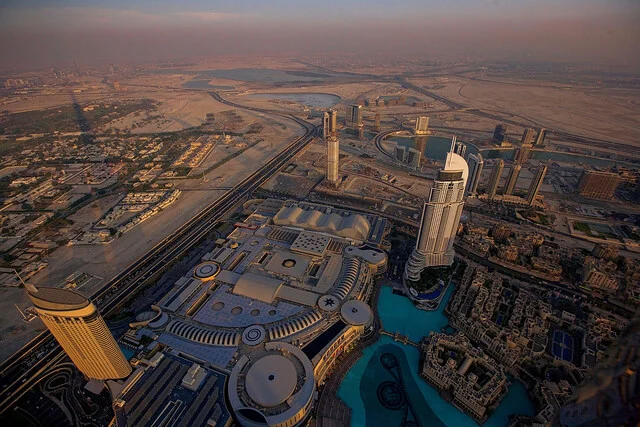
Things to Do in Dubai: The Ultimate Guide to Beaches, Desert & Shopping
0 0 The soft golden sun and clear warm beaches of Dubai offer the most glorious sights that we can ever witness. Every year thousands of travelers flock in to this part of the world from across to globe only […]
Chinese Cuisine: Traditional Food and Dishes to Explore
0 0 The touch of regality that comes along with Mesmerizing China essentially extends over its cuisine as well. Being dainty enough, Chinese Cuisine are huge favorites with people all over the world as they have transcended over geographical boundaries. […]

Australia Student Visa (Study Permit) Guide 2026: Eligibility, Fees & Requirements
0 0 The Australia Student Visa, officially the Subclass 500, lets you live in Australia for your full course at a recognised institution, with limited work rights built in. Covers everyone from a bachelor’s student in Sydney to a vocational […]