 Call Us
 18002099100




0 0 Planning your international Dubai Packages? Here are the must see places in Dubai. Must Do Things in Dubai 1. Ride through the sunset on an at the picturesque Dubai creek, and all for just one dirham. Close your eyes […]
Table of contents
Maharashtra’s history lives through its hill forts, ancient rock-cut caves, colonial landmarks and royal structures. From the Gateway of India in Mumbai to the centuries-old Ajanta and Ellora Caves, the famous monuments of Maharashtra tell stories from very different periods of India’s past. If you’re planning a heritage trip across the state, these are some of the monuments worth adding to your itinerary.
Monument | Location | Known For | Best Time |
Gateway of India | Mumbai | Indo-Saracenic architecture | Oct–Feb |
Bibi Ka Maqbara | Chhatrapati Sambhajinagar | Mughal architecture | Oct–Feb |
Ajanta & Ellora | Chhatrapati Sambhajinagar region | UNESCO-listed caves | Oct–Mar |
Shaniwar Wada | Pune | Peshwa history | Oct–Feb |
Sindhudurg Fort | Malvan | Maratha naval architecture | Oct–Mar |
Famous monuments in Maharashtra
Take a look at this helpful list of Maharashtra’s famous monuments:
1.Gateway of India
What It Is and Why It Exists
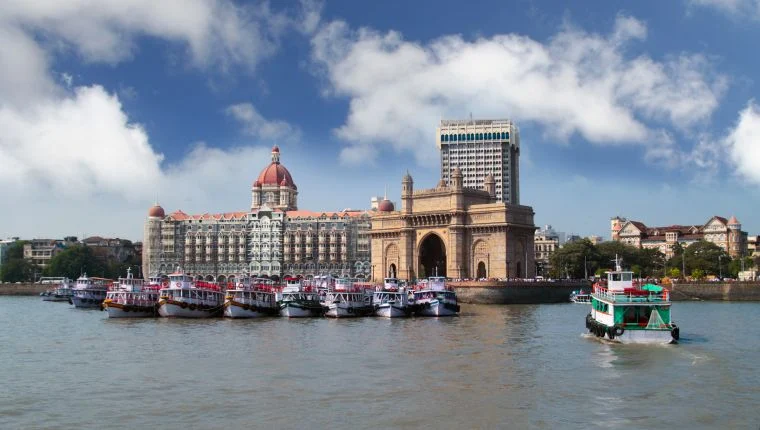
The monument was constructed in 1924 to welcome King George V and Queen Mary to Bombay. The Gateway of India is one of the most famous monuments of Maharashtra. Ironically, the king only got to see a cardboard model of it because the actual structure was not finished when he landed. So it is a welcome gate for a guest who never actually walked through it!
The Architecture and Vibe
It has an Indo-Saracenic architectural style with Gujarati and Islamic influences, with yellow basalt and reinforced concrete. It has a height of 26 m, and overlooks the Arabian Sea, right opposite the Taj Mahal Palace Hotel. The sea behind it, the pigeons in front of it, and the constant crowd of tourists and locals make this the most photographed monument in Mumbai. The archway frames the water perfectly. Everyone takes the same photo. Everyone should.
How to Reach and When to Go?
It is in Colaba, South Mumbai. Take any local train to Churchgate or Chhatrapati Shivaji Maharaj Terminus, then a taxi or bus. There is no entry fee. Go early in the morning if you want clean shots without five hundred people photobombing you. The evening is nice too, but packed. The ferry to Elephanta Caves leaves from here, so kill two birds if you have a full day.
2.Bibi-Ka-Maqbara, Aurangabad
The Location and Setting
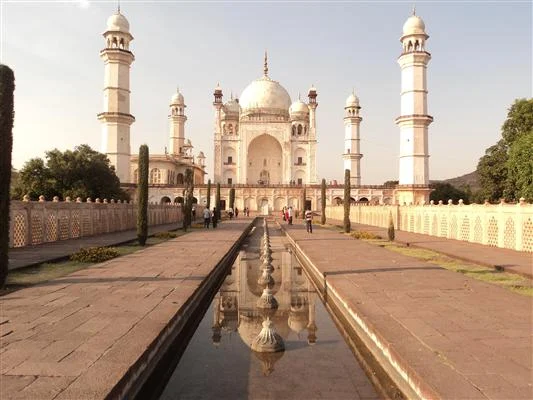
Bibi-Ka-Maqbara is located about 3 km from Chhatrapati Sambhajinagar (formerly Aurangabad City). It is the Deccan’s answer to the Taj Mahal. And yes, it is smaller. Yes, it is less perfect. But it has the peace that the Taj lost years ago. The gardens around it are quiet, the crowds are manageable, and you can actually stand in front of it and think.
The History
Built in 1660 by Prince Azam Shah for his mother, Dilras Banu Begum, who was Aurangzeb’s wife. Aurangzeb was not exactly a fan of extravagant architecture. He was too busy conquering and being austere, but his son went ahead and built this anyway. It is therefore among the top historical monuments of Maharashtra. It is often called the “Taj of the Deccan”, which is quite flattering.
What to Know Before You Go?
The entry fee is around ₹25 for Indians and ₹300 for foreigners. The monument is maintained by ASI. The best light is early morning when the marble glows softly, and the heat has not turned Aurangabad into an oven. Combine it with a trip to the Aurangabad Caves or Daulatabad Fort since you are already in the area. Do not expect Agra-level polish. Expect something more honest and slightly melancholic.
3.Ajanta and Ellora Caves, Aurangabad
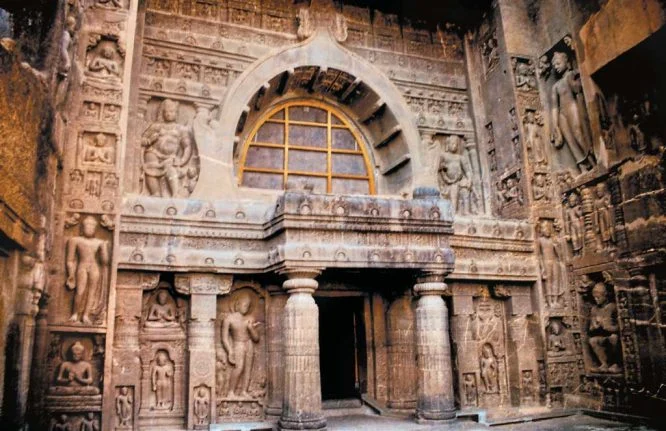
What You Are Looking At
Ajanta is a set of 30 rock-cut caves. It has its origins in Buddhism and dates back to the 2nd century BCE. Ellora has 34 caves, of Buddhist, Hindu, and Jain faiths, from the 6th to the 10th century. Both are UNESCO World Heritage Sites, and people carved them into basalt cliffs, showing a patience that modern society has lost.
The Highlights
At Ajanta, it is the paintings. The frescoes in caves 1, 2, 16, and 17 are among the finest surviving examples of ancient Indian art. The colours are vegetable-based and somehow still vivid after 1,500 years. At Ellora, it is the Kailasa Temple. Cave 16. It is a single-rock, monolithic structure. They did not build it. They removed everything that was not a temple. The scale is offensive. In a good way.
Travel Tips
Ajanta is about 100 km from Aurangabad. Ellora is about 30 km. These are undoubtedly the most famous monuments of Maharashtra. You can do both in a long day, but it is quite challenging. Split them if you can. Entry is ₹40 for Indians at Ajanta, similar to Ellora. Camera tickets are extra. No flash photography is allowed inside the caves, as the light damages the paintings, and the guards will yell at you! Go in winter for beautiful weather. Monsoon makes the roads muddy, but the surrounding waterfalls at Ajanta are spectacular. Wear comfortable shoes with grip. The floors are uneven and slippery.
4.Shaniwar Wada, Pune
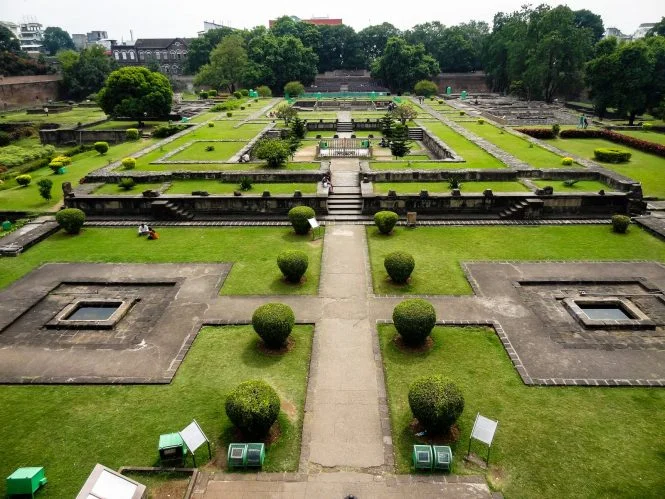
The Story Behind It
This monument was built in 1732. It was the throne of the Peshwas. Shaniwar Wada is one of the top monuments in Maharashtra. This was a palace-fort that saw power, politics, and eventually a fire in 1828 that burnt for seven days and destroyed most of the wooden structure. What remains are the stone foundations, the massive walls, and five fortified gates. The most famous is the Delhi Darwaza. It is so named because it faces north, towards Delhi, the direction of the Peshwas’ ambitions.
What to Expect?
The walls are 15 feet thick in some places. The original building had seven stories. Now you walk through gardens and ruins and try to imagine what it looked like when Bajirao I lived here. There is a light and sound show in the evening that recounts the history. It is in Marathi and Hindi, sometimes English. The story of Narayanrao Peshwa’s assassination, or the Kaka Mala Vachva, is part of the narration, and it still gives people chills.
Getting There and Practical Stuff
Shaniwar Wada is located right in the old city of Pune, near Lal Mahal. Any auto or bus will get you there. Entry fee is minimal, around ₹25 for Indians. The light and sound show has separate tickets. Go in the late afternoon, explore the fort, then stay for the show. The area around it is chaotic, with narrow lanes, heavy traffic, and street food. Embrace it. That is old Pune.
5.Sindhudurg Fort, Sindhudurg
Location
Built on an islet called Khurte in the Arabian Sea, the historic Sindhudurg Fort is about a kilometre off the coast of Malvan. Chhatrapati Shivaji Maharaj commissioned Sindhudurg Fort in the 17th century to strengthen the Maratha naval presence along the Konkan coast. Its location on an island off Malvan makes the journey to the fort part of the experience. It is considered his masterpiece of naval fort architecture. The fort walls are 30 feet high and 12 feet thick in places. There are 42 bastions. And the only way in is by boat.
What Makes It Special?
This is the only fort where Shivaji’s handprints and footprints are preserved in dried lime, embedded in a wall near the entrance. The fort also has a temple dedicated to Shivaji, one of the very few temples where he is worshipped as a god. The compound is huge, over 48 acres, and you can walk the ramparts with the sea crashing below you. On clear days, you can see the coastline for miles.
How to Reach and Tips?
Malvan is about 500 km from Mumbai and 130 km from Goa. The nearest railway station is Kudal on the Konkan Railway. From Malvan Jetty, boats run regularly to the fort, which is about 15 minutes away. The entry fee is around ₹25 plus the boat charges. Wear a hat. There is zero shade in the fort, and the sun reflects off the water and the stone. Carry water. The rocks are slippery in monsoon, so watch your step. And eat the Malvan fish curry after you get back. You will have earned it!
More iconic monuments in Maharashtra
1.Daulatabad Fort, Aurangabad
Originally called Deogiri, the Daulatabad Fort in Aurangabad was built in the 12th century and later renamed Daulatabad by Muhammad bin Tughlaq, who tried to move the entire capital of Delhi here. Not only is it one of the most famous monuments of Maharashtra, but it is also historically significant.
It sits on a conical hill and has some of the most brutal defence architecture in India. It has steep steps, narrow passages, a moat, and dark tunnels designed to confuse invaders. The Chand Minar inside is a 64-metre tower that rivals the Qutub Minar in height. It is about 15 km from Aurangabad, and most people skip it for Ajanta-Ellora. Do not skip it. The climb is tough, but the view from the top is everything.
2.Lohagad Fort, Lonavala
Lohagad is part of the Sahyadri range and falls within the Western Ghats UNESCO Natural World Heritage Site. It is about 10 km from Lonavala, and the trek is easy enough that beginners can manage it. The fort was used by Shivaji, the Marathas, and the Mughals at different times. The four large gates are still intact, and the Vinchu Kata. It is a long, narrow ridge that looks like a scorpion’s tail and is the main attraction here. This fort is best visited in the monsoon, when the entire hill turns green, and the clouds sit below you. But the trail gets muddy, so wear proper shoes.
3.Rajabai Clock Tower, Mumbai
Built between 1869 and 1878, the Rajabai Clock Tower was designed by Sir George Gilbert Scott and funded by Premchand Roychand in memory of his mother, Rajabai. It is Venetian-Gothic, 280 feet tall, and used to play sixteen different tunes until the practice was stopped because it was disturbing patients at the nearby hospital. It sits inside the Mumbai University Fort campus, and you cannot just walk in, as the security is tight. But you can see it from the road, and on a clear day, it dominates that part of the skyline. It is one of Mumbai’s most photographed buildings.
Tips for visiting monuments in Maharashtra
Here are some interesting tips to remember before you visit Maharashtra’s famous monuments:
1.Best time to visit:
The best time to visit the famous monuments of Maharashtra is from October to February, which works well for most heritage sites. Monsoons are particularly scenic around Sahyadri forts, though trails can become slippery.
2.Tickets:
Entry charges vary by monument and nationality. Check current ASI or official tourism rates before travelling.
3.Photography:
Rules differ across sites. Flash photography may be restricted around sensitive paintings and artworks.
4.What to carry:
Comfortable walking shoes, drinking water, sun protection and some cash are useful, especially at forts and remote sites.
5.Choose the most suitable package:
It is a great idea to choose a good package like a Thomas Cook Maharashtra tour package when you visit these places. The Thomas Cook packages are beautifully designed and allow you to see all the famous and historical monuments of Maharashtra smoothly.
FAQs
1.Which is the most famous monument in Maharashtra?
The Gateway of India in Mumbai is the most famous monument in Maharashtra, as it is the state’s most recognised landmark.
2.How many UNESCO World Heritage Sites are in Maharashtra?
There are six UNESCO World Heritage Sites in Maharashtra. They are the Victorian Gothic and Art Deco ensembles of Mumbai, Ajanta Caves, Ellora Caves, Chhatrapati Shivaji Maharaj Terminus, the Western Ghats, and the Elephanta Caves.
3.What is the best time to visit Ajanta and Ellora Caves?
October to February is the best time to visit the Ajanta and Ellora Caves.
4.Is there an entry fee for the Gateway of India?
No, there is no entry fee for the Gateway of India.
5.Which monuments in Maharashtra are connected to Chhatrapati Shivaji Maharaj?
Sindhudurg Fort, Lohagad Fort, and Shaniwar Wada have the strongest connection to Chhatrapati Shivaji Maharaj.
6.How many days are enough to cover monuments in Maharashtra?
For the top five, you need at least five to six days. Mumbai for the Gateway, Aurangabad for Bibi-Ka-Maqbara and Ajanta-Ellora, Pune for Shaniwar Wada, and Malvan for Sindhudurg. Add two more days if you want Daulatabad and Lohagad.
Recommended Articles for you
Flower Shows Around the World: A Celebration of Flowers and Fragrances
0 0 When God created the world, his most beautiful imagination led to the creation of flowers. If we take a close look at our lives we can see that the most special celebrations of our lives are adorned with […]
Guide to Visiting the Temples of Angkor Wat
0 0 A Guide to Temples of Angkor Wat at a Glance Angkor Wat Cambodia is one of the world’s most remarkable temple complexes. It is also the world’s most famous historical landmark. There are hundreds of ancient monuments in […]
Guide to Exploring Busan in South Korea
0 0 A Guide to Exploring Busan at a Glance Busan is known for: beaches, seafood markets, temples, colourful neighbourhoods and lively urban culture. Best places to visit in Busan: Haeundae Beach, Gamcheon Culture Village, Gwangalli Beach, Haedong Yonggungsa Temple, […]
7 Wonders of the World: Amazing Facts About the World’s Greatest Wonders
5 0 Seven Wonders of the World at a Glance The seven wonders of the world are part of the history that everyone should witness at least once. Here’s some information about them: The 7 Wonders of the World: Great […]

Italian Cuisine: Famous Dishes, Regional Specialities & Food Culture
0 0 From creamy northern risotto to spicy southern seafood, every area does its own food thing in Italy. It’s about simple, quality ingredients, eating together, and local rhythms. Skip tourist traps, eat what’s in season, and always save room […]
Paris Attractions: Famous Places and Experiences to Discover
0 0 When you ask a novelist to weave a tale of romance or when a painter intends to bring the most romantic backdrop to his canvas, it is the image of Paris from which they draw inspiration. Intrinsically beautiful […]

A Guide to the Best Places to Visit in Nepal
1 0 Nepal is geographically small, but it crams ancient temples, Himalayan treks, jungle safaris, and mountain lakes into one trip. Indians don’t need a visa. Hit Kathmandu for culture, Pokhara for views, Chitwan for wildlife. Trekking needs a licensed […]
Amazon Rainforest: Wildlife, Tours, Best Places to Visit & Travel Guide
0 0 The Amazon has got a bit of everything – wildlife, river trips, jungle hikes, and some real cultural stuff too. Brazil, Peru, or Ecuador are your main entry points, so pick whichever lines up with what you want […]

Busiest Airports in the World: Top Airports Around the Globe
0 0 Picture this: you’re running a little late for your flight. You leap out of the cab, collect your bags (with little or no grace) and walk into the airport, only to be hit by a wave of travellers […]

Guide to Planning an Ideal Day at Ocean Park
0 0 Ocean Park Hong Kong rolls theme-park rides, giant pandas, marine-life exhibits, scenic cable-car rides, and family-friendly stuff into one massive park. It’s split into the Waterfront and Summit, so you’ve got loads to get through in a full […]

Oktoberfest: Explore the World’s Biggest Beer Festival in Munich
0 0 If you call yourself a beer aficionado, you mustn’t miss out on Oktoberfest – the biggest beer festival in the world. Celebrated in Munich every year for 16-18 days, Oktoberfest marks the marriage ceremony of Prince Ludwig and […]
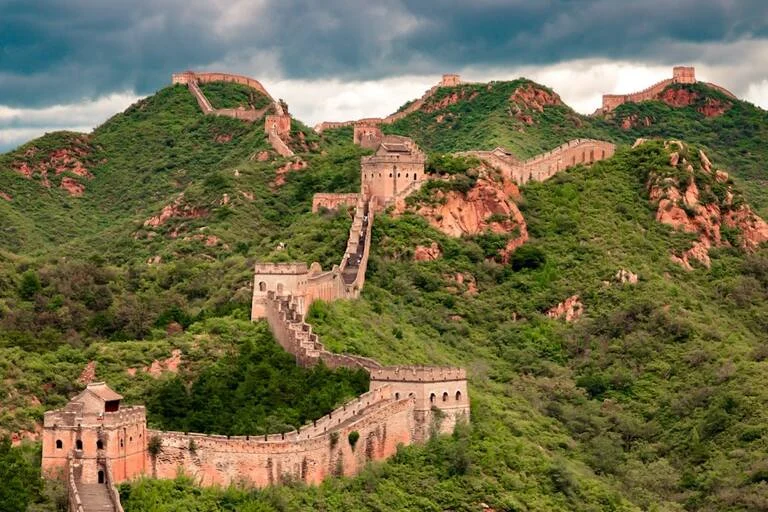
Guide to Visiting the Great Wall of China
0 1 Best sections for first-time visitors: Mutianyu for scenery and a balanced experience, Badaling for accessibility, and Jinshanling for longer, quieter walks. Best time to visit: Spring and autumn offer comfortable weather and beautiful mountain scenery. Summer can be […]

Guide to Visiting Palm Jumeirah in Dubai
0 0 The best travel memories do not begin with a checklist; rather, they begin with a moment that makes you pause and think, “I’m really here.” Imagine watching Dubai’s skyline glow gold from a beachfront café as the sun […]
The Ultimate Bali Vacation Guide: Things to Do & Offbeat Places
0 0 The Indonesian island of Bali is one of the most popular tourist destinations in the world. Both adventure lovers and holiday mongers love visiting this beautiful island to spend a few days of fun and relaxation away from […]

Finland Named the World’s Happiest Country: A Joyful Journey
0 0 Topping the world Happiness Index is something quite common for Nordic Countries today and as such, it is no wonder that the 2018 Annual Happiness Report saw Finland at the top. The country jumped from number five in […]

World Heritage Sites: Explore Iconic Places Around the World
0 0 When it comes to travelling; tourists usually like to visit beaches, hill stations and places that are renowned for monuments and wonders of the world. But how many of you have visited world heritage sites? A world heritage […]
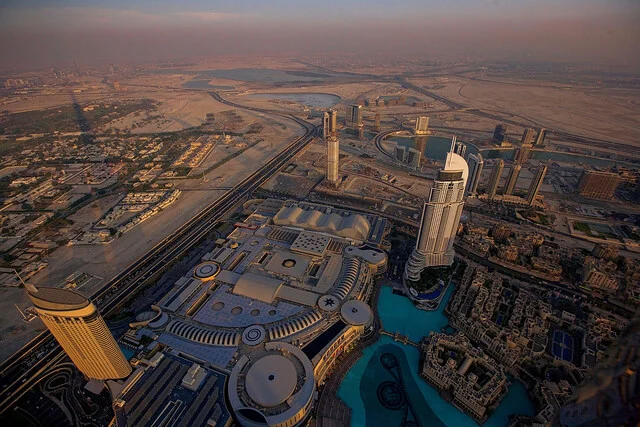
Things to Do in Dubai: The Ultimate Guide to Beaches, Desert & Shopping
0 0 The soft golden sun and clear warm beaches of Dubai offer the most glorious sights that we can ever witness. Every year thousands of travelers flock in to this part of the world from across to globe only […]

Chinese Cuisine: Traditional Food and Dishes to Explore
0 0 The touch of regality that comes along with Mesmerizing China essentially extends over its cuisine as well. Being dainty enough, Chinese Cuisine are huge favorites with people all over the world as they have transcended over geographical boundaries. […]

Australia Student Visa (Study Permit) Guide 2026: Eligibility, Fees & Requirements
0 0 The Australia Student Visa, officially the Subclass 500, lets you live in Australia for your full course at a recognised institution, with limited work rights built in. Covers everyone from a bachelor’s student in Sydney to a vocational […]