 Call Us
 18002099100


0 0 Why Should Central Asia Be on Your Travel List? I’ll be honest. If someone had asked me a year ago to choose between Europe and Central Asia, I would have booked Europe without thinking twice. It’s familiar. You […]
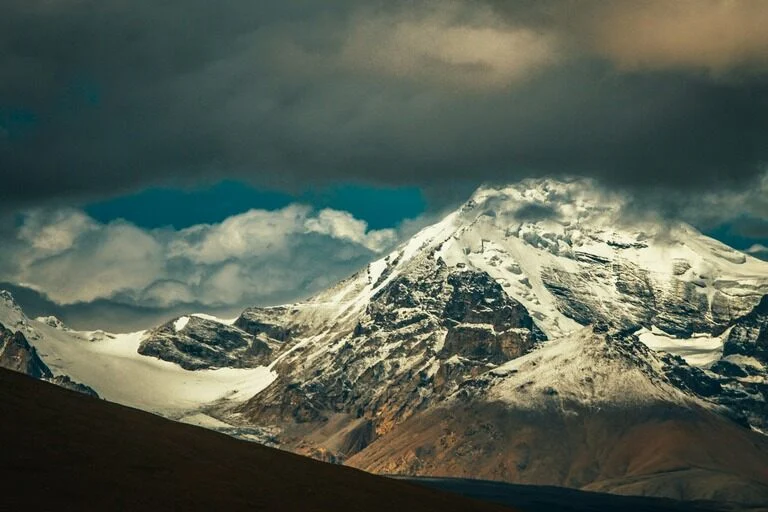
Table of contents
In the remote Tibet Autonomous Region, Mount Kailash and Lake Mansarovar are among the most enigmatic and sacred places on Earth. Towering at 6,714 meters (22,028 feet), Mount Kailash, also known as Kailash Parvat, is revered by four major religions—Hinduism, Buddhism, Jainism, and Bon. Adjacent to it lies Lake Mansarovar, a pristine high-altitude freshwater lake with profound spiritual and mystical significance.
Despite their spiritual reverence, Mount Kailash and Lake Mansarovar remain shrouded in mysteries that baffle scientists and seekers alike. From unexplained geological anomalies to enigmatic myths, these sacred sites continue to defy logic and reason. This article examines the Kailash Parvat mysteries, the Lake Mansarovar mystery, and the scientific theories surrounding them.
1. The Unclimbed Summit of Mount Kailash

Unlike Everest or other Himalayan peaks, Mount Kailash remains unclimbed. Several climbers have attempted to scale its summit, yet no one has ever succeeded.
Mystical Beliefs:
- According to Hindu mythology, Mount Kailash is the abode of Lord Shiva, making it forbidden for mortals to set foot on its peak.
- Tibetan Buddhists believe it is the home of Buddha Demchok, a deity of supreme bliss.
- The Jain tradition identifies it as Ashtapada, where their first Tirthankara, Rishabhdev, attained liberation.
- The Bon religion considers it the seat of their spiritual energy.
- China, which administers Tibet, where Mount Kailash is located, has officially prohibited all climbing attempts. The government respects its religious significance and does not grant climbing permits.
Scientific Theories:
- The mountain’s unique pyramid-like shape is composed of rock formations that make climbing nearly impossible.
- Extreme weather conditions and vertical slopes prevent climbers from reaching the summit.
- Some geologists suggest a strong electromagnetic field around the peak, which could disorient climbers.
2. The Kailash Mountain Secrets: A Man-Made Pyramid?

One of the most intriguing Mount Kailash mysteries is its perfectly symmetrical, pyramid-like shape. Some researchers speculate that Kailash Parvat might be a colossal man-made structure rather than a natural mountain.
Mystical Beliefs:
- Ancient texts suggest that Mount Kailash is the center of the universe, connecting heaven and Earth.
- Some spiritual scholars claim that the mountain aligns perfectly with other sacred sites across the world, including Stonehenge and the Great Pyramids of Egypt.
Scientific Theories:
- Russian geologists hypothesise that Mount Kailash is not a mountain but a massive ancient pyramid, possibly built by an advanced civilisation.
- Others argue that its unique rock formations and symmetry result from natural geological processes over millions of years.
3. The Mysterious Time Acceleration Near Mount Kailash
Travellers near Mount Kailash have reported experiencing strange time distortions.
Mystical Beliefs:
- Some myths claim that time moves faster near Kailash Parvat, with ageing accelerating rapidly for those who spend extended periods there.
- Tibetan monks believe that the mountain has a gateway to another dimension, affecting space-time.
Scientific Theories:
- Some scientists believe that Mount Kailash’s location and magnetic field influence human perception of time.
- Certain anomalies in gravitational fields near the mountain may cause electronic devices to malfunction.
4. The Enigma of Lake Mansarovar: A Mystical Water Body
Located at an altitude of nearly 4,600 meters (15,060 feet), Lake Mapam or Lake Mansarovar (Manasarovar) is one of the highest freshwater lakes in the world. It is believed to be formed in the mind of Lord Brahma, making it sacred in Hinduism.
Lake Mansarovar Mystery:
- The lake is known to change colours—from deep blue to emerald green and even reddish hues.
- Despite its altitude and harsh climate, Lake Mansarovar never freezes completely, unlike neighbouring Rakshastal, which remains frozen.
- Pilgrims claim to experience spiritual visions and divine energies while bathing in its waters.
Scientific Theories:
- The lake’s colour changes are attributed to algae, mineral deposits, and light refraction.
- The salinity and geothermal activity in the region may explain why it doesn’t freeze completely.
- Some researchers suggest that underground thermal vents regulate their temperature.
5. The Twin Lakes: Lake Mansarovar and Lake Rakshastal
Lake Mansarovar (freshwater) and Lake Rakshastal (saltwater) present a striking hydrological contrast.
- Lake Mansarovar: A revered freshwater lake at 15,060ft, it is sacred in Hinduism, Buddhism, and Jainism, believed to purify the soul.
- Lake Rakshastal: A saline lake at 4,575m, it is considered inauspicious in Hindu mythology.
- The crescent shape of Rakshastal is believed to symbolise darkness, ignorance, and negative energy, while the round shape of Manasarovar represents light, purity, and enlightenment. These two lakes, juxtaposed beside each other, are seen as reflections of Shiva’s dual nature—meditative yet destructive.
The Unexplained Connection
In yet another intriguing myth, it is believed that Rakshastal and Manasarovar were once a single body of water, later divided into two opposing entities due to celestial forces. The underground Ganga Chhu channel connecting them is seen as an unsolved hydrological mystery, as the salinity of Rakshastal remains unaffected by the influx of freshwater.
Scientific Theories
- Geological Formation: Mansarovar is fed by glacial melt, while Rakshastal’s high evaporation concentrates salts.
- Hydrological Isolation: Rakshastal lacks major inflow sources, preventing dilution of its salinity.
- Evaporation Effect: Water loss in Rakshastal leaves behind mineral deposits, reinforcing its saline nature.
Though science provides explanations, the contrast between these twin lakes remains an enigma, intertwining mythology and hydrology in one of Tibet’s most mysterious landscapes.
6. The Swastika Formation on Mount Kailash
A giant swastika-like pattern exists on the southern slopes of Mount Kailash.
Mystical Beliefs:
- The Swastika is a sacred symbol in Hinduism and Buddhism, representing eternity and cosmic energy.
- Some believe this pattern was not formed naturally but by a lost ancient civilisation.
Scientific Theories:
- Geologists claim that the rock layers and glacial erosion might have carved this pattern over time.
- Some believe it to be an unusual result of tectonic movements.
The Everlasting Mysteries of Kailash and Mansarovar
The mysteries of Mount Kailash and Lake Mansarovar continue to fascinate scientists, mystics, and adventurers. Whether these phenomena are results of divine intervention, lost civilisations, or natural science, they remain one of the greatest enigmas on Earth.
For believers, Mount Kailash is the spiritual axis of the universe, while for sceptics, it is a geological wonder that challenges scientific explanations.
The truth behind the Kailash Mountain secrets and Manasarovar mysteries may never be fully uncovered, but they will continue to inspire awe and reverence for generations to come. If you are inspired to visit Mount Kailash and Manasarovar, Thomas Cook offers tailored packages that ensure a seamless travel experience filled with both adventure and serenity.