 Call Us
 18002099100





0 0 There is a particular kind of silence that falls over you the first time the sky turns green above your head. It is not something a screen can prepare you for. That unforgettable moment is what makes Northern […]

Table of contents
There are cities you visit, and then there are cities that unfold themselves to you slowly. Edinburgh belongs firmly to the latter. Constructed amidst historic volcanic ridges and medieval alleyways, the city seems to be a living story with memories in every stone. Edinburgh rewards those who delve deeper – into alleyways, skyline silhouettes, and the beat of its historic heartbeat – in contrast to contemporary locations that make an impression at first glance.
Edinburgh Castle is the focal point of this multifaceted event, serving as both the city’s defining anchor and a monument. It commands Edinburgh’s physical and emotional topography from its dramatic perch on Castle Rock. Its enormous edifice draws your gaze skyward from practically every part of the city, serving as a continual reminder that history is there and not buried.
Edinburgh’s unique quality lies in the way its history permeates modern life. Even though many attractions in Edinburgh Scotland are well-known, their real allure is found in the lesser-known aspects, such as peaceful vantage points, significant buildings, and tales that aren’t typically included in travel guides. Edinburgh is more than just a place to visit; it’s an experience that changes with each step, from geological marvels to royal intrigue.
Edinburgh Castle – History, Highlights & Visitor Info
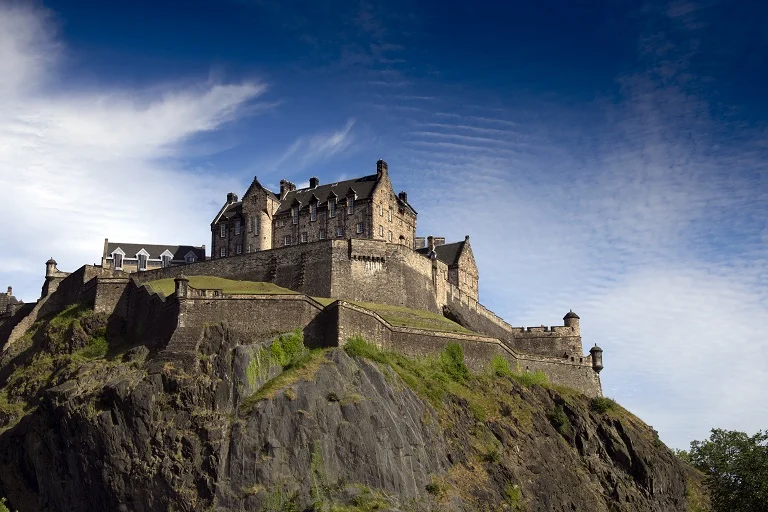
Edinburgh Castle, which rose from an old volcanic rock, has influenced Scotland’s history for more than a millennium. This location was a fortified fortress chosen for its natural protection long before it was converted into a royal dwelling. It saw unrelenting sieges, royal dramas, and political turning points over the course of centuries.
Many tourists are unaware that the castle was constructed gradually over time, mirroring various periods of Scottish history. Instead of revealing a single moment, each chamber, courtyard, and wall displays a timeline.
Key Highlights Inside the Castle
Exploring Edinburgh Castle is less about ticking landmarks and more about understanding what each space represents:
- Crown Jewels (Honours of Scotland): These are Britain’s earliest royal jewels. They were unearthed in 1818 after being hidden for years following political instability. Their continued existence is a testament to Scotland’s resilience.
- Great Hall: The hall, which dates back to the early 16th century, is notable for its striking hammerbeam ceiling. If you look closely, you’ll see weapon displays that narrate tales of conflicts and alliances.
- Royal Palace: This is where James VI was born to Mary, Queen of Scots, a moment that altered the trajectory of British history. Despite their lack of grandeur, the rooms have a great deal of historical significance.
- Views from the Castle: The viewpoint is both strategically and aesthetically pleasing. From this vantage point, the Old Town’s expansive layout makes it evident why it was almost impossible to conquer.
Why It’s a Must-Visit?
This castle is the emotional centre of Edinburgh, among all Edinburgh tourist places. It’s about how you feel, not simply what you see. The echo of footfall, the wind blowing across the battlements, and silence in some rooms all combine to a mood that is difficult to duplicate elsewhere.
Visitor Information & Ticket Insights
It takes some planning to make the most of your trip to the castle. Tickets are required for entry, and prices vary by season and method of purchase. Usually, adult Edinburgh Castle tickets normally cost between £19.50 and £22. Discounts are available for children, seniors, and families.
A few useful tips:
- Booking Edinburgh Castle tickets online in advance is recommended, especially during peak travel months.
- Arriving early helps you explore the interiors before crowds build up. Also, late afternoon visits often offer fewer crowds and dramatic lighting.
- The castle’s famous One O’Clock Gun isn’t just a tradition; it was historically used by ships in the harbour to set their clocks accurately.
- Don’t rush. Most visitors spend under two hours, but to truly absorb it, you need at least three.
Slowing down is crucial, even beyond logistics. The Edinburgh Castle is about more than what you see; it’s about what you take in. Every hallway, vista, and object adds to your knowledge of why this iconic location continues to be the centre of Edinburgh.
Top Attractions in Edinburgh You Shouldn’t Miss
Edinburgh is a city that you must decipher rather than “cover.” There is a deeper layer of tales, symbolism, and little nuances that go beyond the obvious sights and turn sightseeing into exploration. When visited with curiosity, these attractions in Edinburgh Scotland show the city’s hidden personality in addition to being aesthetically pleasing.
Royal Mile: The City’s Living Timeline
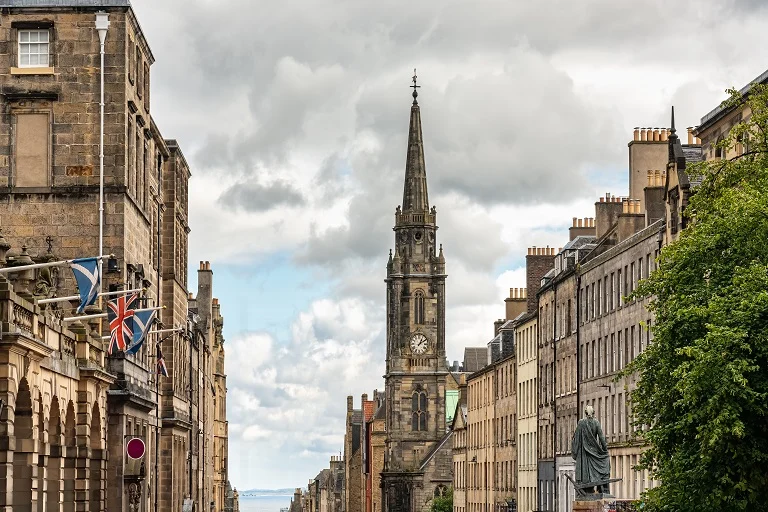
It is oversimplified to say that the Royal Mile is a straight path that connects the castle to the palace. In actuality, it’s a series of interconnected historical “micro-worlds.”
What makes it truly special?
- The street is built over multiple layers of old Edinburgh. Beneath your feet are older streets, buried during expansions.
- “Closes” (narrow alleyways) like Mary King’s Close aren’t just shortcuts; they were once full communities, sealed during plague outbreaks.
- Many buildings lean inward slightly due to centuries of structural shifts, creating an almost theatrical skyline.
Hidden insight:
Most tourists stroll around the centre. Because doorways, sculptures, and side symbols often tell more stories than the main street, locals and historians love the edges.
Arthur’s Seat: A Volcano That Shapes Perspective
Arthur’s Seat is more than just a point of view; it represents the geological basis for Edinburgh’s current configuration. This extinct volcano sculpted the peaks and valleys that define the city’s layout.
Why it stands out?
- The climb is gradual but symbolic—you’re literally walking up millions of years of history.
- The summit offers a 360-degree view of how nature shaped urban design.
- It’s one of the few places where the city feels quiet, despite being so close to the centre.
Unknown detail:
In 1836, a set of tiny coffins with figurines inside was discovered on the hill. Their function is still unknown; some associate them with memorial rites, while others associate them with witchcraft.
Pro tip:
Avoid going on midday treks. The experience becomes almost meditative in the early morning or at dusk.
Holyrood Palace: Where Royalty Feels Human
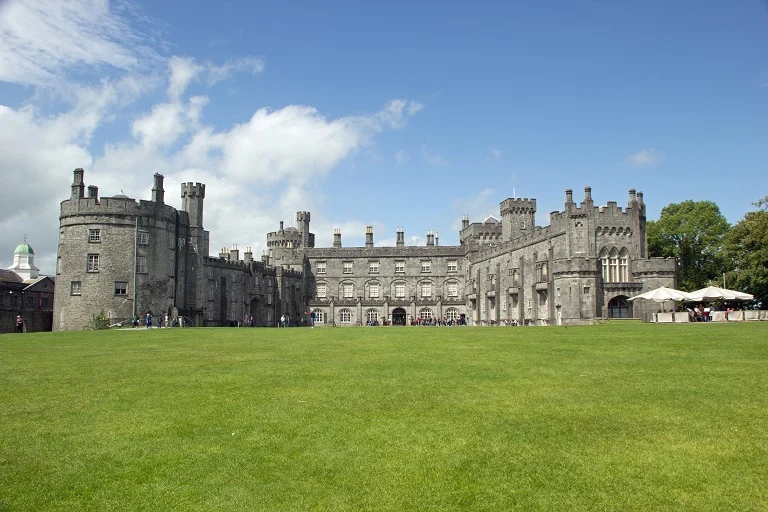
The Palace of Holyroodhouse, a functional royal dwelling that feels unexpectedly intimate in comparison to large European palaces, is located at the end of the Royal Mile.
What do most people notice?
- Lavish rooms and royal artefacts
- Its connection to British monarchy
What do most people miss?
- The adjoining ruins of Holyrood Abbey are equally powerful. The contrast between the maintained palace and the crumbling abbey reflects time’s selective preservation.
- Mary, Queen of Scots’ chambers still carry an emotional weight—especially knowing the dramatic events that unfolded there.
Try out this perspective:
Stand in the abbey ruins during light rain. The wide sky, the emptiness, and the sound combine to produce an almost cinematic environment that is very different from ordinary tourist encounters.
Calton Hill: The City’s Symbolic Skyline
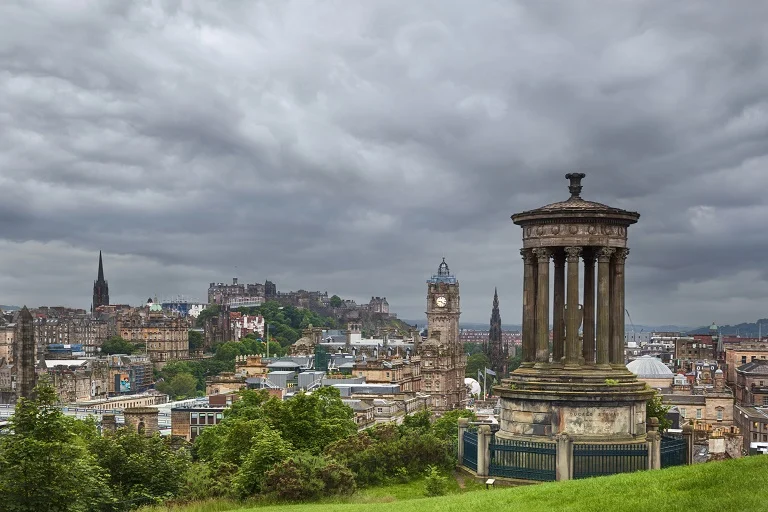
Although Calton Hill’s views are its main draw, its deeper significance comes from what it stands for. This hill serves as Edinburgh’s intellectual hub, where history, ambition, and identity come together.
What makes it unique?
- The unfinished National Monument tells the story of ambition cut short by a lack of funds, earning it the nickname “Edinburgh’s Disgrace.”
- The Nelson Monument functions as a time ball, historically used to help ships set their clocks.
- The Dugald Stewart Monument is one of the most photographed spots, but few know it honours a philosopher, not a political figure.
Did you know:
Both the Old Town and the New Town are readily visible from this elevation. Edinburgh’s dual identity—medieval turmoil and planned elegance—is reflected in this visual contrast.
The Real Takeaway
Many Edinburgh tourist places are simple to visit, but they can be challenging to fully understand without context. These places are remarkable not only for their beauty but also for their depth.
These are distinctive among all the attractions in Edinburgh Scotland, because they encourage curiosity. They are places to understand, not merely places to look at.
FAQs
What is the best time of year to visit Edinburgh for fewer crowds and better experiences?
The ideal time is late spring (May–June) and early autumn (September). August is vibrant due to festivals, but extremely crowded and expensive.
How many days are enough to explore Edinburgh properly?
A minimum of 3 days is recommended. This allows you to explore major landmarks and still have time for hidden gems, viewpoints, and local experiences without rushing.
Is Edinburgh a walkable city for tourists?
Yes, Edinburgh is highly walkable, especially the Old Town and central areas. However, be prepared for steep climbs and uneven cobblestone streets.
---->
Recommended Articles for you

Cherry Blossom Festival in Japan – The Ultimate Spring Escape
0 0 If there is one country that can consistently surprise you, enchant you and make you feel blessed about life, it has to be Japan. From retaining deep-rooted cultural beliefs to staying ahead in technology and being a pioneer […]

Sakura Cherry Blossom – Witness Japan’s Pink Spring
0 0 Every year, Japan’s gardens, trees and parks turn from a glorious green of jade to the soft pink of a blushing bride. That’s right, the cherry blossoms are ready to bloom, bringing with it the promise of a […]

Places to Visit in India in December
0 0 December marks the beginning of the peak travel season in India. From the North of the country to the South, every region has pleasant weather and clear skies, perfect for sightseeing. After the hot summer and muggy monsoon, […]

12 Best Places To Visit In November In India In 2026
0 0 November is a month of vibrant transitions in India, offering an array of travel experiences from the cool Himalayan foothills to the warm beaches of the south. If you’re planning your travel itinerary for November 2026, India presents […]

What is the average cost of living in Singapore in 2026?
0 0 The Cost of Living in Singapore At A Glance Average monthly budget: A single person may need S$1505 every month excluding accommodation. The rest of the budget depends on lifestyle and location. Biggest expense: Accommodation is the largest […]
Top Universities in Germany for International Students
0 0 Germany universities for international students have been one of the most preferred destinations for many years. Public universities charge little to no tuition fees, offering excellent opportunities for globally valued research and English-taught programs across engineering, business, and […]
RBI Forex Guidelines for Foreign Exchange Transactions in India
0 0 What Do RBI Forex Guidelines Say? FEMA oversees the legal mechanism governing foreign exchange transactions in India. All Indian residents should deal in forex only through RBI-authorised persons and for permitted purposes. Under the Liberalised Remittance Scheme (LRS), […]
Cost of Living Index by Country: Compare Living Expenses Around the World (2026 Guide)
0 0 No two countries charge the same price for everyday life. A coffee that costs $2 in Hanoi can cost $7 in Zurich, and a one-bedroom apartment renting for $300 in Cairo might command $3,000 in Manhattan. These gaps […]
Delhi To Haridwar distance: Best Route, Train Timings & Travel Guide
0 0 Delhi to Haridwar At A Glance Haridwar is an integral religious destination for Hindus. In 2025, 3.4 crore people visited Haridwar, and that number is only expected to be higher at the end of 2026. If you are […]
Delhi to Kedarnath distance: Best Route, Train Timings & Travel Guide
0 0 Delhi to Kedarnath cannot be called a road trip, but it is a journey where the destination is sacred, so every part of the journey becomes a kind of storytelling. Most of the people ask, “Delhi to Kedarnath […]
Jodhpur to Udaipur journey is an ultimate Rajasthan travel journey.
0 0 These two destinations have completely different personalities, but the journey between the two destinations is mesmerising. Imagine yourself waking up to the blue-painted buildings of Jodhpur, covered with mighty forts and surrounded by beautiful desert vibes. And then […]
Kullu to Manali distance: Best Route, Train Timings & Road Trip Guide
0 0 Kullu to Manali At a Glance Kullu and Manali sit in the same valley, so this isn’t really a “journey” in the way Delhi to Manali is; it’s more of a short hop most travellers do on their […]
Everything You Need to Know About Mumbai to Goa Distance
0 0 Mumbai to Goa At a Glance Goa is one of the most happening places in India. It offers nature, partying, waterfalls, trails, water activities, and whatnot. Goa sees millions of tourists every year from all across the globe, […]

Varanasi to Haridwar distance: Best Route, Train Timings & Travel Guide
0 0 Varanasi to Haridwar at a Glance Here are the numbers, before anything else. People do this route mostly for one reason: both cities run a daily Ganga aarti, and pilgrims like pairing them into one circuit. Road: roughly […]
Ride the World’s Longest Cable Car to Hon Thom Island: Your Complete Phu Quoc Travel Guide
0 0 The Hon Thom cable car in Phu Quoc is renowned for its Guinness World Record as the longest sea-crossing cable car. Offering a great view of the Gulf of Thailand, this cable car ride stretches across 7.9 km. […]
Longest Bridge in the World: Where Record-Breaking Engineering Meets Stunning Landscapes
0 0 Ask most people to name the world’s longest bridge, and you’re likely to get a confident answer like the Golden Gate Bridge or the Brooklyn Bridge or some other famous landmark plastered across postcards and movies. But the […]
World’s Largest Waterfall: Experience the Majestic Beauty of Angel Falls Like Never Before
0 0 Angel Falls in Venezuela is the highest waterfall in the world. It is 979 metres high. The falls are in a large forest area called Canaima National Park. Getting there takes time, but the views are amazing. You […]
Visit the Largest Mall in the World: Everything You Need for the Perfect Shopping Trip
0 0 Largest Mall In The World Iran Mall in Tehran, Iran, is the world’s biggest mall by total reported area. The mall is approximately 1.95 million square metres, or 21 million square feet. Note: The discussion of the biggest […]
Top 10 Highest Railway Bridges in the World: Discover the Tallest Train Bridges and Their Incredible Stories
0 0 The world’s highest railway bridges are mostly in China and India. India’s Chenab Bridge is the tallest railway arch bridge at 359 metres, which is even higher than the Eiffel Tower. China’s Najiehe Bridge, at 310 metres, still […]