 Call Us
 18002099100



Must-See Things to Do in Dubai: Top Adventures Beyond the Malls
By Thomas Cook Admin


As you plan your travels or delve into the economics of different countries, understanding currency values becomes crucial. The phrase ‘currencies with the lowest exchange rates in the world’ often piques curiosity, both for economic insights and the travel opportunities it presents.
This article explores countries with the lowest currency exchange rates in the world compared to the Indian Rupee (INR), offering you a unique perspective on how far your rupee can stretch abroad.
Ever wondered which countries have the lowest currencies in the world? It comes down to history, monetary policy, and sometimes just how a currency was set up decades ago.
The Iranian rial (IRR) is currently the lowest currency in the world in rupees, with 1 IRR worth roughly 0.00007 rupees, meaning you’d need well over 14,000 rial to make up a single Indian Rupee. Vietnam, Indonesia, Laos and a handful of African currencies aren’t far behind. Rates shift daily, so treat the figures here as a guide rather than gospel, and check a live rate card before you actually exchange money.
A “lowest currency” simply means one where you need a large number of units to equal one unit of a stronger currency, like the US Dollar or the Indian Rupee. It’s a nominal measure, not a health check on the economy behind it. A currency with lowest value can still belong to a country with decent growth and manageable inflation.
For now, just know that being among the lowest currencies in the world is often a matter of arithmetic and history rather than economic failure.
Most currencies today float, meaning their exchange rate against others is set by supply and demand in the global forex market. If more people want to buy a currency than sell it, its value rises. If everyone’s trying to offload it, the value drops.
A few things drive that demand, and the result of the question, which is the lowest currency in the world:
There’s rarely just one reason a currency ends up near the bottom of the pile; usually it’s a mix of factors compounding over years, resulting in a low value currency in the world. Economic instability, unpredictable GDP growth, or a shaky banking system pulls back foreign investment and weakens demand for the currency.
High inflation results in an increase in prices more than wages and productivity rise. This results in central banks printing more money, which covers the deficits, only to feed the problem further, resulting in the cheapest currency in the world. Political uncertainty, from abrupt government change to sanctions, conflict or civil unrest, makes investors nervous and sends their money elsewhere.
A country that runs a persistent trade deficit and exports less than it imports must buy foreign currency in excess of what it earns from exports. This increases the supply of its currency and tends to push down its value. And some central banks resort to deliberate currency devaluation policies to keep exports competitive. Vietnam has done so more than once, which is not always a sign of an economy in trouble.
Here’s an idea of the top 10 lowest currency in the world list against the rupee as of today. These are approximate figures, and they move daily, so use this as a starting point and check the live rate card before you finalise the transaction.
Currency | Country | Approx. 1 Unit = INR | Approx. 100 Unit = INR |
| Iranian Rial (IRR) | Iran | 0.00007 INR | 0.007 |
Vietnamese Dong (VND) | Vietnam | 0.0036 INR | 0.36 |
| Indonesian Rupiah (IDR) | Indonesia | 0.0054 INR | 0.54 |
Lao Kip (LAK) | Laos | 0.0041 INR | 0.41 |
| Sierra Leonean Leone (SLL) | Sierra Leone | 0.0038 INR | 0.38 |
Guinean Franc (GNF) | Guinea | 0.0097 INR | 0.97 |
| Paraguayan Guarani (PYG) | Paraguay | 0.0111 INR | 1.11 |
Uzbekistani Som (UZS) | Uzbekistan | 0.0069 INR | 0.69 |
| Cambodian Riel (KHR) | Cambodia | 0.0206 INR | 2.06 |
Congolese Franc (CDF) | DR Congo | 0.0290 INR | 2.90 |
The rial has been under pressure since international sanctions tightened after 2015, and it’s stayed there. Iran’s economy is largely cut off from mainstream global banking, which limits demand for the currency and keeps it firmly at the bottom of every lowest currencies in the world list.
Vietnam’s central bank has periodically devalued the dong to keep exports competitive, particularly in manufacturing and textiles, making it one of the least valuable currency in the world.
The rupiah never went through a redenomination after inflation spikes decades ago, so the unit count stayed high even as the economy stabilised.
Laos carries a heavy foreign debt load relative to its GDP, much of it tied to infrastructure projects. That, combined with persistent inflation, keeps the kip weak and firmly on this list.
Sierra Leone had redenominated its own currency in the year 2022. However, the older notes of SLL notes and pricing references still circulate in conversation and some legacy data.
Guinea’s economy leans heavily on mineral exports like bauxite, which introduces limited industrial diversification and heavy import reliance, keeping the currency’s unit value low.
The Guarani has always traded at a high unit count against major currencies, partly a legacy of past inflationary periods, but the currency never got redenominated to reflect that.
Uzbekistan’s som went through major exchange rate reforms in 2017 when the country unified its official and black-market rates.
Cambodia’s economy runs on a dual-currency system, with the US Dollar used for the largest transactions. That naturally suppresses demand for the riel itself, keeping its value pinned low even though the economy has been reasonably steady.
The Democratic Republic of Congo sits on vast mineral reserves, but due to political instability and patchy infrastructure keep investor confidence and the currency subdued.
This is where most people get it wrong, so it’s worth being precise. “Lowest currency” and “the weakest currency in the world” measure two completely different things, and mixing them up can lead you to the wrong conclusion about a currency entirely.
Lowest Currency | Weakest Currency |
Number of units needed to equal one Dollar or Rupee | How much value a currency has lost over time |
| Redenomination history, or a currency that was simply set up with a high unit count | Devaluation, chronic inflation, political or trade instability |
A snapshot, fixed at a point in time | A trend, tracked over months or years |
| Yes, a currency with the lowest value can hold steady for years | No, by definition it’s losing ground against other currencies |
| Vietnamese dong: one of the highest unit counts here, but not collapsing | Argentine peso: a far lower unit count, yet losing real value fast through repeated devaluation |
So when someone searches which currency has lowest value, they’re usually really asking which is the weakest currency in the world, and the two questions don’t always have the same answer. It’s worth checking both angles before you assume a currency is “cheap” for a bad reason.
Here’s the part that actually matters if you’re planning a trip.
A low unit value doesn’t mean your money goes further, and it doesn’t mean it goes less far either. What matters is the actual purchasing power once you convert.
Example: Take ₹10,000. Converted to Vietnamese dong at roughly 1 INR = 277 VND, that’s about 2,770,000 dong, which comfortably covers several days of meals, local transport and a mid-range hotel stay in most Vietnamese cities.
Now compare that to a stronger currency like the Euro. That same 10,000 INR converts to roughly 105 Euro, which might just about cover one night in a decent hotel in Paris. The dong looks “cheap” on paper, but it’s the Euro that’s actually the expensive currency to spend in.
This is the practical takeaway: a currency with the lowest value isn’t automatically a bad deal for you, and a currency with a small unit count isn’t automatically expensive. When you buy forex, focus on the exchange rate, fees, and how much the currency will actually cover.
What decides your budget is local prices in that country compared with what your rupees convert into, not the number printed on the note.
The rates fluctuate often when it comes to exchanging currency in India, so here are a few things you must keep in mind.
Exchange Rates vary between banks, forex dealers and online platforms, sometimes by a noticeable margin on the same day. A quick comparison before you commit can save you real money, especially on larger amounts.
Some dealers advertise an attractive headline rate but recover the difference through service fees, delivery charges or a poor buyback rate later. Always ask for the final, all-in cost before you exchange.
Only deal with an RBI-authorised forex dealer or an AD-II-licensed entity. Choosing a trusted provider such as Thomas Cook currency exchange services helps ensure your transaction is properly documented and compliant with applicable regulations.
You’ll need your PAN card, a valid passport, and confirmed travel tickets or visa proof for foreign exchange transactions above certain thresholds. Keep photocopies handy.
Airport counters are convenient, but the rates are almost always worse than what you’d get in the city, sometimes by 8 to 10 per cent. Exchange a small amount for immediate needs and do the bulk of it beforehand.
A prepaid forex card locks in your rate at the time of loading, protects you from daily fluctuations during your trip, and is generally safer to carry than large amounts of cash.
The Iranian rial currently holds that position with 1 IRR = 0.00007 INR, with its value against the Dollar and Rupee kept extremely low by years of sanctions and economic isolation.
By unit count, the Iranian rial, Vietnamese dong and Indonesian rupiah are typically the cheapest currencies in the world to buy in bulk. People often use “which is lowest currency in the world” and “cheapest currency in the world” interchangeably, but a cheap currency to buy isn’t necessarily one that’s losing value.
1 Iranian rial currently works out to roughly ₹0.00007, meaning you’d need more than 14,000 rial to equal a single Rupee.
No, and this is the most common mix-up. A currency with lowest value often reflects redenomination history rather than the state of the economy today. Some countries near the top of this list, like Vietnam and Indonesia, have had reasonably steady growth despite their currency’s high unit count.
Not through most authorised Indian dealers. Currencies such as the Iranian rial are heavily restricted or simply unavailable through RBI-authorised forex channels because of international sanctions, and the same applies to a few others on this list, including the Sierra Leonean leone and Congolese franc in physical cash form.
If you’ve got a trip or a transaction coming up, don’t let an unfamiliar currency slow you down. Check today’s numbers on our live rate card, compare what you’ll actually get, and lock in your rate before you fly. Buy your forex here and get moving.
0 0 Planning your international Dubai Packages? Here are the must see places in Dubai. Must Do Things in Dubai 1. Ride through the sunset on an at the picturesque Dubai creek, and all for just one dirham. Close your eyes […]

0 0 When God created the world, his most beautiful imagination led to the creation of flowers. If we take a close look at our lives we can see that the most special celebrations of our lives are adorned with […]

0 0 When you ask a novelist to weave a tale of romance or when a painter intends to bring the most romantic backdrop to his canvas, it is the image of Paris from which they draw inspiration. Intrinsically beautiful […]

0 0 The Amazon has got a bit of everything – wildlife, river trips, jungle hikes, and some real cultural stuff too. Brazil, Peru, or Ecuador are your main entry points, so pick whichever lines up with what you want […]

0 0 Picture this: you’re running a little late for your flight. You leap out of the cab, collect your bags (with little or no grace) and walk into the airport, only to be hit by a wave of travellers […]

0 0 Ocean Park Hong Kong rolls theme-park rides, giant pandas, marine-life exhibits, scenic cable-car rides, and family-friendly stuff into one massive park. It’s split into the Waterfront and Summit, so you’ve got loads to get through in a full […]

0 0 If you call yourself a beer aficionado, you mustn’t miss out on Oktoberfest – the biggest beer festival in the world. Celebrated in Munich every year for 16-18 days, Oktoberfest marks the marriage ceremony of Prince Ludwig and […]

0 1 Best sections for first-time visitors: Mutianyu for scenery and a balanced experience, Badaling for accessibility, and Jinshanling for longer, quieter walks. Best time to visit: Spring and autumn offer comfortable weather and beautiful mountain scenery. Summer can be […]

0 0 The best travel memories do not begin with a checklist; rather, they begin with a moment that makes you pause and think, “I’m really here.” Imagine watching Dubai’s skyline glow gold from a beachfront café as the sun […]
0 0 The Indonesian island of Bali is one of the most popular tourist destinations in the world. Both adventure lovers and holiday mongers love visiting this beautiful island to spend a few days of fun and relaxation away from […]

0 0 Topping the world Happiness Index is something quite common for Nordic Countries today and as such, it is no wonder that the 2018 Annual Happiness Report saw Finland at the top. The country jumped from number five in […]

0 0 When it comes to travelling; tourists usually like to visit beaches, hill stations and places that are renowned for monuments and wonders of the world. But how many of you have visited world heritage sites? A world heritage […]
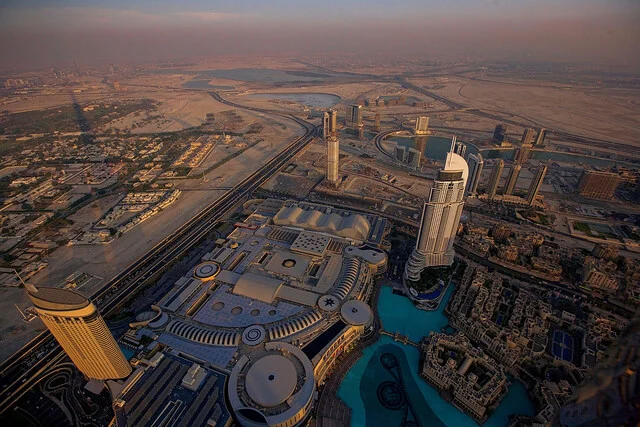
0 0 The soft golden sun and clear warm beaches of Dubai offer the most glorious sights that we can ever witness. Every year thousands of travelers flock in to this part of the world from across to globe only […]
0 0 The touch of regality that comes along with Mesmerizing China essentially extends over its cuisine as well. Being dainty enough, Chinese Cuisine are huge favorites with people all over the world as they have transcended over geographical boundaries. […]

0 0 The Australia Student Visa, officially the Subclass 500, lets you live in Australia for your full course at a recognised institution, with limited work rights built in. Covers everyone from a bachelor’s student in Sydney to a vocational […]

0 0 Cherry Blossoms: The best time to see cherry blossoms, or sakura, is from late March to mid-April. Budget-friendly Travel Season: Peak winters (January to February) and June are the most budget-friendly travel seasons. Festivals: During summer and early […]
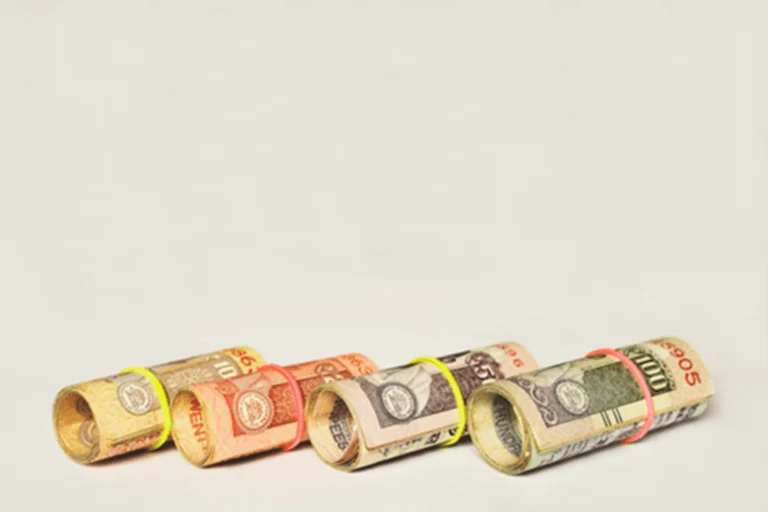
6 1 There isn’t one card that wins for everyone, and any article claiming otherwise is probably selling something. What makes a card the best forex card for you comes down to the markup, whether it holds the currencies you […]

2 1 The rupee moves against the dollar for reasons that repeat: a few real factors affecting exchange rates, money flowing in and out of India, what the RBI does with rates, and how confident investors feel that week. Add […]

10 0 Visa-Free Countries You Can Visit with a US Visa A valid US visa can get you into other countries without a separate visa application. A number of nations treat the US visa as proof enough on its own, […]
18 3 The dollar has never been cheap in rupee terms, not really. But it’s still wild to see how far the number has travelled since 1947, from under four rupees to close to a hundred. This walks through the […]