 Call Us
 18002099100





0 0 Planning your international Dubai Packages? Here are the must see places in Dubai. Must Do Things in Dubai 1. Ride through the sunset on an at the picturesque Dubai creek, and all for just one dirham. Close your eyes […]
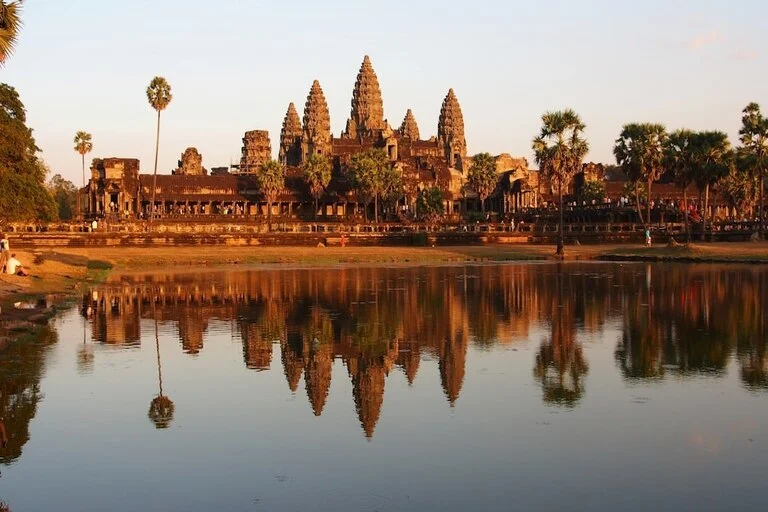
Table of contents
A Guide to Temples of Angkor Wat at a Glance
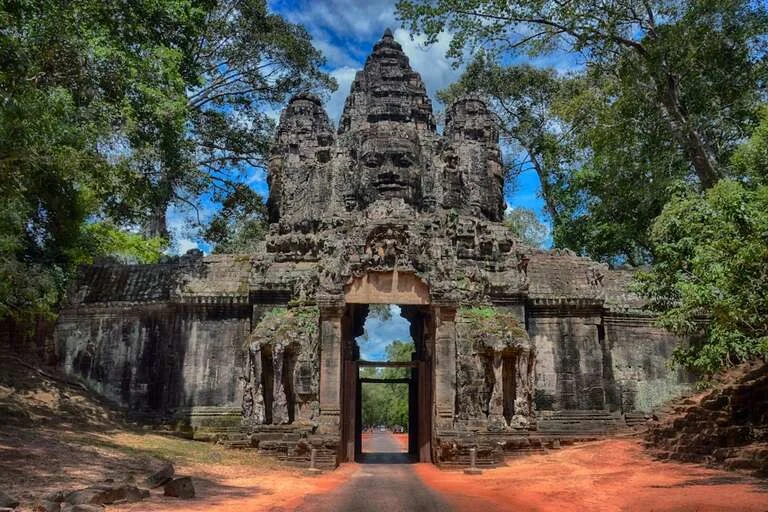
Angkor Wat Cambodia is one of the world’s most remarkable temple complexes. It is also the world’s most famous historical landmark. There are hundreds of ancient monuments in the Angkor archeological park, so you need quite some time to explore it.
- Best time to visit: November to February is when the weather is dry and cool, making exploring temples more comfortable.
- Must-visit temples: Angkor Wat, Bayon, Ta Prohm, Banteay Srei, and Preah Khan are among the highlights.
- What to pack: Comfortable walking shoes, lightweight clothing, sunscreen, sunglasses, a hat, a reusable water bottle, and rain protection.
- Angkor Wat ticket: You need an official Angkor Pass to enter the main Angkor Archaeological Park.
- How many days are enough: Plan at least three days if you want to explore the major temples without rushing.
What Is Angkor Wat?
Angkor Wat Cambodia is a massive temple complex in Siem Reap. Built during the Khmer Empire in the 12th century under King Suryavarman II, it is one of the country’s most important cultural landmarks.
People often confuse Angkor Wat with the entire archaeological area, but Angkor Wat is actually one temple within the much larger Angkor Archaeological Park. There are numerous temples and monuments built during different periods of the Khmer Empire in this park. You can spend several days exploring this park as it is very big.
So, if you are planning a trip to Angkor Wat, Cambodia, understanding the difference between Angkor Wat temple and the wider archaeological park will help you plan your itinerary better.
A Brief Look at Angkor Wat History
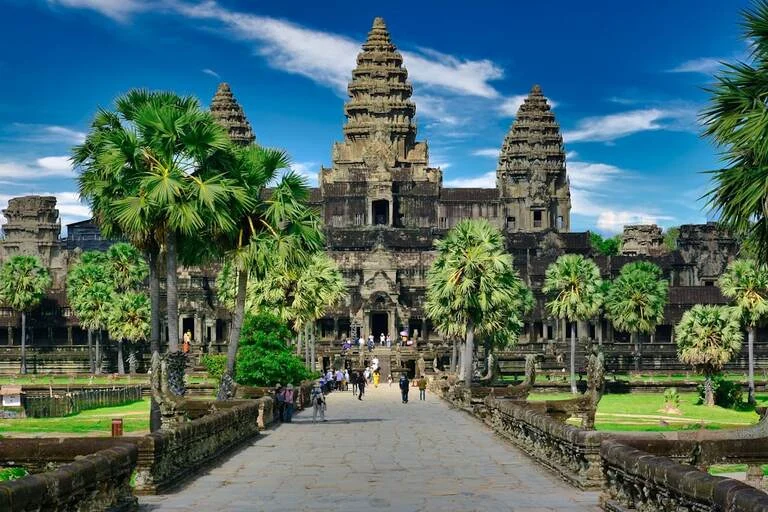
The Angkor Wat history is closely connected to the rise of the Khmer Empire, and this is how:
King Suryavarman II commissioned this west-facing temple in the early 12th century. Did you know that it was originally dedicated to Lord Vishnu?
But over time, the influence of Buddhism increased. Angkor eventually became one of the world’s great pre-modern cities. It has sophisticated reservoirs, canals, and other water-management systems.
Pro tip: Before visiting, spend some time learning about the Khmer Empire. This is because even with a basic understanding of the period, you will appreciate carvings and architecture more.
Angkor Wat Architecture: What Makes It Special?
The Angkor Wat architecture is what attracts visitors from around the world.
Here, you will see a carefully planned design that has concentric galleries, courtyards, towers, terraces, and moats. The five central towers of the temple are commonly interpreted as representing Mount Meru (the sacred cosmic mountain in Hindu and Buddhist traditions).
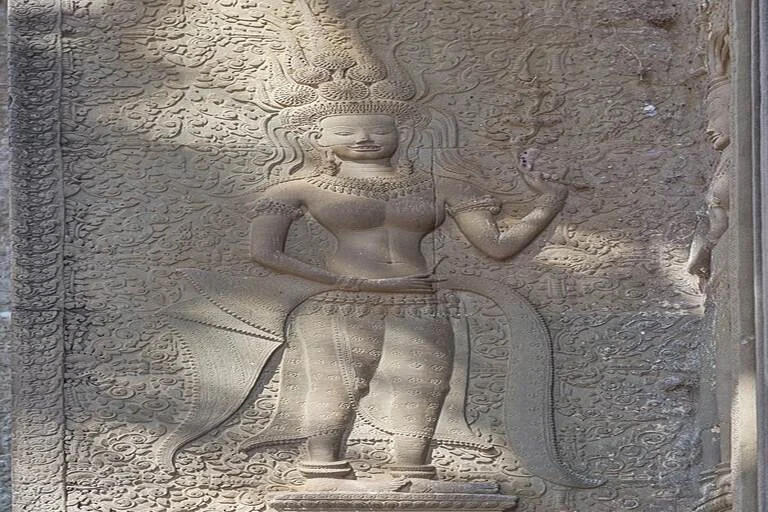
On the walls, you will find detailed religious stories, battles, royal processions, and scenes from Hindu mythology.
Then come the central towers. These are particularly striking when viewed from the outer galleries, as their distinctive lotus-bud shapes have become one of the defining visual symbols of Cambodia.
Key architectural features of Cambodia temple are:
Feature | What to look for |
| Central towers | Five towers symbolising Mount Meru |
Moat | Large water-filled structure surrounding the temple |
| Bas-reliefs | Detailed scenes from mythology and history |
Galleries | Long corridors with intricate carvings |
| Causeway | Main approach leading towards the temple |
Courtyards | Multiple enclosed spaces within the complex |
The Angkor Wat Temples You Should Not Miss
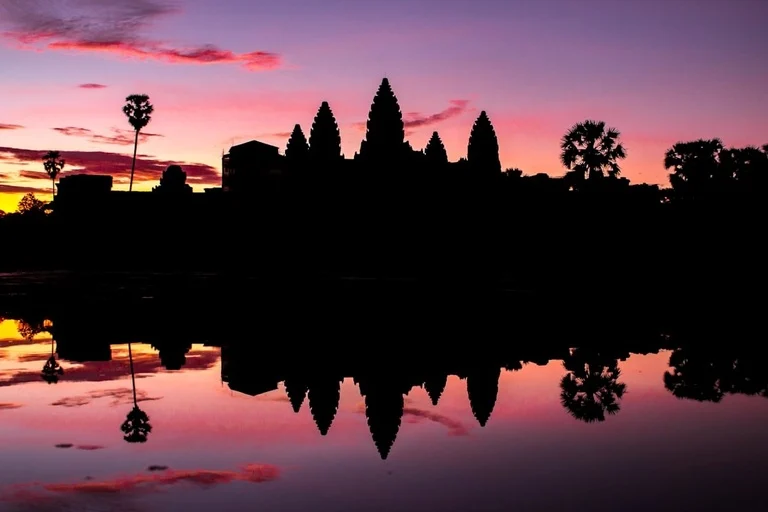
Angkor Wat is the star attraction of Angkor archeological park, but there are many other Angkor Wat temples that you should visit. These offer different architectural styles, histories, and experiences.
1. Angkor Wat
This entire 400-square-kilometre World Heritage site gets its name from Angkor Wat temple. Ideally, arriving before sunrise will give you one of the best experiences, as you will see the temple silhouette reflected in the front pools.
2. Bayon
This is located within the ancient city of Angkor Thom and is famous for its enormous carved stone faces.
The temple has a maze-like structure and may seem confusing. So, walk slowly through the different levels. While there, look for the bas-reliefs depicting everyday Khmer life, military campaigns, and historical scenes.
3. Ta Prohm
Ta Prohm has giant tree roots that have grown over parts of the structure. These create the dramatic appearance, making Ta Prohm internationally famous.
Fun fact: Do you know that this temple was featured in the movie Lara Croft: Tomb Raider?
Pro tip: Visit early in the morning if possible. Ta Prohm can become extremely crowded later in the day.
4. Banteay Srei
This temple is located farther from the main Angkor complex and is known for its intricate carvings and pinkish sandstone. This is a relatively small temple.
5. Preah Khan
Preah Khan is where you will see long corridors, courtyards, and partially restored structures. There is also vegetation growing around parts of the temple, creating an atmospheric setting.
Angkor Wat Ticket: What You Need to Know
You need an Angkor Wat ticket to enter the main archaeological park. The standard pass options are:
Pass | Validity | Cost | Inclusions |
1-day pass | 1 day | $37 | With a 1-day pass, you get a Small Circuit Tour. This includes: Angkor Wat, Phnom Bakheng, Bayon, Chau Say Tevoda, Ta Keo, Ta Prohm, Banteay Kdei, Prasat Kravan, Prohm Kel, Baksei Chamkrong, Bay Kaek, Top Khang Lech, Ta Nei, and Srah Srang. |
3-day pass | 10 days from the date of purchase, allowing 3 days of visits | $62 | With a 3-day pass, you get the Small Circuit Tour and the Grand Circuit Tour. This includes: Preah Khan, Neak Pean, Krol Ko, Ta Som, East Mebon, Pre Rup, Banteay Prei, Krol Romeas, North Baray, and Tonle Snguot. |
7-day pass | 1 month from the date of purchase, allowing 7 days of visits | $72 | With a 7-day pass, you get the Small Circuit Tour and the Grand Circuit Tour. This includes: Preah Khan, Neak Pean, Krol Ko, Ta Som, East Mebon, Pre Rup, Banteay Prei, Krol Romeas, North Baray, and Tonle Snguot. |
For Cambodia temple, you can also get a special pass that you can purchase, but for that you need to be a foreign resident who has a valid 2-year or longer Cambodian visa.
In case you lose your physical ticket, you can contact Angkor Enterprise’s customer support as soon as possible. Then you will need to show your proof of purchase (receipt or confirmation email). Then, the authorities will re-issue or verify your ticket.
What is the Best Time to Visit Angkor Wat?
As we know, Angkor Wat is located in Cambodia and has a tropical climate, with a dry season and a wetter period. So, follow the guide below for the weather when visiting Cambodia temple:
Season | Weather Conditions | Recommendation |
November-February | Cooler and relatively dry | Excellent for sightseeing. |
| March-May | Very hot | Suitable but tiring because of heat. |
June-August | Hot, humid, and rainy | Carry gear to protect yourself from rain. |
| September-October | Wet and humid | The crowd is smaller, so you can visit if you want that experience. The surroundings during this time are lush. |
Pro tip: Regardless of the season, begin your Angkor Wat tour early in the day as the combination of heat, humidity, and extensive walking can make afternoon sightseeing exhausting.
What to Pack for Angkor Wat?
Exploring all the temples in Angkor Wat Cambodia involves considerable walking, uneven surfaces, stairs, and exposure to the sun. So, it is very important to pack properly and practically.
Below is the essential packing list:
- Comfortable walking shoes
- Lightweight, breathable, and modest clothing
- Sunscreen
- Sunglasses
- Reusable water bottle
- Small backpack to carry essentials
- Portable power bank
- Compact umbrella or lightweight rain jacket
- Camera or smartphone to get good pictures
Pro tip: If you are a woman, carry a lightweight scarf for additional coverage when needed. Men should also avoid overly short clothing when visiting religious sites.
How to Explore Angkor Wat?
Since the archaeological park is big, the best approach is to divide it across multiple days. A sample itinerary is below.
Day 1: The Classic Angkor Route
Start early, ideally before sunrise at Angkor Wat. Spend the morning exploring the main temple before heading to Angkor Thom and the Bayon. Take a lunch break, and afterwards, visit Ta Prohm.
Day 2: Explore Beyond the Main Temples
Visit Banteay Srei and Preah Khan. Include other smaller temples depending on your interests and energy levels as well to cover more of the park.
Day 3: Take It Slowly
Maybe revisit your favourite temple, or explore lesser-known monuments or photograph Angkor Wat under different lighting conditions. You will love it!
How to Get Around in Angkor Archaeological Park?
The temples are spread across a large area, so walking between every site is not practical. You can do the following things instead:
- You can hire a tuk-tuk and driver for the day.
- Hire a car with air conditioning. This is ideal for families.
- You can do cycling, but consider the distances and weather before choosing this option.
Pro tip: Arrange your transport in advance and agree on the itinerary and price before starting your day.
Important Things to Remember About Your Angkor Wat Trip
Angkor is an active religious and cultural site, not simply an archaeological attraction. So, keep the following tips in mind:
- Dress respectfully.
- Ensure you follow instructions around restricted areas.
- Do not climb on fragile structures, touch carvings unnecessarily, or remove stones or artefacts. This could get you in trouble.
- Carry your passport or required identification.
- Keep your belongings secure.
- Lastly, don’t rush. Take your time in exploring the beauty of Angkor.
FAQ’s
1. What is Angkor Wat?
Angkor Wat is the world’s largest religious monument and a UNESCO World Heritage Site in Cambodia.
2. Who built Angkor Wat and when?
King Suryavarman II built Angkor Wat in the early 12th century.
3.What is Angkor Wat famous for?
Angkor Wat is famous for its Khmer architecture, intricate carvings, and iconic temple towers.
4. What are the Angkor Wat ticket prices?
Angkor Wat tickets cost are around ₹3,531 for 1 day, ₹5,917 for 3 days, and ₹6,872 for 7 days.
5. What is the best time to visit Angkor Wat?
November to March is the best time to visit Angkor Wat.