 Call Us
 18002099100



Chasing the Lights Across the World’s Best Northern Lights Countries
By thomascook seo


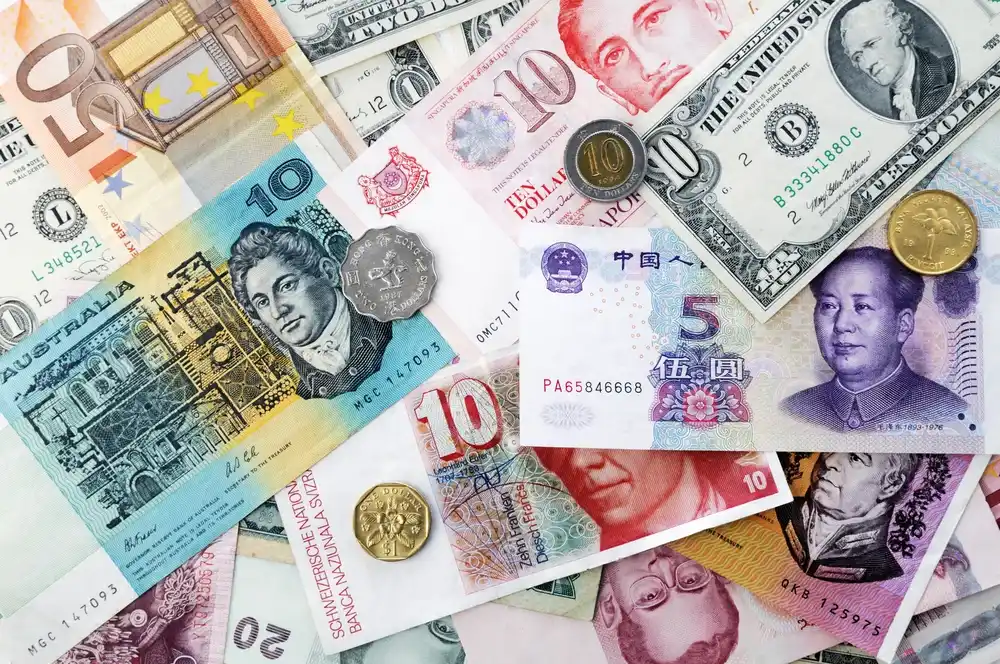
Learn how currency exchange works and the impact of fixed exchange rates vs flexible exchange rates on the economy of the country.
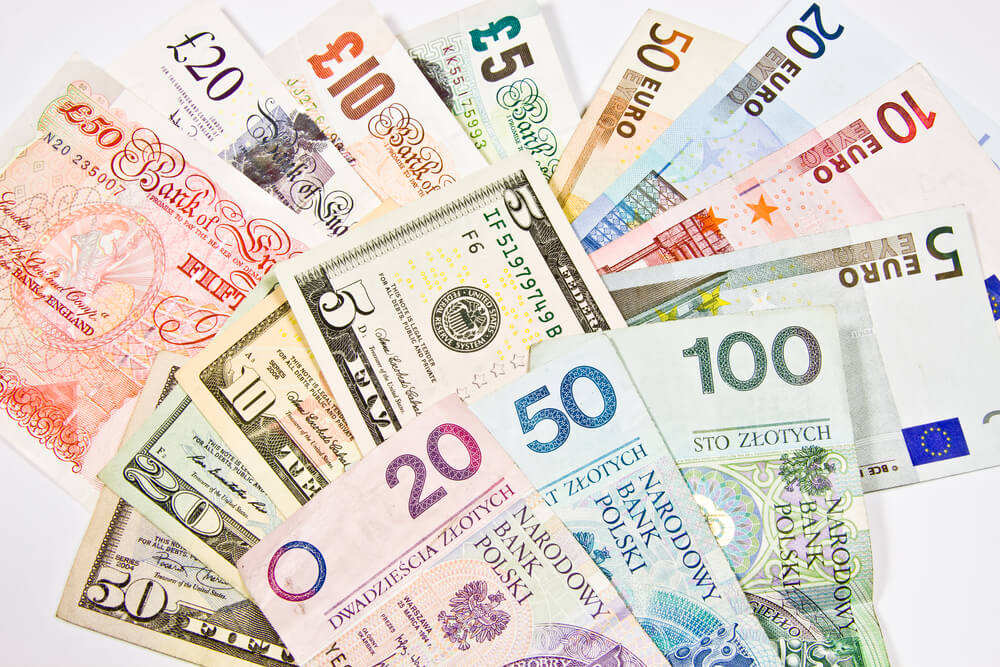
The business which has an authorized license to exchange one currency with another for its customers is known as Currency Exchange. Currency exchange of physical money (Paper notes & coins) is usually done over the teller’s counter of such business offices, we can found currency exchange offices in different forms and locations. It may be a small business operating out of a single office, or it may be a large business chain operating at different cities and airports, or it may be private, nationalize, or international banks.
The currency exchange can be both physical and online, which allows you to exchange one country’s currency for another by carrying out buy and sell transactions. Let us see the below examples of how currency exchange works, if you want to buy US Dollars against Indian Rupees, you need to bring Indian Rupees (Cash, Cheque, or Bank Card) to the currency exchange store to buy US Dollars. The amount you would be able to purchase would depend on the exchange rate. The market determines the currency value, which is known as an exchange rate, it tells you how much your currency is worth in foreign currency.
There are broadly two types of exchange rates: Floating and Fixed. Floating/Flexible exchange rate changes constantly, while fixed exchange rates rarely change.
Currency exchange rates are mostly determined by the Forex (Foreign Exchange) market. Such exchange rates are known as floating/flexible exchange rates. It fluctuates on a moment-by-moment basis. Currencies like Canadian dollars, European Euros, British pounds, and Japanese Yen uses floating exchange rates. The government and central bank of these countries do not actively intervene to keep the exchange rate fixed. Their policies can influence the rates over the longer term but cannot regulate the exchange rates.
Other currencies, like the Gulf –Saudi Arabian riyal, UAE dirham, Kuwaiti dinar, rarely change. That is because those countries use a fixed exchange rate that only changes when the government does so. These fixed currency rates are usually pegged to US Dollars. Their central banks have enough reserves in the form of foreign currency to control their currency worth. To keep the fixed exchange rate, the central bank holds US dollars. If the value of the local currency falls, the bank sells its US dollars for local currency. That reduces the supply in the marketplace, appreciating its currency value.
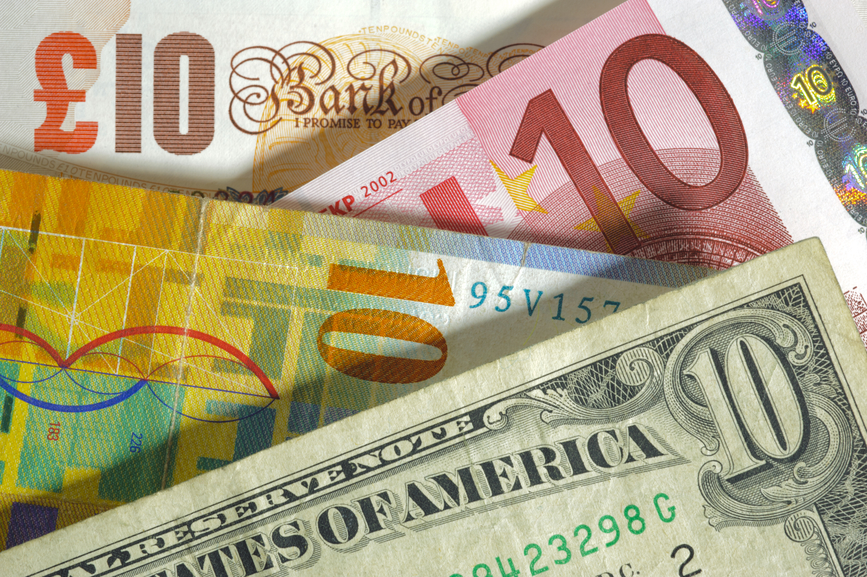
A fixed exchange rate is set firmly by the monetary authority with respect to a foreign currency on the other hand, a floating exchange rate is determined in foreign exchange markets depending on demand and supply, and it generally fluctuates constantly. Extensively when the government decides the exchange rate, it is called a fixed exchange rate, whereas when market influences determine the exchange rate, it is called flexible or floating exchange rates.
Both Fixed and Floating exchange rates have their own merits as mention below:
| Fixed Exchange Rates | Floating or Flexible Exchange Rates |
| It ensures stability in exchange rate which encourages foreign trade. | Deficit or surplus in Balance of Payment is automatically corrected |
| A fixed exchange rate ensures that major economic disturbances do not occur. | There is no need for the government to hold any foreign exchange reserve |
| It prevents capital outflow & speculation in foreign exchange market. | It helps in optimum resource allocation |
| Fixed exchange rates are more conducive to expansion of world trade because it prevents risk and uncertainty in transactions | It frees the government from the problem of balance of payment. |
When it comes to choosing between fixed and flexible exchange rate, understanding their nuances can significantly impact your financial decisions, especially in forex. Let’s break the types of exchange rate down so you can see which might work better for you.
Stability: If predictability is your thing, then a fixed exchange rate offers that. This means that the exchange rate is pegged to another currency, and therefore, you will have stable price levels when trading with other countries.
No Flexibility: For example, if the currency pegged was fluctuating you could get locked into a rate of depreciation. This is not very flexible in responding to other market changes.
Inflation Control: Countries with fixed rates tend to have lower inflation rates, and therefore, you can even budget and plan your expenses.
Market-Driven: A floating exchange rate is market-driven. This can be useful if you are looking to take advantage of favourable currency movement.
Volatility: This category also tends to be volatile, and you are bound to face risks related to changes in the market. So, it’s advisable to keep monitoring.
Scope for Gains: But keep in mind, that this type can be unpredictable. You might face risks from sudden changes in the market, making it crucial to stay informed.
In the end, it all boils down to your risk tolerance and financial goals. If you have a preference for having a fixed exchange rate over a floating one, then understand them because this will help you in making informed forex decisions between fixed and floating exchange rate.
There are many factors that influence exchange rate but the below three factors are most important which has direct impact on exchange rates namely Interest rates, Demand and Supply & Country’s economic growth.
The interest rate paid by a country’s central bank has a big impact. A higher interest rate offers lenders in an economy a higher return relative to other countries. Therefore, it attracts foreign capital and causes the exchange rate to rise. The opposite relationship exists for decreasing interest rates, i.e., lower interest rates tend to decrease exchange rates.
The money supply is created by the country’s central bank, if the government prints too much currency, then there is too much currency chasing too few goods. Currency holders will bid up the prices of goods and services, which will create inflation. So some of the investors will invest overseas where there is nil or zero inflation, but they will find no demand for their currency since there so much of it. That is why inflation can push the value of currency down. The economics of supply and demand speak that when demand is high, prices rise and the currency appreciates in value. On the other hand, if imports are more than a country’s exports, there is relatively less demand for its currency, so prices should decline. In such cases currency, depreciates or loses value.
The currency exchange rate is determined independently to the economic growth rate. The exchange rate impact the economic growth of a country. And the economic growth rate can influence the exchange rate. Foreign investors inevitable seek out stable countries with strong economic performance. A country’s economic growth and financial stability impacts its currency exchange rates. If the country has strong, growing and stable economy will attract investors to buy its goods and services. The investors also take a call depending on the financial stability of a country. If the financial stability looks bad, they will refrain from investing. A country with positive ascribes will draw investment funds away from other countries perceived to have more political and economic risk. Political turmoil, for e.g., can cause the loss of confidence in a currency and a movement of capital to the currencies of more stable countries.
Exchange rate affects in many ways when it comes to personal finances. There are lots of examples to prove the same.
In this era of globalization, goods of other countries are commonly used, or sometimes even more commonly, than those produced domestically. Exchange rates have a significant impact on the prices you pay for imported goods. A weaker domestic currency means that you need to pay more for foreign goods and a stronger domestic currency will reduce the prices of foreign goods.
Another example is, if you have planned to travel abroad to another country that uses a different currency, you must also plan for exchange rate values. When the Indian Rupees are strong, you can buy more foreign exchange and enjoy a more affordable trip. If the Indian Rupees are weak, your trip will cost more because you cannot buy much foreign currency. Since the exchange rate fluctuates and varies, you might find the cost of your trip has changed since you started planning it. This is how the exchange rate affects your finances. In short, when the exchange rate changes, the prices of imported goods will change in value, including domestic products that rely on imported parts and raw materials. The exchange rates also impact investment performance, influence the job market and real estate sector too, all these will directly or indirectly affect a common man.



0 0 There is a particular kind of silence that falls over you the first time the sky turns green above your head. It is not something a screen can prepare you for. That unforgettable moment is what makes Northern […]

0 0 If there is one country that can consistently surprise you, enchant you and make you feel blessed about life, it has to be Japan. From retaining deep-rooted cultural beliefs to staying ahead in technology and being a pioneer […]
0 0 Every year, Japan’s gardens, trees and parks turn from a glorious green of jade to the soft pink of a blushing bride. That’s right, the cherry blossoms are ready to bloom, bringing with it the promise of a […]
0 0 December marks the beginning of the peak travel season in India. From the North of the country to the South, every region has pleasant weather and clear skies, perfect for sightseeing. After the hot summer and muggy monsoon, […]
0 0 November is a month of vibrant transitions in India, offering an array of travel experiences from the cool Himalayan foothills to the warm beaches of the south. If you’re planning your travel itinerary for November 2026, India presents […]

0 0 The Cost of Living in Singapore At A Glance Average monthly budget: A single person may need S$1505 every month excluding accommodation. The rest of the budget depends on lifestyle and location. Biggest expense: Accommodation is the largest […]
0 0 Germany universities for international students have been one of the most preferred destinations for many years. Public universities charge little to no tuition fees, offering excellent opportunities for globally valued research and English-taught programs across engineering, business, and […]
0 0 What Do RBI Forex Guidelines Say? FEMA oversees the legal mechanism governing foreign exchange transactions in India. All Indian residents should deal in forex only through RBI-authorised persons and for permitted purposes. Under the Liberalised Remittance Scheme (LRS), […]
0 0 No two countries charge the same price for everyday life. A coffee that costs $2 in Hanoi can cost $7 in Zurich, and a one-bedroom apartment renting for $300 in Cairo might command $3,000 in Manhattan. These gaps […]
0 0 Delhi to Haridwar At A Glance Haridwar is an integral religious destination for Hindus. In 2025, 3.4 crore people visited Haridwar, and that number is only expected to be higher at the end of 2026. If you are […]

0 0 Delhi to Kedarnath cannot be called a road trip, but it is a journey where the destination is sacred, so every part of the journey becomes a kind of storytelling. Most of the people ask, “Delhi to Kedarnath […]

0 0 These two destinations have completely different personalities, but the journey between the two destinations is mesmerising. Imagine yourself waking up to the blue-painted buildings of Jodhpur, covered with mighty forts and surrounded by beautiful desert vibes. And then […]
0 0 Kullu to Manali At a Glance Kullu and Manali sit in the same valley, so this isn’t really a “journey” in the way Delhi to Manali is; it’s more of a short hop most travellers do on their […]
0 0 Mumbai to Goa At a Glance Goa is one of the most happening places in India. It offers nature, partying, waterfalls, trails, water activities, and whatnot. Goa sees millions of tourists every year from all across the globe, […]

0 0 Varanasi to Haridwar at a Glance Here are the numbers, before anything else. People do this route mostly for one reason: both cities run a daily Ganga aarti, and pilgrims like pairing them into one circuit. Road: roughly […]
0 0 The Hon Thom cable car in Phu Quoc is renowned for its Guinness World Record as the longest sea-crossing cable car. Offering a great view of the Gulf of Thailand, this cable car ride stretches across 7.9 km. […]
0 0 Ask most people to name the world’s longest bridge, and you’re likely to get a confident answer like the Golden Gate Bridge or the Brooklyn Bridge or some other famous landmark plastered across postcards and movies. But the […]
0 0 Angel Falls in Venezuela is the highest waterfall in the world. It is 979 metres high. The falls are in a large forest area called Canaima National Park. Getting there takes time, but the views are amazing. You […]
0 0 Largest Mall In The World Iran Mall in Tehran, Iran, is the world’s biggest mall by total reported area. The mall is approximately 1.95 million square metres, or 21 million square feet. Note: The discussion of the biggest […]
0 0 The world’s highest railway bridges are mostly in China and India. India’s Chenab Bridge is the tallest railway arch bridge at 359 metres, which is even higher than the Eiffel Tower. China’s Najiehe Bridge, at 310 metres, still […]