 Call Us
 18002099100


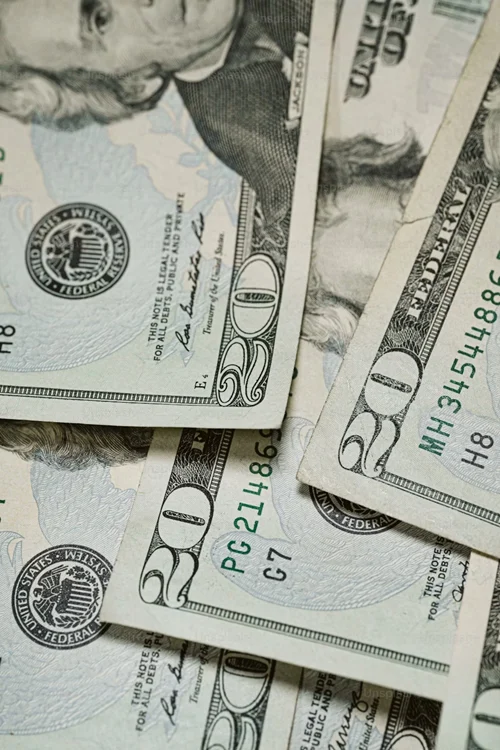
Table of contents
Why dollar price is increasing because of changes in interest rates, inflation expectations, economic growth, capital flows, and demand for the US dollar. Overall, this change is closely linked to the difference between US interest rates and those offered by other major economies.
Let us understand it better:
- The dollar is the currency in which most countries globally trade, and it can strengthen when investors expect higher returns from US assets such as Treasury securities and equities.
- Since the dollar is a global currency and remains a global reserve, it also benefits during periods of geopolitical or financial uncertainty.
- The IMF describes the dollar as the world’s superior reserve currency.
- To understand why dollar is rising, you also need to understand its relation to other currencies. A stronger dollar does not necessarily mean that the US economy has suddenly become stronger in absolute terms. It just means that the USD has gotten stronger in relation to that economy.
- For Indian consumers, a stronger dollar leads to more expensive imports, overseas education, international travel, and foreign-currency payments. Since the value of the rupee weakens, it becomes more expensive.
What Does It Mean When the Dollar Is Rising?
All currencies are always traded relative to another currency. So, when people say that the dollar is rising, it means that the dollar is rising against a particular currency. It could be the Indian rupee, euro, Japanese yen, or any other currency. This movement reflects both an increase in demand for the dollar and weakness in the currency being compared with it.
For example, if the USD/INR exchange rate moves from ₹83 to ₹85 per US dollar, one dollar costs more rupees than before. So, from an Indian consumer’s perspective, this can make dollar-denominated expenses more expensive.
Keep in mind: The dollar’s rise against the rupee does not mean that it is rising against every major currency at the same time.
Why Is the Dollar Rising?
In a true sense, there is no single answer to why the dollar is rising. This is because currency values respond to several factors together.
The major factors affecting the mindset to buy US Dollar include:
- US interest rates and expectations
- Inflation and monetary policy
- Relative economic growth
- Demand for US financial assets
- Global risk and safe-haven demand
- International trade and capital flows
- Expectations surrounding the Federal Reserve
- Relative weakness in other currencies
Understanding these factors makes it easier to answer why is USD rising at any particular point.
What Factors Impact the Rise of the USD?
Let us understand the major factors that are contributing to the rise in the dollar’s value:
1. Higher US Interest Rates
One of the biggest reasons why is dollar rate increasing is the difference between US interest rates and those offered by other major economies.
Since US interest rates are high, investors see this as a potentially beneficial market and invest more money. This makes a rich market richer.
2. Federal Reserve Monetary Policy
The decisions that the Federal Reserve takes related to monetary policy and interest rates have a major influence on the USD.
For instance, when the Fed raises rates or signals that rates may remain elevated, investors hope for better returns and amp up investment. This is one of the major reasons why is USD rising in global currency markets.
3. Strong US Economic Growth
When investors believe the US economy will perform better than other major economies, they may increase investments in American companies, government securities, and other assets.
But economic growth is only one part of the picture. Investors also consider inflation, interest rates, and economic prospects in other countries they can invest in.
4. Inflation and Interest-Rate Expectations
If inflation in the US remains high, markets may expect the Federal Reserve to maintain higher interest rates for longer. This makes dollar-denominated assets relatively attractive and contributes to why the price of dollar is increasing.
5. Capital Inflows Into the US
When foreign investors purchase investments such as US equities, Treasury securities, corporate bonds, and other assets, the capital inflow in the US economy naturally increases. Higher capital inflows contribute to why dollar price is increasing.
The opposite can happen when investors withdraw money from US markets and move capital elsewhere. This will lower the demand for US assets and reduce demand for USD.
6. Global Economic and Geopolitical Uncertainty
The USD plays an important role in global finance as it is widely used for international transactions and reserves. During periods of uncertainty, some investors may increase their exposure to dollar-denominated assets, ultimately strengthening it.
However, the dollar does not automatically rise during every crisis. The market response depends on the nature of the event and how it is impacting the US and other economies.
7. Weakness in Other Currencies
Note that the currency’s value is always relative to another currency. This means the USD can rise because of stronger dollar demand, weakness in another currency, or both.
For instance, if the euro or Japanese yen gets weak, the USD may appreciate against those currencies even without a major improvement in US economic conditions.
8. Global Demand for the Dollar
The demand for USD is beyond domestic requirements as it plays an important role in international trade and finance, as it is widely used for cross-border transactions. So, the USD remains the dominant currency in global official reserves.
Any change in international demand influences the rate of the dollar. You can observe these trends when you buy forex.
How Do These Factors Work Together?
Why the dollar is rising can have different answers at different times. Interest rates may dominate one period, while global uncertainty, capital flows, or weakness in another currency may become more important later.
So, for anyone trying to understand why is dollar price increasing, the most useful approach is to look at several indicators together rather than relying on a single day’s exchange-rate movement.
Let us understand how several factors impact the strength of USD:
| Factor | Potential impact on USD |
Higher US interest rates | Can increase demand for dollar assets |
| Federal Reserve policy | Influences interest-rate expectations |
Strong US growth | Can attract foreign investment |
| Persistent inflation | Can support expectations of higher rates |
Capital inflows | Can increase demand for USD |
| Global uncertainty | Can increase demand for dollar assets |
Weakness in other currencies | Can make USD stronger comparatively |
| Treasury yields | Can influence demand for US assets |
Global dollar demand | Supports the dollar’s international role |
| Oil prices | Can influence trade and currency flows |
Market expectations | Can move USD ahead of actual events |
Does a Strong Dollar Mean the US Economy Is Doing Better?
Honestly, not necessarily. To determine whether the US economy is also doing better or not is to be determined by understanding the factors impacting the USD.
All currency markets are forward-looking. This means that the currency can strengthen because investors expect future economic conditions in that particular country to improve. Keeping this in mind, investors will invest more as interest rates are expected to remain attractive.
On another note, since the dollar is a globally transacted currency, it also strengthens when markets are concerned about global economic or political conditions. For instance, during a geopolitical war.
So, why is dollar value increasing is not necessarily the same question as whether the US economy is becoming stronger in every respect.
Why Does a Rising Dollar Matter to India?
As an Indian consumer, the most impactful way of seeing the dollar’s value increase is seeing a change in the USD/INR exchange rate.
If the dollar becomes more expensive compared to the rupee, imported goods and services priced in dollars become expensive. Not just products; the impact is also seen on:
- International travel (You can also use prepaid travel card)
- Overseas education
- Foreign subscriptions
- International investments
- Business payments
- Foreign-currency loans or obligations
For anyone planning any of the above transactions, understanding why the dollar price is increasing matters because exchanging Indian rupees for US dollars becomes more expensive if the rupee weakens against the dollar.
What Could Cause the Dollar to Fall?
It is not certain that the dollar will keep increasing in value and getting stronger. Some factors can cause the dollar to fall:
- US interest rates fall relative to other economies.
- US economic growth slows significantly.
- Investors lose confidence in the US and move capital into overseas markets.
- Demand for safe investment declines.
- Other major currencies like the Euro strengthen.
- Expectations about US monetary policy change.
Is the Dollar Index the Same as the Dollar Rate?
No, the two are different.
The Dollar Index simply measures the dollar against EUR, JPY, CAD, GBP, SEK, and CHF.
And a “dollar rate” is simply the exchange rate between the dollar and a particular currency, such as USD/INR.
FAQs
Some of the frequently asked questions about increases in USD value are:
Why is the dollar rising?
The dollar can rise when the US offers returns that are more attractive than other investments.
Why is the dollar rate increasing against the Indian rupee?
USD/INR can increase when demand for dollars rises relative to rupees. Several factors can include US interest rates, capital flows, crude oil prices, India’s trade position, inflation, and expectations about monetary policy.
Why is the dollar value increasing when the US economy is not growing rapidly?
Currency values depend on future expectations, not on just one country’s growth alone. The dollar can strengthen because other economies are weakening, US assets remain attractive, or investors seek dollar-denominated safe-haven assets.
Why is the Dollar Index rising?
The Dollar Index rises when the dollar strengthens against a six-component currency basket, including the euro, yen, pound, Canadian dollar, Swedish krona, and Swiss franc.
Does a rising dollar mean higher prices in India?
Yes, it does mean higher prices in India, but only for goods that are imported from the US.
Can the dollar fall after rising for a long period?
Yes, it can, as currency movements are dynamic. If there are changes in US interest-rate expectations, economic growth, inflation, capital flows, global risk sentiment, or the performance of other currencies, the dollar can weaken.
Table of contents
Our Forex Offerings




Recommended Articles for you
Why Is the Dollar Rising? Understanding the Factors Behind USD Strength
0 0 Why dollar price is increasing because of changes in interest rates, inflation expectations, economic growth, capital flows, and demand for the US dollar. Overall, this change is closely linked to the difference between US interest rates and those […]
Why Study in Australia? Here’s What Indian Students Should Know
0 0 Australia is a popular destination for students who want to study internationally. The opportunity to study in Australia gives access to internationally recognised qualifications, modern campuses and an environment with many cultures, helping you grow. What to keep […]

Chasing the Lights Across the World’s Best Northern Lights Countries
0 0 There is a particular kind of silence that falls over you the first time the sky turns green above your head. It is not something a screen can prepare you for. That unforgettable moment is what makes Northern […]

Cherry Blossom Festival in Japan – The Ultimate Spring Escape
0 0 If there is one country that can consistently surprise you, enchant you and make you feel blessed about life, it has to be Japan. From retaining deep-rooted cultural beliefs to staying ahead in technology and being a pioneer […]
Sakura Cherry Blossom – Witness Japan’s Pink Spring
0 0 Every year, Japan’s gardens, trees and parks turn from a glorious green of jade to the soft pink of a blushing bride. That’s right, the cherry blossoms are ready to bloom, bringing with it the promise of a […]
Places to Visit in India in December
0 0 December marks the beginning of the peak travel season in India. From the North of the country to the South, every region has pleasant weather and clear skies, perfect for sightseeing. After the hot summer and muggy monsoon, […]
12 Best Places To Visit In November In India In 2026
0 0 November is a month of vibrant transitions in India, offering an array of travel experiences from the cool Himalayan foothills to the warm beaches of the south. If you’re planning your travel itinerary for November 2026, India presents […]

What is the average cost of living in Singapore in 2026?
0 0 The Cost of Living in Singapore At A Glance Average monthly budget: A single person may need S$1505 every month excluding accommodation. The rest of the budget depends on lifestyle and location. Biggest expense: Accommodation is the largest […]
Top Universities in Germany for International Students
0 0 Germany universities for international students have been one of the most preferred destinations for many years. Public universities charge little to no tuition fees, offering excellent opportunities for globally valued research and English-taught programs across engineering, business, and […]
RBI Forex Guidelines for Foreign Exchange Transactions in India
0 0 What Do RBI Forex Guidelines Say? FEMA oversees the legal mechanism governing foreign exchange transactions in India. All Indian residents should deal in forex only through RBI-authorised persons and for permitted purposes. Under the Liberalised Remittance Scheme (LRS), […]
Cost of Living Index by Country: Compare Living Expenses Around the World (2026 Guide)
0 0 No two countries charge the same price for everyday life. A coffee that costs $2 in Hanoi can cost $7 in Zurich, and a one-bedroom apartment renting for $300 in Cairo might command $3,000 in Manhattan. These gaps […]
Delhi To Haridwar distance: Best Route, Train Timings & Travel Guide
0 0 Delhi to Haridwar At A Glance Haridwar is an integral religious destination for Hindus. In 2025, 3.4 crore people visited Haridwar, and that number is only expected to be higher at the end of 2026. If you are […]

Delhi to Kedarnath distance: Best Route, Train Timings & Travel Guide
0 0 Delhi to Kedarnath cannot be called a road trip, but it is a journey where the destination is sacred, so every part of the journey becomes a kind of storytelling. Most of the people ask, “Delhi to Kedarnath […]

Jodhpur to Udaipur journey is an ultimate Rajasthan travel journey.
0 0 These two destinations have completely different personalities, but the journey between the two destinations is mesmerising. Imagine yourself waking up to the blue-painted buildings of Jodhpur, covered with mighty forts and surrounded by beautiful desert vibes. And then […]
Kullu to Manali distance: Best Route, Train Timings & Road Trip Guide
0 0 Kullu to Manali At a Glance Kullu and Manali sit in the same valley, so this isn’t really a “journey” in the way Delhi to Manali is; it’s more of a short hop most travellers do on their […]
Everything You Need to Know About Mumbai to Goa Distance
0 0 Mumbai to Goa At a Glance Goa is one of the most happening places in India. It offers nature, partying, waterfalls, trails, water activities, and whatnot. Goa sees millions of tourists every year from all across the globe, […]

Varanasi to Haridwar distance: Best Route, Train Timings & Travel Guide
0 0 Varanasi to Haridwar at a Glance Here are the numbers, before anything else. People do this route mostly for one reason: both cities run a daily Ganga aarti, and pilgrims like pairing them into one circuit. Road: roughly […]
Ride the World’s Longest Cable Car to Hon Thom Island: Your Complete Phu Quoc Travel Guide
0 0 The Hon Thom cable car in Phu Quoc is renowned for its Guinness World Record as the longest sea-crossing cable car. Offering a great view of the Gulf of Thailand, this cable car ride stretches across 7.9 km. […]
Longest Bridge in the World: Where Record-Breaking Engineering Meets Stunning Landscapes
0 0 Ask most people to name the world’s longest bridge, and you’re likely to get a confident answer like the Golden Gate Bridge or the Brooklyn Bridge or some other famous landmark plastered across postcards and movies. But the […]
World’s Largest Waterfall: Experience the Majestic Beauty of Angel Falls Like Never Before
0 0 Angel Falls in Venezuela is the highest waterfall in the world. It is 979 metres high. The falls are in a large forest area called Canaima National Park. Getting there takes time, but the views are amazing. You […]