 Call Us
 18002099100



0 0 There is a particular kind of silence that falls over you the first time the sky turns green above your head. It is not something a screen can prepare you for. That unforgettable moment is what makes Northern […]
Table of contents
There are landscapes you visit and landscapes that you will never forget. The Alps mountains are unquestionably in the second group. This stunning region, which stretches across Europe like a natural spine, is more than just a travel destination; it’s an experience that transforms your perception of nature, adventure, and even quiet.
The Alps mountain range, which spans nations including France, Switzerland, Italy, Austria, Germany, and Slovenia, is a masterwork of geological drama. From the precision and luxury of Swiss alpine towns to the unadulterated, cinematic splendour of the Italian Dolomites, each nation has its own unique individuality.
However, the character of the Alps mountains is what really draws tourists there more than their height. Not only do you “see” peaks here, but you also stroll through narratives etched in time, rock, and ice. Imagine watching clouds whirl beneath you as if the sky had folded in on itself, or standing in a peaceful alpine meadow with cowbells echoing in the distance.
Contrasts, adrenaline and serenity, toughness and grace, loneliness and lively culture, are what create the charm. And as you enter the Alps mountain range, regular travel just doesn’t feel the same.
Most Famous Mountains in the Alps to Visit
The Alps mountains are more than just a group of peaks; each mountain has a unique personality and is a living, breathing landscape. The diversity here is unparalleled, ranging from striking pyramid-shaped giants to angular limestone formations that shine at dusk. The fact that each of the mountains in the Alps provides a unique emotional and visual experience – some are strong, some are serene, and some are almost surreal – is what really sets them apart.
The most famous peaks listed here capture the spirit of the Alps and should be on your list of places to visit in the future.
Mont Blanc: The Crown Jewel of the Alps
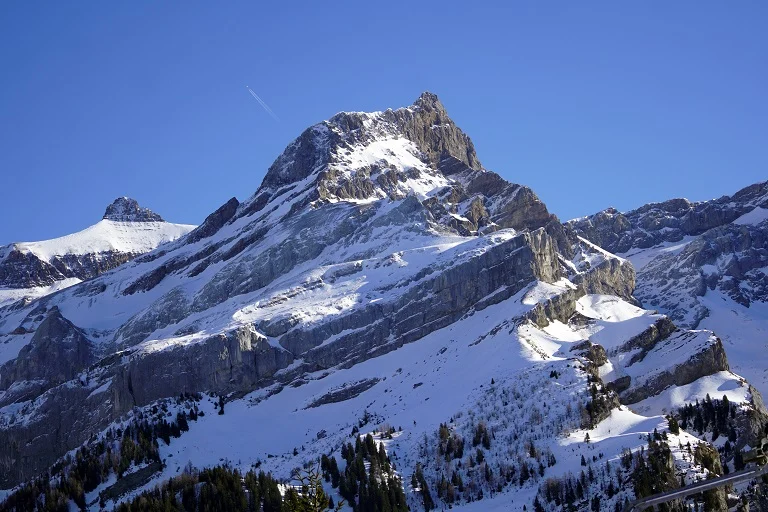
The Alps highest mountain, Mont Blanc, is situated between France and Italy. Beyond the moniker, however, Mont Blanc provides one of the most engaging mountain experiences.
Travellers can take a cable car up to amazing vantage spots where glaciers spread endlessly below, rather than merely observing them from a distance.
What makes it unforgettable?
- The “Step into the Void” skywalk over a sheer drop
- Close-up glacier formations that feel almost otherworldly
- A golden-pink glow during sunset that transforms the entire peak
Among all mountains in the Alps, Mont Blanc delivers scale, drama, and accessibility like no other.
Matterhorn: The Icon of Symmetry
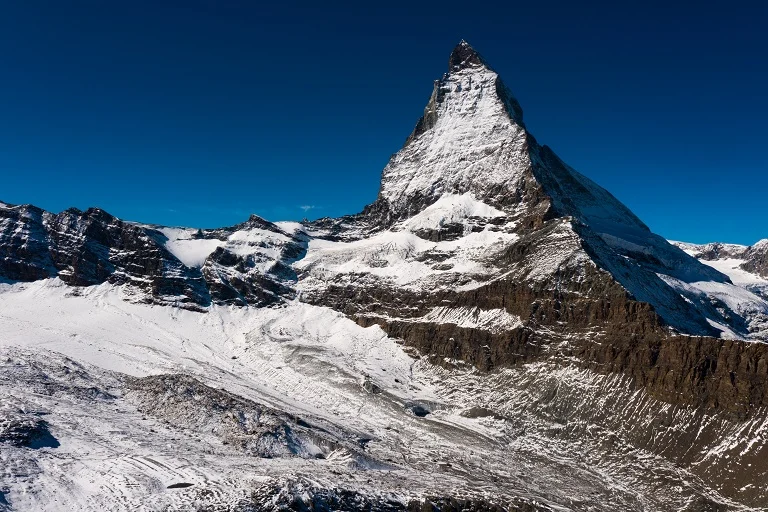
The nearly flawless pyramid shape of the Matterhorn in Switzerland makes it readily identifiable. Among the Alps mountains, it may not be the tallest, but it is undoubtedly the most spectacular.
The Matterhorn varies considerably throughout the day, something that most travellers are unaware of. Its appearance is altered by light and shadow, giving it the illusion of several mountains in one.
Unique highlights:
- Mirror reflections at Riffelsee lake during sunrise
- A car-free alpine town (Zermatt) that enhances the experience
- One of the most photographed peaks in the world
This is not just a mountain – it’s a visual masterpiece.
Jungfrau: Where Nature Meets Engineering?
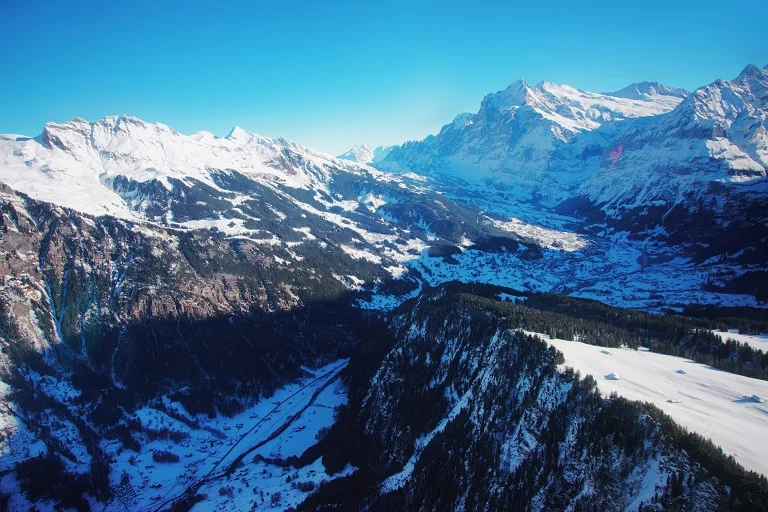
Jungfrau presents a unique blend of human ingenuity and scenic beauty. Travellers who may not be climbers can access the alpine environment by one of Europe’s tallest trains.
Jungfrau is more about experience than endurance, unlike many other Alpine mountains.
What sets it apart?
- Ice tunnels are carved deep inside glaciers
- Panoramic viewing decks at extreme altitudes
- Snow experiences even in summer
It’s one of the rare locations where you may experience the full force of the Alps while standing at a high altitude without engaging in strenuous hiking.
Eiger: The Mountain of Legends
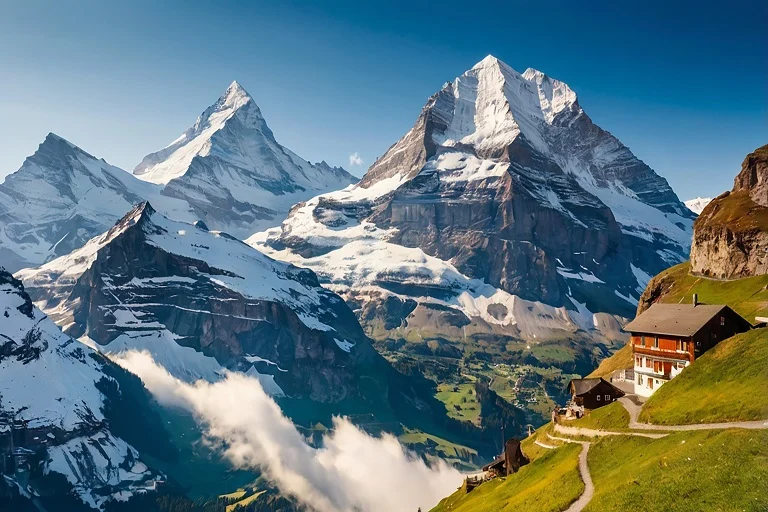
Often regarded as one of the world’s most difficult climbs, the Eiger is well-known for its North Face. Situated in Switzerland, its notoriety extends well beyond its height.
Eiger is renowned as the most intense and unpredictable summit in the Alps.
What makes it unique?
- The North Face, visible from nearby trains
- Sudden weather shifts that test even experts
- A deep history of mountaineering triumphs and tragedies
This is where the Alps reveal their raw and untamed side.
Dolomites: Nature’s Artistic Masterpiece
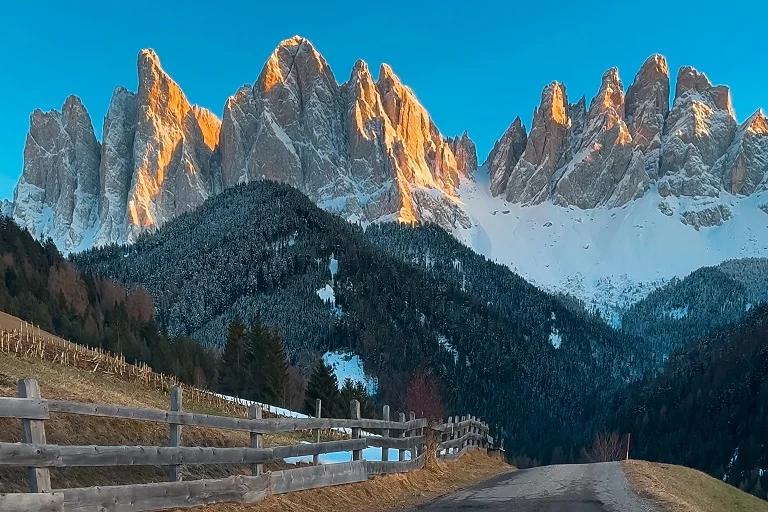
There is nothing like the Dolomites in Italy in the Alps. There are sharp, vertical rock formations that appear to have been hand-sculpted in place of smooth peaks.
Their interaction with light is what really distinguishes them. Enrosadira is the name for the phenomenon where the rocks glow pink at sunset.
Why do they stand out?
- Unique limestone formations found nowhere else
- Scenic hikes that combine meadows, cliffs, and alpine huts
- A completely different visual identity within the Alps
- If the Alps were a painting, the Dolomites would be its most dramatic brushstroke.
Together, these summits explain why the Alps mountains continue to be among the world’s most memorable travel locations, each providing experiences that last long after the trip is over, in addition to breathtaking views.
Travel Tips for Visiting the Alps
The Alps mountain range doesn’t behave like a typical destination – it behaves like a living system. If you understand its rhythm, your trip becomes extraordinary. If you don’t, you’ll miss half the magic.
Best Time to Visit (It’s Not What You Think)
Most travellers chase summer or winter. The real secret? Timing your altitude, not just the season.
- June to early July: Snow still hugs higher peaks, creating surreal contrasts – green valleys below, white summits above
- Late September: Golden larch trees transform entire valleys into glowing landscapes (rare, and almost never crowded)
- Mid-winter nights: The sky clarity at high altitude makes stargazing sharper than many observatories
How to Reach Different Regions (Think Layers, Not Routes)?
Navigating the Alps is like unlocking levels in a game:
- Start with cities like Zurich or Geneva
- Transition via panoramic trains (Glacier Express isn’t transport – it’s a moving viewpoint)
- Final ascent? Cable cars, cogwheel trains, or even hiking
Here’s the insight: the last 20% of your journey often delivers 80% of the experience. That’s where the real mountains in the Alps reveal themselves, far from highways and crowds.
Packing Essentials (What Most People Get Wrong)
Put an end to overpacking and concentrate on clever layering:
- A windproof shell (weather changes more quickly than predicted)
- UV-blocking sunglasses (even in the summer, snow glare can cause eye strain)
- Lightweight gloves can surprise you even on July mornings.
- A little notebook – because certain perspectives are worth writing down rather than just taking pictures
Expert advice: In the Alps, quiet is a luxury. Bring patience. The moments you don’t rush are the greatest ones here.
Moving with the beat of the mountains is more important when exploring the Alps mountain range than just checking off locations. The trip becomes much more engaging and memorable as you get used to it.
Frequently Asked Questions
1. Are there any lesser-known villages in the Alps worth visiting?
Indeed, settlements like Wengen, Alpbach, and Ortisei provide genuine alpine culture, wooden chalets, and serene surroundings free of large tourist groups.
2. When visiting the Alps, is altitude sickness a concern?
Particularly above 2,500 meters, it can be. Mild symptoms may occur in places like Jungfraujoch. To assist your body to acclimate, stay hydrated, abstain from alcohol at first, and increase gradually.
3. Which regional cuisine in the Alps is worth trying?
Every region has its own specialities, such as polenta in Italy, fondue in Switzerland, and Käsespätzle in Austria. These filling meals are ideal for chilly alpine climates.
---->
Recommended Articles for you

Cherry Blossom Festival in Japan – The Ultimate Spring Escape
0 0 If there is one country that can consistently surprise you, enchant you and make you feel blessed about life, it has to be Japan. From retaining deep-rooted cultural beliefs to staying ahead in technology and being a pioneer […]

Sakura Cherry Blossom – Witness Japan’s Pink Spring
0 0 Every year, Japan’s gardens, trees and parks turn from a glorious green of jade to the soft pink of a blushing bride. That’s right, the cherry blossoms are ready to bloom, bringing with it the promise of a […]
Places to Visit in India in December
0 0 December marks the beginning of the peak travel season in India. From the North of the country to the South, every region has pleasant weather and clear skies, perfect for sightseeing. After the hot summer and muggy monsoon, […]
12 Best Places To Visit In November In India In 2026
0 0 November is a month of vibrant transitions in India, offering an array of travel experiences from the cool Himalayan foothills to the warm beaches of the south. If you’re planning your travel itinerary for November 2026, India presents […]

What is the average cost of living in Singapore in 2026?
0 0 The Cost of Living in Singapore At A Glance Average monthly budget: A single person may need S$1505 every month excluding accommodation. The rest of the budget depends on lifestyle and location. Biggest expense: Accommodation is the largest […]
Top Universities in Germany for International Students
0 0 Germany universities for international students have been one of the most preferred destinations for many years. Public universities charge little to no tuition fees, offering excellent opportunities for globally valued research and English-taught programs across engineering, business, and […]
RBI Forex Guidelines for Foreign Exchange Transactions in India
0 0 What Do RBI Forex Guidelines Say? FEMA oversees the legal mechanism governing foreign exchange transactions in India. All Indian residents should deal in forex only through RBI-authorised persons and for permitted purposes. Under the Liberalised Remittance Scheme (LRS), […]
Cost of Living Index by Country: Compare Living Expenses Around the World (2026 Guide)
0 0 No two countries charge the same price for everyday life. A coffee that costs $2 in Hanoi can cost $7 in Zurich, and a one-bedroom apartment renting for $300 in Cairo might command $3,000 in Manhattan. These gaps […]
Delhi To Haridwar distance: Best Route, Train Timings & Travel Guide
0 0 Delhi to Haridwar At A Glance Haridwar is an integral religious destination for Hindus. In 2025, 3.4 crore people visited Haridwar, and that number is only expected to be higher at the end of 2026. If you are […]
Delhi to Kedarnath distance: Best Route, Train Timings & Travel Guide
0 0 Delhi to Kedarnath cannot be called a road trip, but it is a journey where the destination is sacred, so every part of the journey becomes a kind of storytelling. Most of the people ask, “Delhi to Kedarnath […]
Jodhpur to Udaipur journey is an ultimate Rajasthan travel journey.
0 0 These two destinations have completely different personalities, but the journey between the two destinations is mesmerising. Imagine yourself waking up to the blue-painted buildings of Jodhpur, covered with mighty forts and surrounded by beautiful desert vibes. And then […]
Kullu to Manali distance: Best Route, Train Timings & Road Trip Guide
0 0 Kullu to Manali At a Glance Kullu and Manali sit in the same valley, so this isn’t really a “journey” in the way Delhi to Manali is; it’s more of a short hop most travellers do on their […]
Everything You Need to Know About Mumbai to Goa Distance
0 0 Mumbai to Goa At a Glance Goa is one of the most happening places in India. It offers nature, partying, waterfalls, trails, water activities, and whatnot. Goa sees millions of tourists every year from all across the globe, […]

Varanasi to Haridwar distance: Best Route, Train Timings & Travel Guide
0 0 Varanasi to Haridwar at a Glance Here are the numbers, before anything else. People do this route mostly for one reason: both cities run a daily Ganga aarti, and pilgrims like pairing them into one circuit. Road: roughly […]
Ride the World’s Longest Cable Car to Hon Thom Island: Your Complete Phu Quoc Travel Guide
0 0 The Hon Thom cable car in Phu Quoc is renowned for its Guinness World Record as the longest sea-crossing cable car. Offering a great view of the Gulf of Thailand, this cable car ride stretches across 7.9 km. […]
Longest Bridge in the World: Where Record-Breaking Engineering Meets Stunning Landscapes
0 0 Ask most people to name the world’s longest bridge, and you’re likely to get a confident answer like the Golden Gate Bridge or the Brooklyn Bridge or some other famous landmark plastered across postcards and movies. But the […]
World’s Largest Waterfall: Experience the Majestic Beauty of Angel Falls Like Never Before
0 0 Angel Falls in Venezuela is the highest waterfall in the world. It is 979 metres high. The falls are in a large forest area called Canaima National Park. Getting there takes time, but the views are amazing. You […]
Visit the Largest Mall in the World: Everything You Need for the Perfect Shopping Trip
0 0 Largest Mall In The World Iran Mall in Tehran, Iran, is the world’s biggest mall by total reported area. The mall is approximately 1.95 million square metres, or 21 million square feet. Note: The discussion of the biggest […]
Top 10 Highest Railway Bridges in the World: Discover the Tallest Train Bridges and Their Incredible Stories
0 0 The world’s highest railway bridges are mostly in China and India. India’s Chenab Bridge is the tallest railway arch bridge at 359 metres, which is even higher than the Eiffel Tower. China’s Najiehe Bridge, at 310 metres, still […]