 Call Us
 18002099100


0 0 There is a particular kind of silence that falls over you the first time the sky turns green above your head. It is not something a screen can prepare you for. That unforgettable moment is what makes Northern […]
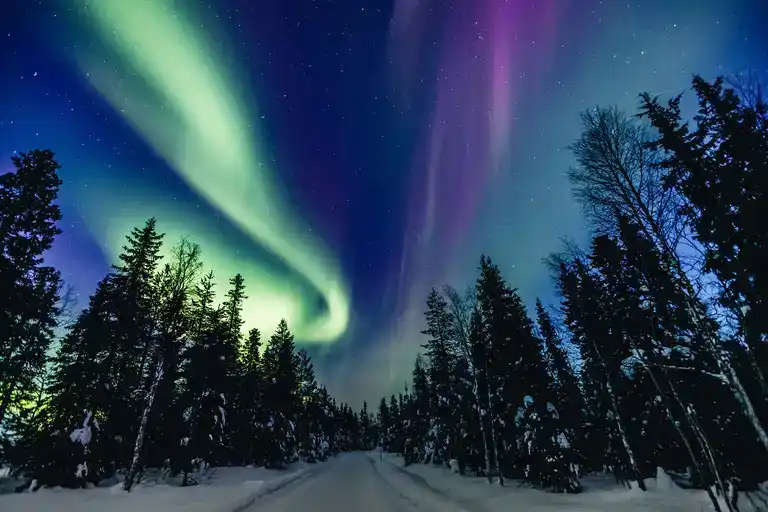
Table of contents
There is a particular kind of silence that falls over you the first time the sky turns green above your head. It is not something a screen can prepare you for. That unforgettable moment is what makes Northern Lights trips so popular. But choosing the right country can make a big difference to your experience. Not every trip into the Arctic Circle is built the same. Some Northern Lights destinations hand you comfort, warm cabins, and a short transfer from the airport. Others ask you to travel further into true wilderness for a rarer, quieter show. Below, we have broken down the five destinations worth your money, what each one actually delivers, and how to book the version of this trip that fits you best.
What Are the Northern Lights?
The Northern Lights, also known as the aurora borealis, appear when charged particles from the Sun meet gases in Earth’s atmosphere. This interaction creates the colourful lights seen in the night sky. The result is a curtain of moving light, usually green, sometimes pink or violet on a strong night. It is one of the very few natural events that photographs well and still feels bigger in person than any picture manages to show.
Because of how the phenomenon works, it is only reliably visible from a narrow ring of latitude, roughly between 65 and 72 degrees north. Every Aurora Borealis country on this page sits inside or close to that band, which is exactly why they consistently outperform anywhere else on the map for sightings. The mirror event near the South Pole, Aurora Australis, exists too, but it plays out over Antarctica and open ocean, well outside the reach of a normal holiday.
One more reason to book sooner to the countries with Aurora Borealis rather than later: the sun runs on an eleven-year activity cycle and has just reached its peak. 2024 through 2026 is shaping up to be one of the strongest windows for aurora activity in over a decade, which makes this genuinely one of the best years to finally tick this trip off your list.
Best Northern Lights Countries in the World
There is no single best country for Northern Lights. There are five that consistently deliver, and each one sells a slightly different holiday. Below is a full breakdown of what you are actually booking with each, built for travellers who are ready to compare and choose, not just browse.
1. Norway
Norway sells the version of the aurora you have seen in every travel magazine, mountains dropping into black fjord water with light rolling across the sky above. It is consistently ranked among the best country for Northern Lights, backed by a mature tourism industry built specifically around the chase, heated viewing domes, boats that reposition around cloud cover, and guides who track real-time forecasts for you. Tromso is the best spot to see Northern Lights for first-timers, with an international airport and everything from budget group tours to private charters nearby. The Lofoten Islands push further, pairing jagged peaks with dark skies for one of the most photographed best place to see Northern Lights locations anywhere. Packages typically run 4 to 7 nights, pairing guided evening hunts with husky sledging, Sami reindeer visits, and fjord cruises.
The best time to visit Northern Lights in Norway falls in late February and March, when skies clear and temperatures ease slightly from deep winter. Book Norway if scenery matters as much to you as the sighting itself, and reach out to us to lock a Tromso or Lofoten itinerary before peak dates sell out. Best for couples on a milestone trip, photographers, and anyone who wants dramatic terrain in every frame alongside the lights.
2. Iceland
Iceland is one of the few Northern Lights countries compact enough to chase clear skies across the whole island in a single evening, while daytime sightseeing rivals the aurora itself for the trip highlight. Reykjavik carries too much light pollution on its own, so tours drive you thirty minutes to two hours out, a small trade-off compared to most other destinations.The Golden Circle route is the best place to see Northern Lights for travellers based near Reykjavik, while the south coast near Vik and Snaefellsnes Peninsula offer the best spot to see Northern Lights for repeat visitors chasing better photos. Most trips run just 4 nights, bundling nightly hunts with Golden Circle tours, glacier hikes, and the Blue Lagoon. Iceland stays bookable almost year-round, but the best time to visit Northern Lights here is late September through March. Book Iceland if your holiday time is limited but your ambitions are not, and let us build a short, high-impact itinerary around your dates. Best for short breaks, first-time aurora chasers, and travellers stopping over between Europe and North America.
3. Finland
Finland sells comfort in a way no other destination on this list matches. Lapland’s glass-roofed cabins and igloos, many fitted with automatic aurora alerts, let you watch the sky from bed rather than standing outside for hours, without giving up strong sighting odds inside the auroral oval. Saariselka is the best spot to see Northern Lights in the country thanks to its dark skies and dense cluster of glass cabin resorts, while Levi adds daytime skiing to the mix. Packages usually run for 4 to 5 nights around Rovaniemi, Levi, or Saariselka, pairing glass cabin stays with husky sledging, snowmobile safaris, and Santa Claus Village for families.Glass cabins sell out fast for the December and February peaks, so early booking matters more here than elsewhere. Book Finland if comfort and family friendliness matter as much as the lights, and ask us about securing a cabin for your dates. Best for families, honeymooners, and anyone who wants a restful trip built around comfort rather than standing outside for hours.
4. Sweden
Sweden rarely tops the general travel conversation, but Abisko National Park holds a quiet reputation as one of the most statistically reliable countries with Aurora Borealis anywhere. A local mountain microclimate known as the blue hole keeps its skies clear even when nearby regions cloud over, and the Aurora Sky Station lifts viewers above part of the cloud layer entirely. Abisko is the undisputed best spot to see Northern Lights in Sweden, with Kiruna serving as the transport hub and home to the famous Icehotel, rebuilt from ice every winter. A typical 4-night trip pairs the Icehotel with Aurora Sky Station evenings and snowshoe excursions. Sweden holds its odds well from September through March, making it one of the more forgiving Northern Lights destinations on dates. Book Sweden if actual sighting odds matter more to you than scenery or comfort, and we will build your Abisko itinerary around them. Best for travellers who have already done Norway or Finland and want a quieter alternative with stronger statistical odds.
5. Canada
Canada offers something none of the European destinations can: sheer scale. Yellowknife sits directly under the auroral oval with some of the clearest, driest air in North America, making it the best spot to see Northern Lights for travellers chasing consistently strong displays. Churchill, Manitoba, adds a rare bonus: it is also one of the best places on earth to see wild polar bears during the autumn migration. Yellowknife packages typically run 4 to 5 nights with nightly guided hunts to heated lakeside sites, dog sledging, and ice fishing. Churchill combination trips run longer, pairing tundra buggy polar bear tours with evening aurora viewing.
Churchill’s polar bear season runs from late October into November, so book that combination trip well ahead. Book Canada if you want genuine wilderness and a wildlife bonus alongside the sky, and talk to us about pairing Yellowknife or Churchill with the rest of your trip. Best for wildlife lovers, adventurous travellers, and anyone who wants wide-open sky views without a village or crowd in the frame.
Between these five, you are covering pretty much every version of aurora chasing that exists, from Nordic comfort to Canadian wilderness. Excited for your next destination? Talk to an expert and discuss the best Northern light tour package.
Best Time to Visit Northern Lights Countries
Timing your trip right matters just as much as choosing the destination. Summer is off the table everywhere on this list, since the far north gets close to 24 hours of daylight during those months, leaving no darkness for the aurora to appear against. The real booking season runs from late August through early April, and it splits into a few distinct windows worth knowing before you pick your dates.
August and September mark the early season, when nights are just turning dark again. This period also gets a genuine boost from the autumn equinox, when geomagnetic activity tends to run higher than average across every Aurora Borealis country. December and January bring the polar night across parts of the Arctic Circle, delivering maximum darkness and more viewing hours per night, though at the cost of harsher cold and, in the far north, less daylight for sightseeing between hunts.
February and March are widely considered the best time to see the Northern Lights across almost every destination covered here. Skies tend to be clearer than in deep winter, temperatures ease slightly, and you still get long dark nights alongside a second equinox boost heading into March. If you can only lock one window across your entire trip, this is the one we recommend booking.
Tips for Planning Your Northern Lights Trip
A little preparation protects your odds significantly, no matter which of these Northern Lights countries you choose. Track the KP index before and during your trip using apps like Hello Aurora or Space Weather Live, so you know which evenings are genuinely worth heading out for, no matter which best spot to see Northern Lights you have chosen. Pack proper layers, since clear winter nights regularly drop to minus 20 degrees Celsius across most of these destinations. Book at least 5 to 7 nights where possible, since a single-night trip leaves no room for cloud cover, and plan your evenings around 10 pm to 2 am, generally the strongest viewing window regardless of the best time to visit Northern Lights you land on.
Lock accommodation and flights two to three months ahead for peak February and March dates, especially for glass cabins in Finland or Icehotel rooms in Sweden, which sell out earliest across every one of these Northern Lights destinations. Whichever you pick, matching your dates to that window is what actually turns the best country for Northern Lights on paper into a genuine sighting in person.
Which Northern Lights Country Should You Book?
Norway brings dramatic scenery and an aurora-chasing infrastructure built to actively work the odds in your favour. Iceland brings speed and flexibility for travellers short on time. Finland brings comfort and family friendliness through its glass-cabin resorts. Sweden brings the most statistically reliable skies in Europe through Abisko’s blue hole microclimate. Canada brings raw wilderness scale and, in Churchill, a genuine wildlife bonus alongside the lights. All five are genuinely excellent Northern Lights destinations, and there is no single wrong choice among them. What matters most is matching the destination to your own travel style, your budget, and how much comfort you are willing to trade for a darker sky, then locking your dates into that February-to-March sweet spot wherever your chosen best country for Northern Lights allows.
Ready to book? Tell us your travel dates, your budget, and what kind of trip you are after, and we will put together a tailored itinerary across any of these five Northern Lights Countries so you can stop reading about the aurora and start planning to actually stand under it.
Recommended Articles for you

Cherry Blossom Festival in Japan – The Ultimate Spring Escape
0 0 If there is one country that can consistently surprise you, enchant you and make you feel blessed about life, it has to be Japan. From retaining deep-rooted cultural beliefs to staying ahead in technology and being a pioneer […]

Sakura Cherry Blossom – Witness Japan’s Pink Spring
0 0 Every year, Japan’s gardens, trees and parks turn from a glorious green of jade to the soft pink of a blushing bride. That’s right, the cherry blossoms are ready to bloom, bringing with it the promise of a […]

Places to Visit in India in December
0 0 December marks the beginning of the peak travel season in India. From the North of the country to the South, every region has pleasant weather and clear skies, perfect for sightseeing. After the hot summer and muggy monsoon, […]
12 Best Places To Visit In November In India In 2026
0 0 November is a month of vibrant transitions in India, offering an array of travel experiences from the cool Himalayan foothills to the warm beaches of the south. If you’re planning your travel itinerary for November 2026, India presents […]

What is the average cost of living in Singapore in 2026?
0 0 The Cost of Living in Singapore At A Glance Average monthly budget: A single person may need S$1505 every month excluding accommodation. The rest of the budget depends on lifestyle and location. Biggest expense: Accommodation is the largest […]
Top Universities in Germany for International Students
0 0 Germany universities for international students have been one of the most preferred destinations for many years. Public universities charge little to no tuition fees, offering excellent opportunities for globally valued research and English-taught programs across engineering, business, and […]
RBI Forex Guidelines for Foreign Exchange Transactions in India
0 0 What Do RBI Forex Guidelines Say? FEMA oversees the legal mechanism governing foreign exchange transactions in India. All Indian residents should deal in forex only through RBI-authorised persons and for permitted purposes. Under the Liberalised Remittance Scheme (LRS), […]
Cost of Living Index by Country: Compare Living Expenses Around the World (2026 Guide)
0 0 No two countries charge the same price for everyday life. A coffee that costs $2 in Hanoi can cost $7 in Zurich, and a one-bedroom apartment renting for $300 in Cairo might command $3,000 in Manhattan. These gaps […]
Delhi To Haridwar distance: Best Route, Train Timings & Travel Guide
0 0 Delhi to Haridwar At A Glance Haridwar is an integral religious destination for Hindus. In 2025, 3.4 crore people visited Haridwar, and that number is only expected to be higher at the end of 2026. If you are […]
Delhi to Kedarnath distance: Best Route, Train Timings & Travel Guide
0 0 Delhi to Kedarnath cannot be called a road trip, but it is a journey where the destination is sacred, so every part of the journey becomes a kind of storytelling. Most of the people ask, “Delhi to Kedarnath […]
Jodhpur to Udaipur journey is an ultimate Rajasthan travel journey.
0 0 These two destinations have completely different personalities, but the journey between the two destinations is mesmerising. Imagine yourself waking up to the blue-painted buildings of Jodhpur, covered with mighty forts and surrounded by beautiful desert vibes. And then […]
Kullu to Manali distance: Best Route, Train Timings & Road Trip Guide
0 0 Kullu to Manali At a Glance Kullu and Manali sit in the same valley, so this isn’t really a “journey” in the way Delhi to Manali is; it’s more of a short hop most travellers do on their […]
Everything You Need to Know About Mumbai to Goa Distance
0 0 Mumbai to Goa At a Glance Goa is one of the most happening places in India. It offers nature, partying, waterfalls, trails, water activities, and whatnot. Goa sees millions of tourists every year from all across the globe, […]

Varanasi to Haridwar distance: Best Route, Train Timings & Travel Guide
0 0 Varanasi to Haridwar at a Glance Here are the numbers, before anything else. People do this route mostly for one reason: both cities run a daily Ganga aarti, and pilgrims like pairing them into one circuit. Road: roughly […]
World’s Largest Waterfall: Experience the Majestic Beauty of Angel Falls Like Never Before
0 0 Angel Falls in Venezuela is the highest waterfall in the world. It is 979 metres high. The falls are in a large forest area called Canaima National Park. Getting there takes time, but the views are amazing. You […]
Visit the Largest Mall in the World: Everything You Need for the Perfect Shopping Trip
0 0 Largest Mall In The World At A Glance Iran Mall in Tehran, Iran, is the world’s biggest mall by total reported area. The mall is approximately 1.95 million square metres, or 21 million square feet. Note: The discussion […]
Top 10 Highest Railway Bridges in the World: Discover the Tallest Train Bridges and Their Incredible Stories
0 0 The world’s highest railway bridges are mostly in China and India. India’s Chenab Bridge is the tallest railway arch bridge at 359 metres, which is even higher than the Eiffel Tower. China’s Najiehe Bridge, at 310 metres, still […]
The Longest Beach in the World – All You Need to Know
0 0 Praia do Cassino in Brazil is about 254 km long, making it the longest continuous beach in the world. Cox’s Bazar in Bangladesh is also very well known and is called the longest natural sandy sea beach. So, […]
Ride the World’s Longest Cable Car to Hon Thom Island: Your Complete Phu Quoc Travel Guide
0 0 The Hon Thom cable car in Phu Quoc is renowned for its Guinness World Record as the longest sea-crossing cable car. Offering a great view of the Gulf of Thailand, this cable car ride stretches across 7.9 km. […]