 Call Us
 18002099100




2 0 If you have ever stood at immigration wondering whether you needed a visa at all, you know how confusing this topic gets. As of 2026, Indian passport holders can enter roughly 55 to 60 destinations without a traditional […]
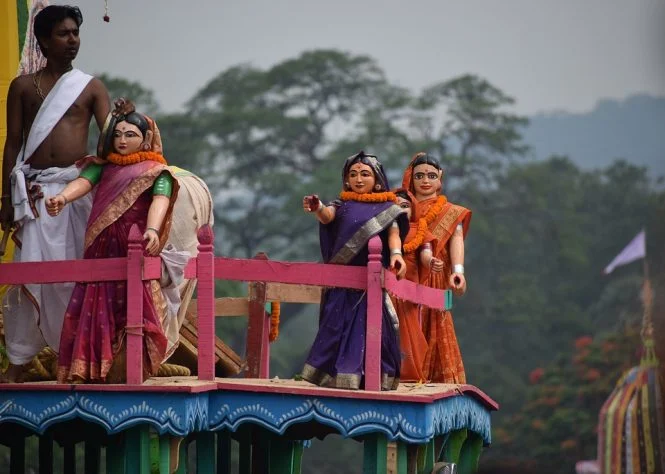
Table of contents
Every year, somewhere amid the chants of “Jai Jagannath,” a quiet wooden idol leaves the sanctum of one of India’s oldest temples and rolls out into the streets on a giant chariot. If you’ve never witnessed it, it’s hard to explain what that moment feels like. If you have, you already know why people keep going back.
Let me walk you through the story, the celebrations, and everything you need to know if you’re planning to be part of Rath Yatra 2026.
The Temple, the Idol, and Why It All Matters in the Jagannath Yatra
The Puri Temple is dedicated to Lord Jagannath, a form of Lord Vishnu. Inside, he’s worshipped alongside his brother Balarama and sister Subhadra. What makes this trio so striking is the idol itself; the Puri Jagannath idol is one of the rarest wooden idols you’ll come across anywhere. That alone draws thousands of pilgrims to the temple every single day, long before Rath Yatra season even begins.
But the temple isn’t just about what’s inside it. It’s also home to the Jagannath Rath Yatra — arguably the most significant symbol of Puri itself.
So, What’s the Story Behind the Rath Yatra?
Here’s where it gets beautiful.
Rath Yatra, at its heart, is a journey. Lord Jagannath, along with Balaram and Subhadra, travels once a year from his temple to his aunt’s house, i.e. the Gundicha temple, which is also his birthplace. This symbolic travel is what the entire festival is built around.
There’s a lovely belief tied to this: that Lord Jagannath actually looks forward to stepping out of his temple once a year, just to be among people from every walk of life. No barriers, no formalities — just the Lord, out on the street, surrounded by everyone who wants to see him.
That’s really what makes Rath Yatra so powerful. It isn’t only a religious event. It’s a living symbol of unity in diversity and one of the most historically rich traditions India has held on to.
History of Lord Jagannath and Rath Yatra
The Puri Temple, which is dedicated to God Jagannath, is one of the oldest and most revered temples in India. Lord Jagannath is a form of Lord Vishnu. At the Puri temple, Lord Jagannath is worshipped alongside his brother Balarama and sister Subhadra. The Puri Jagannath idol is one of the rarest wooden idols. This makes it very attractive and fascinating, drawing thousands of pilgrims every day. Along with the temple, the Jagannath Rath Yatra is also one of the most significant symbols of Puri. Read on to know more about the history of the place and why Rath Yatra is celebrated in the article below:
- God Jagannath’s temple significance
The Lord Jagannath Puri temple holds immense spiritual, cultural, and historical significance. It has the mysterious wooden Puri Jagannath idol and is home to the world-famous Jagannath Rath Yatra.
- Jagannatha Ratha Yatra Story
So, what is the Rath Yatra meaning? It refers to the symbolic journey of the deities from their abode to their aunt’s house. Lord Jagannath, along with his siblings, Balaram and Subhadra, visits the Gundicha temple once a year. This is when the annual Jagannath Rath Yatra happens. The Gundicha temple is their birthplace and their aunt’s house. It is said that God Jagannath likes leaving his temple once a year to be surrounded by people from all walks and paths of life. The Ratha Yatra Festival is, therefore, a strong symbol of unity in diversity and one of the most historically rich traditions of India.
Rath Yatra 2026: A Nine-Day Journey, Day by Day
Rath Yatra 2026 unfolds over nine days, starting with the grand chariot procession from the Jagannath Temple to the Gundicha Temple. Along the way, you’ll witness the Gundicha Yatra, Hera Panchami, the Bahuda Yatra (the return journey), Suna Besha, and finally, Niladri Bije. Each day has its own rhythm and meaning, and together they draw millions of devotees to Puri.
Here’s how it plays out.
- Day 1 of Jagannath Rath Yatra: The Grand Chariot Procession
The procession begins on the first day of the Rath Yatra. The original Puri Jagannath idols are brought out from the temple and placed in their respective wooden chariots. The chariots are then pulled by millions of devotees who gather on the streets of Puri.
- Day 2: Darshan at Gundicha Temple
The deities are placed inside the Gundicha temple, and on the second day, devotees visit this temple for an auspicious Jagannath Puri Darshan.
- Day 3: Daily Rituals and Devotional Celebrations
Day 3 is filled with rituals, pujas and bhajans for God Jagannath, which create a mood of festivity and celebration.
- Day 4: Pilgrimage and Temple Traditions
Special pujas and rituals take place throughout the day, and devotees can come and see the Jagannath murti wooden idols from close quarters.
- Day 5: Hera Panchami – Goddess Lakshmi’s Visit
On the 5th day, Goddess Lakshmi visits the Gundicha Temple in search of Lord Jagannath. It marks the union of Jagannath and Lakshmi and is one of the most significant rituals of the Jagannatha Ratha Yatra.
- Day 6: Spiritual Observances at Gundicha Temple
The day consists of prayers and rituals with devotees thronging the temple to get a glance of the Jagannath Puri idols.
- Day 7: Preparations for Bahuda Yatra
On the seventh day, the preparations for the return journey of the Jagannath Ratha Yatra start. The Jagannath chariots are prepared, and rituals are carried out to ensure the smooth completion of the Bahuda Yatra.
- Day 8: Bahuda Yatra – The Return Chariot Procession
The return journey takes place on the eighth day. The deities are placed on the Jagannath Puri Rath, pulled by millions of devotees and brought back to the Jagannath Temple.
- Day 9: Suna Besha – The Golden Attire Ceremony
During the Suna Vesa, the idols are adorned in magnificent golden ornaments while seated in the Jagannath Puri Rath.
- Day 10: Adhara Pana Ritual
Adhara Pana, a sweet beverage, is offered in large earthen pots to the deities. This marks the end of the Lord Jagannath Rath Yatra.
- Day 11: Niladri Bije – The Return to the Sanctum
With the Niladri Bijay, the Puri Jagannath idols are returned to their original place in the Jagannath temple. This is the conclusion of the Rath Yatra Festival.
A Festival of Rituals Worth Witnessing
From the chariot pulling on Day 1 to the playful Hera Panchami, the dazzling Suna Besha, and the quiet finality of Niladri Bije, every part of Rath Yatra carries centuries of tradition. If you’ve ever wanted to experience something genuinely timeless, Rath Yatra 2026 is worth building your travel plans around.
The Jagannath Chariots Themselves Are Part of the Story:
The chariots used in the Jagannath Rath Yatra are among the largest ceremonial chariots in the world, and here’s the part that gets me every time: they’re rebuilt every single year, from scratch, using traditional techniques. Each chariot represents one of the three deities: Lord Jagannath, Balaram, and Subhadra. Together, they symbolise something deeply moving — divine accessibility. The idea that the Lord himself steps outside the temple just to bless people from every walk of life.
How to Reach Jagannath Puri?
- By Air
The nearest airport to Puri is Biju Pattanaik Airport in Bhubaneswar. You can fly there and then drive down to Puri to see the Lord Jagannath deity.
- By Train
Puri has its own railway station. You can take a train and reach Puri comfortably.
- By Road
Many devotees drive to Puri either in their own vehicles or in taxis. You can also take a bus and reach Puri quite easily.
What to Pack for Rath Yatra 2026?
Rath Yatra 2026 runs from 16th July to 24th July, right in the middle of peak monsoon season. So an umbrella is non-negotiable. Pack appropriate clothing too, ideally ethnic wear — and a quick but important note: you’re not allowed to wear denims inside the Lord Jagannath Puri temple.
How to Plan Your Visit for Rath Yatra 2026?
The simplest way to experience Rath Yatra without the logistical stress is to book a Thomas Cook package. It takes care of travel, hotel reservations, sightseeing, and transfers, so you can focus on actually being present for the festival rather than juggling bookings. Just head to the Thomas Cook portal, browse the Puri trip packages, and pick the one that fits you.
Where to Stay in Puri?
- Beach hotels and resorts in Puri aren’t just about the Yatra alone; it’s also one of India’s most loved beach destinations, so you’ll find some excellent beach resorts and hotels here.
- Mid-range hotels are comfortable, safe, and easy on the pocket. Puri has a good spread of these.
- Budget stays are good if you’re keeping costs low; dharamshalas, hostels, and dormitories are all available during Rath Yatra 2026.
Few things to keep in mind:
- Book early:
Millions travel to Puri during this period, and without advance hotel and flight bookings, things get difficult fast. - Take care of your health:
Being part of the Jagannath Ratha Yatra is genuinely once-in-a-lifetime, but it’s also physically demanding. Get a health check before you travel, speak to your doctor if needed, and don’t ignore exhaustion or dehydration along the way. Many devotees do face this, so go prepared. - Plan properly:
With the kind of crowds Puri sees during this time, a loosely thrown-together trip just won’t work. A Thomas Cook holiday package, a clear sense of what you want to see, and a plan you actually follow — that’s the way to do it.
What are the places nearby worth visiting?
When you book a Thomas Cook Jagannath Rath Yatra package, you also get to explore some genuinely beautiful places around Puri.
- Konark Temple:
Dedicated to the Sun God, this architectural experience is one you shouldn’t skip while in Odisha. - Chilika Lake:
A stunning lake close to Puri, well worth a spot on your itinerary. - Puri Beach (Golden Beach):
One of India’s best beaches. After the spiritual intensity of the Yatra, spend some unhurried time here. - Raghurajpur Heritage Crafts Village:
A hidden gem of a crafts village that most travellers miss, but really shouldn’t. - Bhubaneswar:
The capital of Odisha, and a city that beautifully blends the old with the new. A great way to round off your Odisha trip.
Final Thoughts
Rath Yatra isn’t just a festival you watch; it’s one you feel. The chariots, the chants, the millions of hands pulling those ropes together, the Lord stepping out to be among his people. If this has been on your list, there’s no better time than now to plan for it.
Book a Thomas Cook package, and let Jagannath Ratha Yatra 2026 be the trip that stays with you.
FAQs
- When does the Jagannath Ratha Yatra take place?
It takes place every year in July. The 2026 edition is slated to begin on July 16th. - Is everyone allowed to visit the Jagannath Puri Rath festival?
Only Hindus are allowed to enter the temple, but everyone can partake in the Rath Yatra festivities. - How old are the chariots?
The chariots used in the Rath Yatra are rebuilt every year, following age-old traditions passed down through generations.
Recommended Articles for you

Guide to Buying US Dollars in India
0 0 Short version to how to buy USD in India, since that’s what you actually came for: buy online, a few days before you need the cash. Not at the airport. Not at your bank branch on the way […]

Guide to Forex Card Charges, Fees and Markups
1 0 Forex card charges are the fees you pay to get, load, and use a prepaid travel card abroad, covering issuance, reload, currency conversion, ATM withdrawal, and the markup baked into the rate. Most of these sit between 0% […]

Guide to How Much Cash and Foreign Currency You Can Legally Carry Abroad
2 1 You are at the check-in counter, wallet stuffed with dollars, when a customs officer waves you toward the red channel. This is the moment a lot of Indian travellers dread, and it usually comes down to not knowing […]

Lowest Currencies in the World with Exchange Rates in INR (2026)
5 0 As you plan your travels or delve into the economics of different countries, understanding currency values becomes crucial. The phrase ‘currencies with the lowest exchange rates in the world’ often piques curiosity, both for economic insights and the […]

How Much Cash Can You Carry from India to USA?
3 0 Flying from India to the USA, two separate limits apply to your cash, not one. RBI caps the foreign currency notes you carry from India at USD 3,000 per visit. The US side has no fixed cap, but […]

Guide to the Highest-Valued Currencies in the World
22 0 The Kuwaiti Dinar (KWD) is the most valued currency in the world in 2026. 1 Dinar = ₹309. The Bahraini Dinar and Omani Rial follow close behind, both worth over ₹240 to the Rupee. Before assuming Kuwait must […]

Forex Markup Fee Explained: Meaning, Charges & How to Avoid It
0 1 Forex card charges are the fees you pay to get, load, and use a prepaid travel card abroad, covering issuance, reload, currency conversion, ATM withdrawal, and the markup baked into the rate. Most of these sit between 0% […]

Abu Dhabi Offers Free UAE Visas for Indians: All You Need to Know
0 1 Imagine planning a three-night Abu Dhabi holiday, with the offer taking care of your 30-day UAE tourist visa. From the Sheikh Zayed Grand Mosque and Louvre Abu Dhabi to Yas Island and Ferrari World, there is plenty to […]

Kashi Vishwanath Temple Guide 2026: Timings, Darshan, VIP Booking & Travel Tips
0 0 Kashi Vishwanath Temple Guide at a Glance The Kashi Vishwanath Temple in Varanasi is one of the 12 Jyotirlingas of Hindu Dharma. All Jyotirlingas are dedicated to Lord Shiva. If you believe in Shiva, it must be your […]
Bhimashankar Jyotirlinga Guide 2026: Temple Timings, Trek Route, Wildlife Sanctuary & Shravan Darshan Tips
0 0 Bhimashankar is that rare Jyotirlinga where your darshan ends and your trek begins. The Bhimashankar Jyotirlinga Temple is situated inside a wildlife sanctuary, surrounded by the thick Sahyadri forest. You can attend the Kakad Aarti at dawn, spot […]
Char Dham Yatra 2026: Complete Registration, Route, Cost & Itinerary Guide
0 0 Quick introduction: Opening dates: Between April 19 and 23, 2026. Yamunotri & Gangotri open together on Akshaya Tritiya (Apr 19), Kedarnath on Apr 22, Badrinath on Apr 23 Registration: Free, but mandatory, and opened Mar 6 at registrationandtouristcare.uk.gov.in […]
Grishneshwar Jyotirlinga Guide: Temple Timings, Ellora Caves & Travel Tips
0 0 Close your eyes and imagine the moment: the sky is still dark, the air smells faintly of camphor and incense, and you are standing barefoot on cool stone before a shrine where you are praying. Your morning begins […]
Rameshwaram Temple Travel Guide: Timings, Darshan & Places to Visit
0 0 One of the most important religious travel destinations in India, Rameshwaram is an icon by itself. With its roots deeply connected to the holy Ramayana, Rameshwaram is one of the 12 Jyotirlingas in India. Rameshwaram is also a […]
Trimbakeshwar Temple Guide: Timings, VIP Darshan & Kumbh Significance
0 0 “Where faith meets silence, every prayer finds its way.” There is a different kind of silence that settles over the moment you catch your first glimpse of the Brahmagiri hills rising behind the temple spire. It’s not the […]

Places to Visit in September in India – Top Destinations & Travel Tips
2 0 September is one of the best months to travel across India. The monsoon begins to retreat, waterfalls remain full, hill stations turn lush green, and many destinations are less crowded than during the peak holiday season. Whether you’re […]

Best Countries to Visit in July from India
1 0 July is the peak of monsoon in India, but in many parts of the world it is a beautiful summer season. This is why July is a great time for international travel. If you are planning your next […]

Breathtakingly Beautiful Places to Visit Near Mumbai During Monsoon
1 1 Monsoon is one of the most beautiful seasons in India. On the one hand, you get lashing rains and cool, misty weather. On the other hand, you get to see green valleys, roaring waterfalls, and other magical natural […]

Best Monsoon Destinations in India for July and August
1 0 When you plan your annual vacation, you often think about travelling in summer or winter. But have you considered travelling in the rainy season? Well, the most magical holidays happen when you go offbeat and make an epic […]

Best Places to Visit in Monsoon in India
1 0 India is one of the most beautiful countries in the world. And, at certain times, the magic simply comes alive. The monsoon is one of them. With the rains lashing different parts of the country, the flora, fauna, […]