 Call Us
 18002099100



Chasing the Lights Across the World’s Best Northern Lights Countries
By thomascook seo


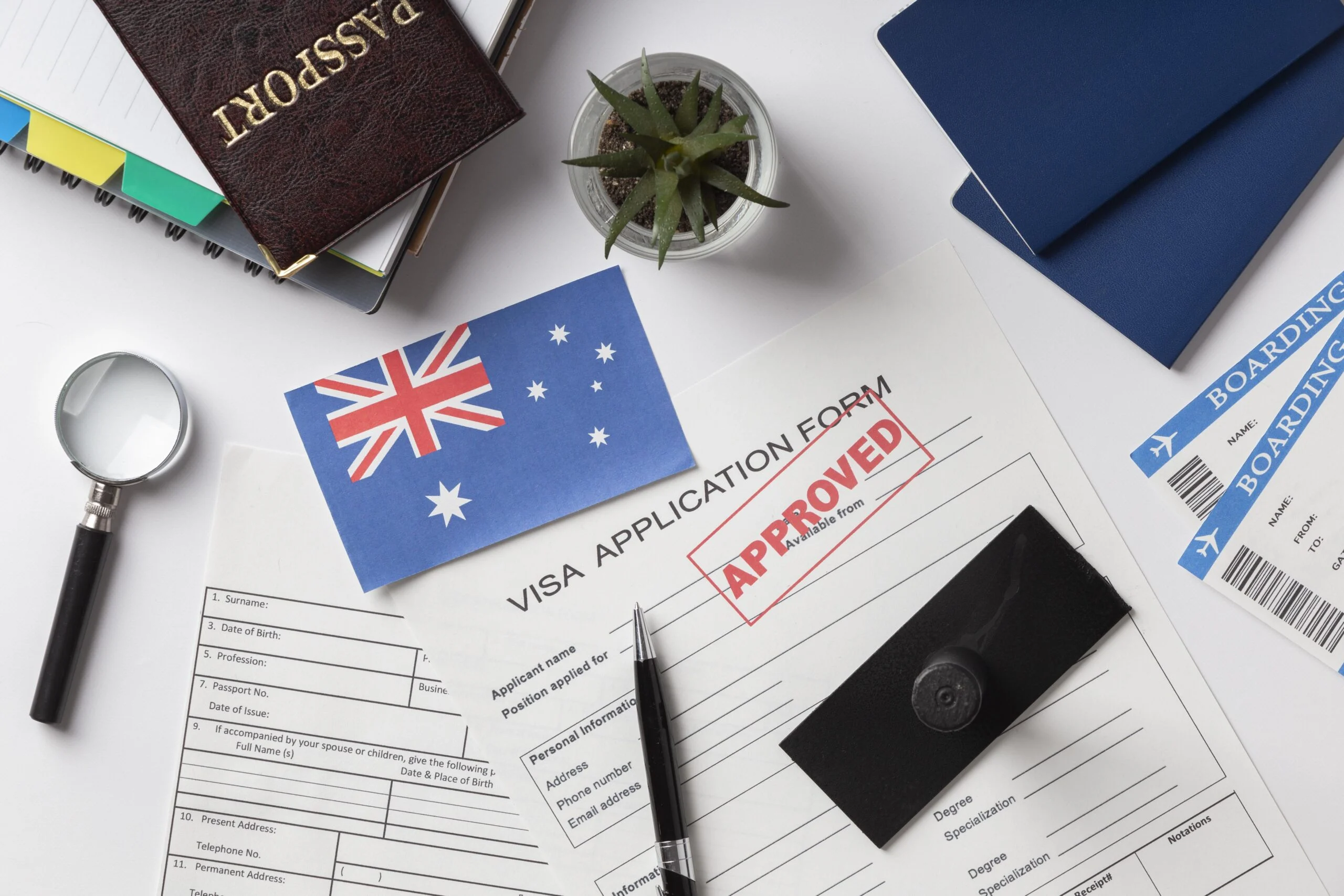
The Australia Student Visa, officially the Subclass 500, lets you live in Australia for your full course at a recognised institution, with limited work rights built in. Covers everyone from a bachelor’s student in Sydney to a vocational trainee in Perth. And 2026 has not been quiet on this front. The biggest shifts are a higher visa fee, revised financial Australia student visa requirements, and a stricter Genuine Student rule, and honestly, all three land harder on Indian applicants than most.
From 1 July 2026, the Department of Home Affairs raised the Australia student visa fees for Subclass 500 to AUD 2,500, up from AUD 2,000. Not a small jump. The financial requirement for living costs moved to AUD 29,710 a year, and the Genuine Student (GS) requirement, which replaced the older GTE test in March 2024, now gets tighter scrutiny of course relevance and academic history. Work rights stayed at 48 hours a fortnight during term, at least for now. For an Australian student visa for Indians, this basically means budgeting earlier and actually spending time on your GS statement instead of dashing it off the night before you submit.
There are a few types when it comes to student permit Australia:
This is the main education visa Australia offers international students. It covers university degrees, vocational diplomas, and standalone English courses, running for your course length plus a short buffer.
Meant for a parent or guardian accompanying a student under 18. It is a separate application, not an add-on, and the guardian cannot work under it.
Built for workplace-based training rather than a degree. Students sometimes confuse it with Subclass 500, but it only fits if you are training on the job, not studying at an institution.
There are some criteria when it comes to applying for an Australia student visa:
There is no fixed age ceiling, though under-18 applicants face extra paperwork. University study generally expects education equivalent to Year 12; vocational and diploma courses are more flexible.
You cannot apply without a CoE from your provider. Most institutions also ask for IELTS, PTE, or TOEFL scores, commonly around an overall band of 6.0, though this depends on the course.
If your course aligns with your background and career goals. Vague responses raise red flags because officers are looking for a credible story, not a perfect one.
There are a few Australia study visa requirements regarding your financial situation that contribute to getting an Australia student visa:
You need to show you can cover tuition, living costs, and travel without depending on part-time work. This is one of the areas where Australia study visa requirements get strict, since officers watch for funds that arrive suddenly rather than build up over time.
The current figure for annual living costs is AUD 29,710 for a single applicant, plus roughly AUD 10,394 for a partner and AUD 4,449 per child, on top of tuition and OSHC. If you’re planning to buy AUD for your initial expenses, factor these living costs into your budget. Confirm the exact figure of embassy fees for Australia study visa on the Home Affairs site before applying, since it is reviewed periodically.
Bank statements from the last three months, fixed deposit receipts, an education loan sanction letter, or a scholarship confirmation all work. Let’s actually run the numbers instead of just listing categories. A student on a coursework master’s showing AUD 30,000 tuition, AUD 29,710 living costs, AUD 600 for OSHC, and AUD 1,500 for return airfare would need close to AUD 61,800 in total. At roughly INR 56.5 per AUD, that’s around ₹34.9 lakh. Your own tuition number will move the total up or down quite a bit, so treat this as a shape, not a target.
Here are the details you need for Australia student visa fees:
The base embassy student visa expenses for Australia applications sit at AUD 2,500 from 1 July 2026 with the Australian student visa new rules. This is non-refundable even if your visa is refused, and additional applicants pay their own separate charge.
OSHC is compulsory for the entire visa period. For a single applicant on a one-year course, it typically costs AUD 500 to 700, depending on the provider.
Add biometrics (around AUD 45, where required), a health exam through an approved panel physician (roughly AUD 300 to 500), and any English test fees. Together, these student visa expenses for Australia applications add a few hundred dollars beyond the headline visa fee.
There is no single guaranteed number. As a general benchmark, around half of higher education applications are decided within about 28 days, with most others finished within a few months, though vocational and research applications often take longer. A clean, complete application still matters most.
Most applicants need a health exam at an approved panel clinic, covering a chest X-ray and basic tests. Biometrics, where required, means fingerprints and a photo at a visa centre. Interviews are rare for Subclass 500 but can happen if your GS answers or funds need clarifying.
Here is what you need to do for a student permit Australia step by step:
Accept your offer, pay any deposit, and your provider issues the CoE, which triggers everything that follows.
Gather academic records, English scores, financial proof, and your GS statement early, since mismatched dates cause more delays than missing paperwork.
Create your account, fill in the form, and upload documents in the format expected. This step trips up more applicants than any other, mostly because blank fields or mismatched figures trigger further checks, and once submitted, there is little room to fix small errors.
Book these promptly if asked, since delays here push out your decision.
Honestly, from here there’s not much to do except check ImmiAccount every so often and start packing. Refreshing it five times a day won’t speed anything up, but nobody actually listens to that advice.
Here are the documents you absolutely need to have:
Student visa holders can work up to 48 hours a fortnight during term, with no cap during official course breaks. Master’s by Research and PhD students have no fortnightly limit at all. A student forex card can make it easier to manage everyday expenses from your study budget while you’re in Australia. Working beyond these limits can put your visa at risk, so it is worth tracking hours properly rather than estimating.
A lot of refusals trace back to bank statements with a large lump sum deposited weeks before applying, which just looks arranged rather than genuine, even when it isn’t. Another is picking a course with no obvious link to prior study, then writing a GS statement that never actually explains the jump; it just talks around it.
Students also submit English scores that have quietly expired (nobody checks the expiry date until it’s too late), or a CoE that does not match their form. Small stuff, mostly. But small stuff is exactly what gets flagged. None of it is hard to avoid; it just needs attention before submission, not after.
Once your Australian student visa for Indians paperwork is in motion, the next step is sorting your money, and this is the part people tend to leave till the last week. Thomas Cook Forex can help you convert your proof-of-funds amount, load a forex card for everyday spending in Australia, and lock in exchange rates ahead of your OSHC and tuition payments, so your visa budget and your actual travel budget stay in sync instead of drifting apart.
For 2026, single applicants of a student permit Australia need access to AUD 29,710 for one year of living costs, plus tuition and OSHC.
The total amount, including tuition, usually ranges from ₹25 lakh to ₹40 lakh, depending on the course and city.
Most higher education applications are decided within a few weeks to a couple of months, varying by course type.
Yes, if the balance is stable and not inflated by an unexpected deposit just before you apply.
Not at all. IELTS is the most commonly used test, but PTE Academic and TOEFL iBT are also accepted, depending on your institution.
It checks that your course, background, and career plans genuinely line up, replacing the GTE test since March 2024.

0 0 There is a particular kind of silence that falls over you the first time the sky turns green above your head. It is not something a screen can prepare you for. That unforgettable moment is what makes Northern […]

0 0 If there is one country that can consistently surprise you, enchant you and make you feel blessed about life, it has to be Japan. From retaining deep-rooted cultural beliefs to staying ahead in technology and being a pioneer […]
0 0 Every year, Japan’s gardens, trees and parks turn from a glorious green of jade to the soft pink of a blushing bride. That’s right, the cherry blossoms are ready to bloom, bringing with it the promise of a […]
0 0 December marks the beginning of the peak travel season in India. From the North of the country to the South, every region has pleasant weather and clear skies, perfect for sightseeing. After the hot summer and muggy monsoon, […]
0 0 November is a month of vibrant transitions in India, offering an array of travel experiences from the cool Himalayan foothills to the warm beaches of the south. If you’re planning your travel itinerary for November 2026, India presents […]

0 0 The Cost of Living in Singapore At A Glance Average monthly budget: A single person may need S$1505 every month excluding accommodation. The rest of the budget depends on lifestyle and location. Biggest expense: Accommodation is the largest […]
0 0 Germany universities for international students have been one of the most preferred destinations for many years. Public universities charge little to no tuition fees, offering excellent opportunities for globally valued research and English-taught programs across engineering, business, and […]
0 0 What Do RBI Forex Guidelines Say? FEMA oversees the legal mechanism governing foreign exchange transactions in India. All Indian residents should deal in forex only through RBI-authorised persons and for permitted purposes. Under the Liberalised Remittance Scheme (LRS), […]
0 0 No two countries charge the same price for everyday life. A coffee that costs $2 in Hanoi can cost $7 in Zurich, and a one-bedroom apartment renting for $300 in Cairo might command $3,000 in Manhattan. These gaps […]
0 0 Delhi to Haridwar At A Glance Haridwar is an integral religious destination for Hindus. In 2025, 3.4 crore people visited Haridwar, and that number is only expected to be higher at the end of 2026. If you are […]
0 0 Delhi to Kedarnath cannot be called a road trip, but it is a journey where the destination is sacred, so every part of the journey becomes a kind of storytelling. Most of the people ask, “Delhi to Kedarnath […]
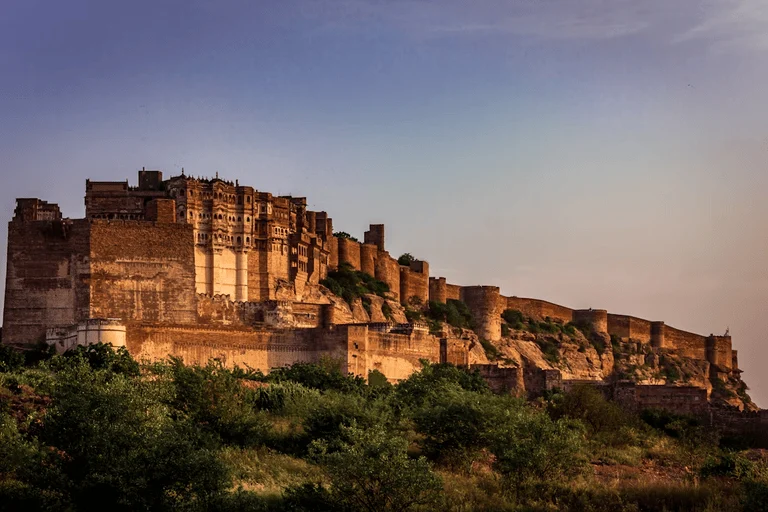
0 0 These two destinations have completely different personalities, but the journey between the two destinations is mesmerising. Imagine yourself waking up to the blue-painted buildings of Jodhpur, covered with mighty forts and surrounded by beautiful desert vibes. And then […]
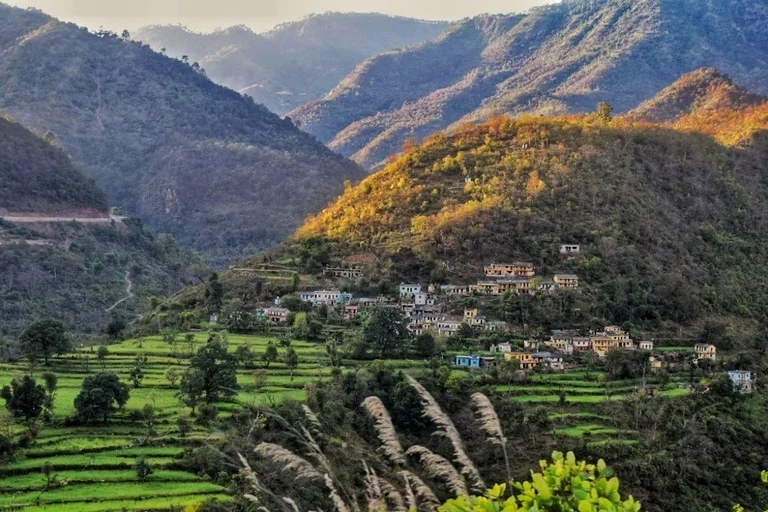
0 0 Kullu to Manali At a Glance Kullu and Manali sit in the same valley, so this isn’t really a “journey” in the way Delhi to Manali is; it’s more of a short hop most travellers do on their […]
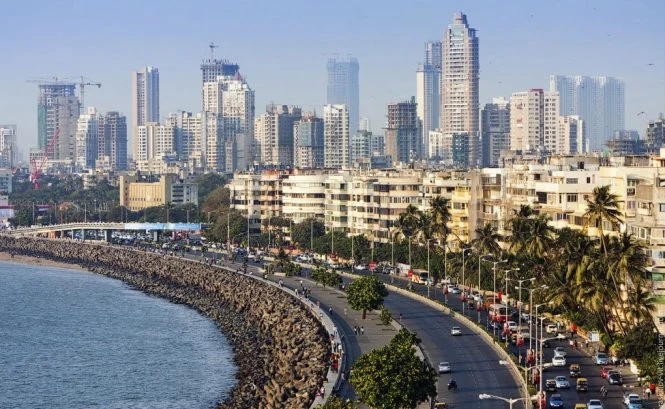
0 0 Mumbai to Goa At a Glance Goa is one of the most happening places in India. It offers nature, partying, waterfalls, trails, water activities, and whatnot. Goa sees millions of tourists every year from all across the globe, […]

0 0 Varanasi to Haridwar at a Glance Here are the numbers, before anything else. People do this route mostly for one reason: both cities run a daily Ganga aarti, and pilgrims like pairing them into one circuit. Road: roughly […]
0 0 The Hon Thom cable car in Phu Quoc is renowned for its Guinness World Record as the longest sea-crossing cable car. Offering a great view of the Gulf of Thailand, this cable car ride stretches across 7.9 km. […]
0 0 Ask most people to name the world’s longest bridge, and you’re likely to get a confident answer like the Golden Gate Bridge or the Brooklyn Bridge or some other famous landmark plastered across postcards and movies. But the […]
0 0 Angel Falls in Venezuela is the highest waterfall in the world. It is 979 metres high. The falls are in a large forest area called Canaima National Park. Getting there takes time, but the views are amazing. You […]
0 0 Largest Mall In The World Iran Mall in Tehran, Iran, is the world’s biggest mall by total reported area. The mall is approximately 1.95 million square metres, or 21 million square feet. Note: The discussion of the biggest […]
0 0 The world’s highest railway bridges are mostly in China and India. India’s Chenab Bridge is the tallest railway arch bridge at 359 metres, which is even higher than the Eiffel Tower. China’s Najiehe Bridge, at 310 metres, still […]