 Quick Chat
 Call Us
 18002099100




0 0 TL;DR: Astronomically speaking, Time’s Ticking!!! Here’s the quick version: What is Jantar Mantar Delhi? It is an 18th-century stone observatory near Connaught Place, built by Maharaja Jai Singh II in 1724. The nearest metro is Patel Chowk (Yellow […]

Table of contents
Mahashivaratri, or the “Great Night of Shiva”, is one of the most significant Hindu festivals celebrated all across India, as well as in several other parts of the world by Hindu devotees. This annual religious festival is celebrated in the month of Maagha or Phalguna according to the Hindu Lunar calendar and brings countless people together with its cultural and traditional practices, such as puja, rituals, fairs, local events, etc. If you want an elaborate explanation of the importance of Maha Shivaratri and the key rituals associated with it, go through the contents of this page.
How is Mahashivratri celebrated?
Mahashivratri is about honouring Lord Shiva and seeking his divine blessings and guidance in life. However, how exactly the Mahashivratri celebration across India takes place differs from place to place and from community to community. In general, Hindus across the country celebrate Mahashivaratri with early morning rituals at Shiva temples, which include special invocations and Abhishekams on Shiva Lingams, followed by observing a fast and participating in nightlong vigil, which includes chanting prayers, listening to religious sermons, singing devotional songs, and so on. Alongside this, various religious-themed cultural programs, such as dramas, discourses, dance and music events, etc., are organised, and the people of the local community attend them. Social gatherings, exchanging of greetings and meals and partaking in charitable actions are some other features that are evident during Mahashivaratri throughout India.
Mahashivratri Rituals
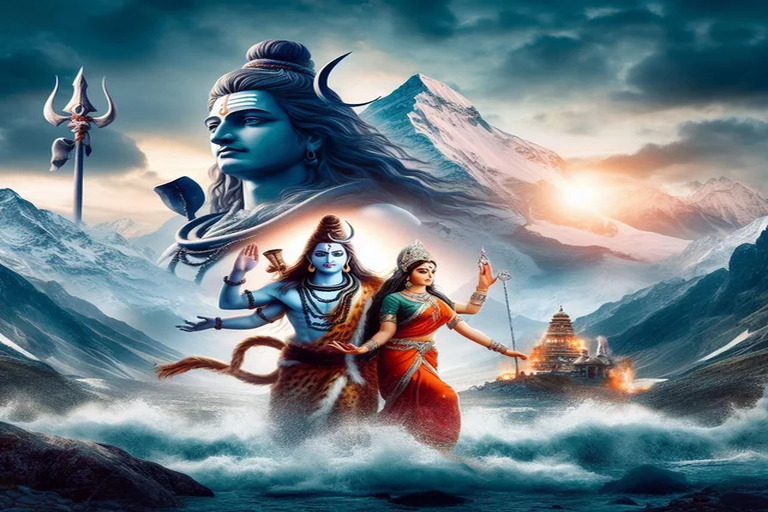
Mhadev and paravti
Mahashivratri is illustrated by age-old traditions and rituals that are widely performed and observed on this auspicious day by countless devotees even now. The festival is marked by a handful of ritualistic practices, such as;
Jaagran or Nightlong rituals
During the night of the festival, devotees gather together in an all-night vigil, called “Jaagran” or “Jaagaran” and partake in devotional activities, such as the offering of prayers, uttering of religious chants, meditation, etc. Jagran is believed to signify dedication to Lord Shiva and, in a way, is allegorical of overcoming darkness and incognisance.
Making offerings
During Mahashivratri, devotees offer sacred Bilva leaves to Shiva Lingam. This is believed to have a calming effect on the Lord’s fiery energy. Flowers (except red ones) are also offered to the Lord, which symbolises devotion as well as the destruction of negative energies. When making offerings, be sure to ask the priest what to offer. Instead of Kumkum or Sindoor, you should use sandalwood while worshipping the lord. This is because offering red vermillion is said to be equivalent to insulting the lord. Hence, it should be avoided at all costs.
Fasting
The practice of Mahashivratri fasting is a key ritual followed by many adherents during this festival. It signifies self-control and is believed to purify one’s soul, body and mind, which in turn helps them to focus their thoughts and divert their energies on spiritual purposes.
Meditation and religious chants
The chanting of the lord’s name, along with meditative practice during Mahashivratri, is said to help followers establish a strong spiritual connection with their inner selves and experience the lord’s divine aura. When you visit the key locations where Mahashivratri is celebrated, you will keep hearing people continuously chant the Panchakshara mantra, “Om Namah Shivaya”.
Maha Rudrabhishek:
This is a edic ritual followed by priests and devotees during Mahashivratri across India. It involves the ritual bathing of Shiva Lingam with milk, honey, curd ghee, etc., all while chanting religious mantras. This ritual is said to bring peace, growth, prosperity and success in one’s life.
Shiva Darshan:
During Mahashivratri, prayers are offered both at home and in temples. It is a great time to go on Lord Shiva temple visits, i.e., Shiva Darshan, seek blessings from the god, talk to priests and other devotees, witness and engage in ritualistic practices, etc. According to the Puranas, one should avoid completing a full circle around the Shiva Lingam. Instead, it should be a semi-circle (half-circumambulation) and then return to the starting point.
Types of Mahashivratri Fasting
Fasting, or “Vrat”, is a major Mahashivratri ritual observed by devotees. However, many have the misconception that it means not eating anything throughout the day of Mahashivratri, but that is not the case. There are mainly three types of Mahashivratri fasting observed by devotees during the festival. They are;
Phalahara Vrat
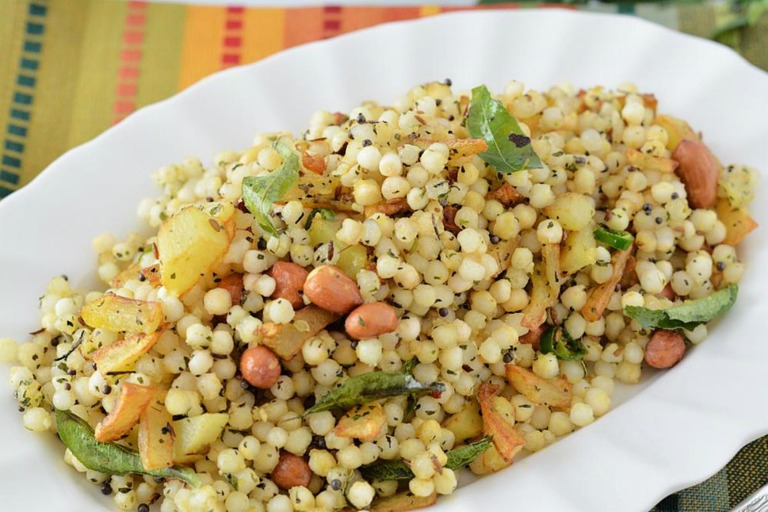
Faral
During Mahashivratri, devotees who partake in this type of fasting abstain from eating certain types of food, which include pulses, grains, and non-vegetarian food. Instead of these, they stay on a strict diet that includes fruits, nuts, yoghurts, milk, lassi, water, coconut water, and coffee. Just remember that these foods should not be salted. The food allowed in Phalahara Vrat is considered pure and can help facilitate spiritual growth.
Nirjala Vrat
On the other hand, Nirjala Vrat is another important but more strict version of fasting that many devotees observe during Mahashivratri. Nirjala Vrat literally means waterless fasting. In this kind of fasting, devotees abstain from not only solid but also liquid food, including water. It is observed throughout the day and night. It is very challenging, but devotees still manage to successfully observe it all while partaking in other ritualistic activities through sheer devotion and unwavering mental and physical strength.
Samapta
This type of fasting involves eating the food allowed under Phalahara Vrat, such as fruits, milk, nuts, water, etc., and a one-time meal consisting of sweets, such as sooji ka halwa, rice kheer, jaggery kheer, etc.
When observing Mahashivratri at home, make sure to place the idol or picture of Lord Shiva in the northeast direction of the house and make offerings, followed by performing aarti. Also, if you are observing a fast that allows the consumption of fruit juice, consider avoiding packaged juices. It’s because they may contain added preservatives and salt.
Importance of Mahashivratri and why it is celebrated
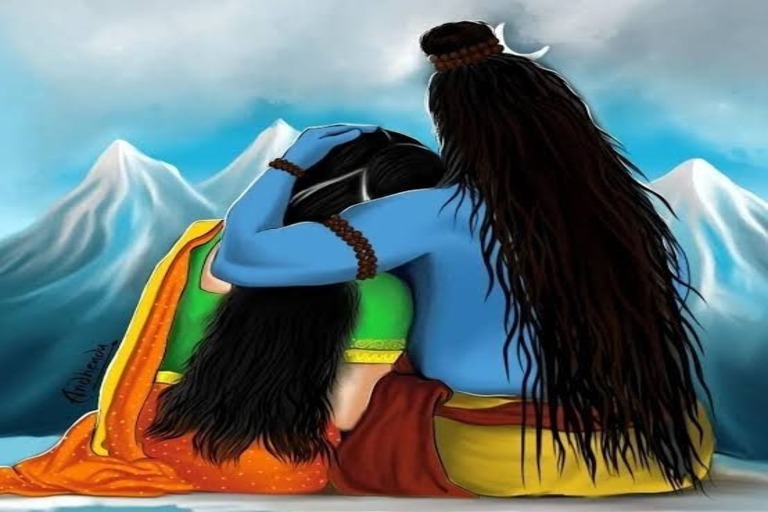
Mhashivratri
Must Read : Mahashivratri 2025: Date, History, and Significance Across India
Mahashivratri, or the “Great Night of Shiva”, has immense spiritual and cultural importance. Some legend suggests that this festival is said to be the night marking the auspicious union of Lord Shiva and Devi Parvati through marriage, while other suggests that it marks the night when the Lord performed Tandava Nritya, the celestial dance of creation, preservation and destruction.
There is another popular legend associated with Mahashivaratri that many may not know. According to this legend, it is believed that Mahashivaratri marks the day when Lord Shiva consumed the Halahala that was produced during Samudra Manthana. Otherwise called “Churning of the Ocean”, Samudra Manthan is elaborately explained in Vishnu Purana. This happened when the Devas and Asuras, as commanded by Lord Vishnu, began churning the ocean in search of the immortality nectar. During this event, Haalahala, a pot of toxic poison capable of wiping out all creation, came out of the ocean. The Devas approached Lord Shiva and requested him to take care of this poison. To protect the three worlds, Lord Shiva consumed the poison. As soon as he did it, Devi Parvati pressed her hand on his throat so the poison wouldn’t reach the stomach and spread to the rest of the body. The poison stayed in his throat, turning it blue, hence giving the god the epithet “Neelkantha”, meaning the “blue-throated one”. As therapy, the Devas were suggested to keep Mahadev awake through the night, which they did, and once morning came, the Lord Shiva gave his blessings to all the Devas. Hence, it is believed that the vigil associated with Mahashivratri is linked to this event.
All in all, it brings people of different backgrounds and social statuses together in performing ritualistic practices and being part of the Mahashivratri celebration. Through offerings, prayers, religious chants, fasting, etc., devotees get an opportunity to purify their mind, body and soul, align them to reach higher consciousness, connect with the divine presence of the lord and seek his blessings and guidance in life, to overcome challenges.
Conclusion:
The importance of Mahashivratri in Hinduism and India is immense. Lord Shiva represents inner strength and the ability to overcome difficulties and challenges in life. By fasting, making offerings, and taking part in other ritualistic practices, devotees get to cleanse their minds, body and soul and create a stronger bond with their inner selves and the Lord, which is said to help them overcome difficulties, eradicate negativities and reach their purpose in life.
Recommended Articles for you
Exotic Kashmir with Gulmarg: A Customer’s Journey Through Paradise on Earth
0 0 Kashmir: The Place Everyone Talks About. I Finally Went. Snow-covered peaks, mirror-like lakes, warm Kahwa and views that somehow live up to the hype. I’ll admit it. I wondered if Kashmir could really live up to everything I’d […]
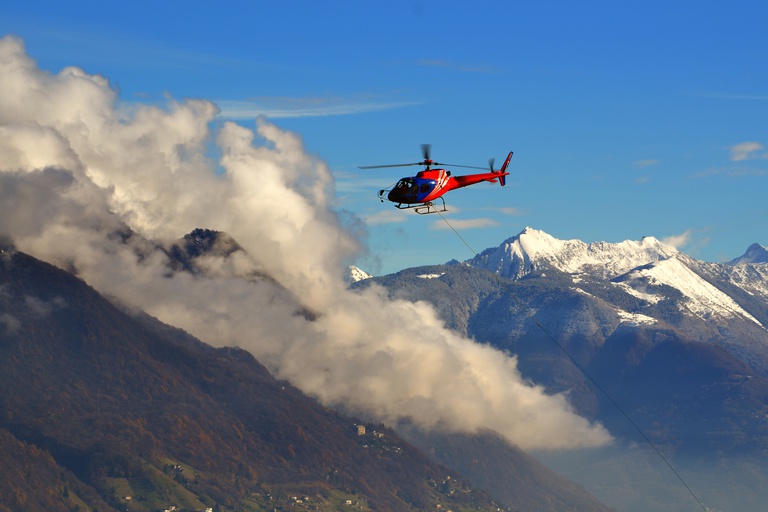
Kailash Mansarovar Yatra via Kathmandu by Helicopter: A Journey of Faith, Adventure & Transformation
0 0 We often embark on journeys to experience new things or to find ourselves. The Kailash Mansarovar Yatra is clearly the latter. For centuries, this remote destination, peeking from the rugged mountain terrain, has called upon countless devotees like […]
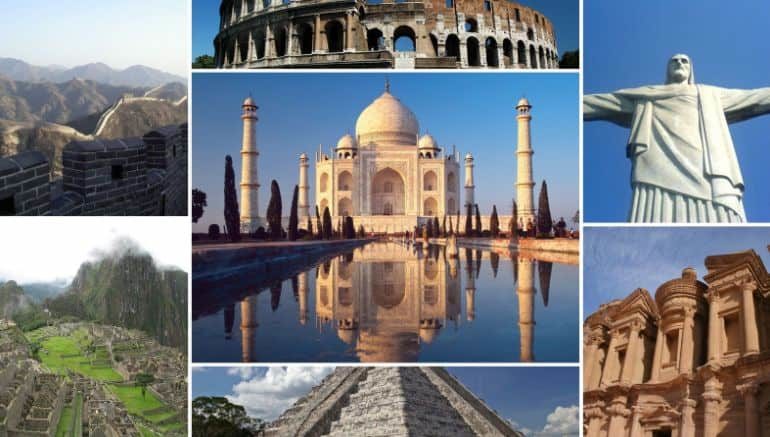
7 Wonders of the World: Amazing Facts About the World’s Greatest Wonders
5 0 In 2007, a global poll was held to decide the new 7 Wonders of the World. From the earlier list only one remained, the Pyramids, and it was time to bring forth a new set of heritage icons […]

Famous Italian Dishes: A Taste of Authentic Italian Cuisine
0 0 Although, Italian food is much appreciated and replicated the world over, it is best experienced in Italy. The fresh, local produce combined with the skills and traditions of authentic Italian chefs, and the expresso, wine and cheese, give […]
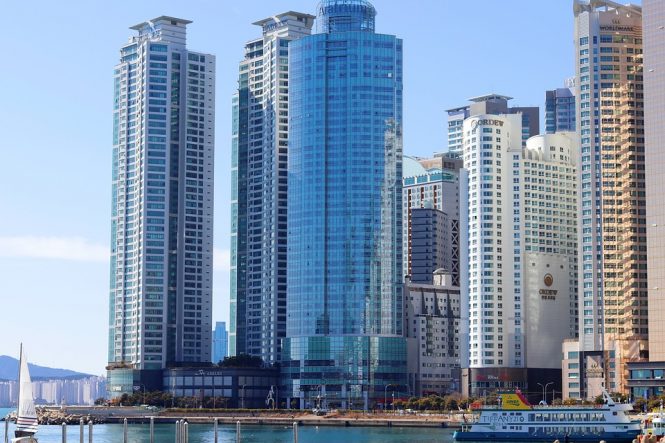
Places to Visit in Busan: Top Attractions & Things to Do
0 0 Do you ever find yourself sitting for days, often weeks deliberating where to go on your next holiday? Can’t choose between sipping on some piña colada on a calm beach or partying all night in the heart of […]

Best Time to Visit Japan: A Complete Season-Wise Travel Guide
0 0 There isn’t any specific weather that constitutes the Best Time to Visit Japan as the weather patterns, and average temperatures vary significantly across the country. The wide mountain ranges and surrounding warm seas are the main influencers of […]

Everything You Need to Know Before Visiting the Amazon Rainforest
0 0 The Amazon Rainforest, a vast and awe-inspiring wilderness, beckons adventurous souls with its unparalleled biodiversity, ancient cultures, and breathtaking landscapes. This verdant expanse is a true marvel of nature across nine nations in South America, with its lush […]
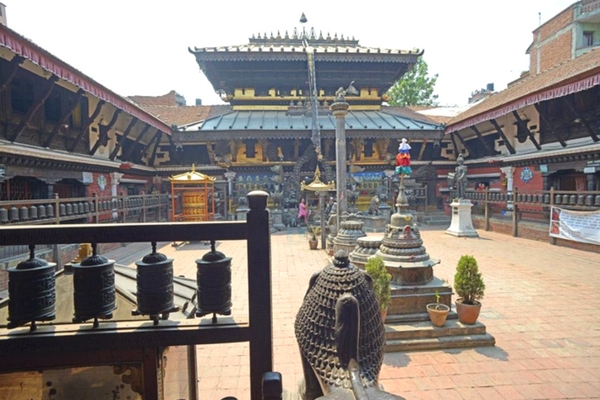
10 Most Beautiful Nepal Tourist Places To Visit
1 0 The land of ancient monasteries, snow-capped mountains and the birthplace of Buddhism, Nepal couldn’t be a more enchanting place to travel. Though October to December is deemed the best time to visit Nepal, it’s never too soon to […]

A Detailed Itinerary for an Ideal Day in Ocean Park
0 0 Ocean Park, nestled on the southern side of Hong Kong Island, is an iconic marine-themed amusement park and one of the city’s premier attractions. With its diverse array of thrilling rides, captivating animal exhibits, and mesmerizing marine life […]
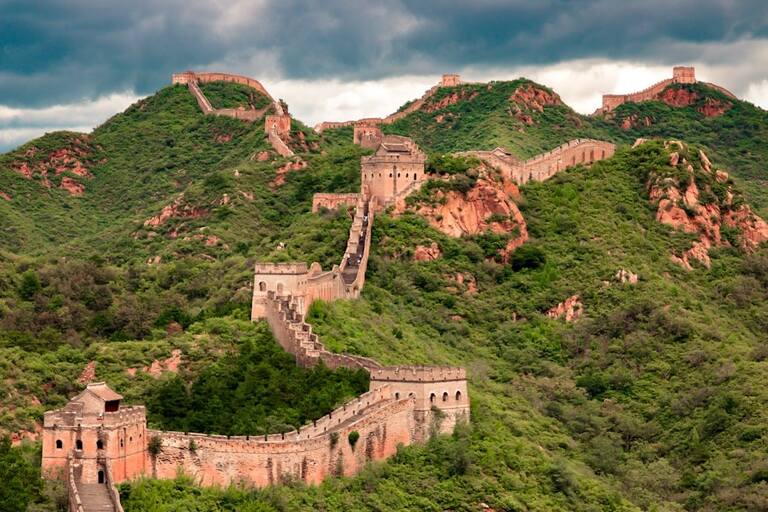
Walk Along the Great Wall of China: A Marvel of Defence
0 1 Stretching across the vast expanse of northern China, the Great Wall stands as an awe-inspiring testament to human ingenuity, perseverance, and resilience. This colossal fortification, built and rebuilt over centuries, has captured the imagination of travelers and historians […]
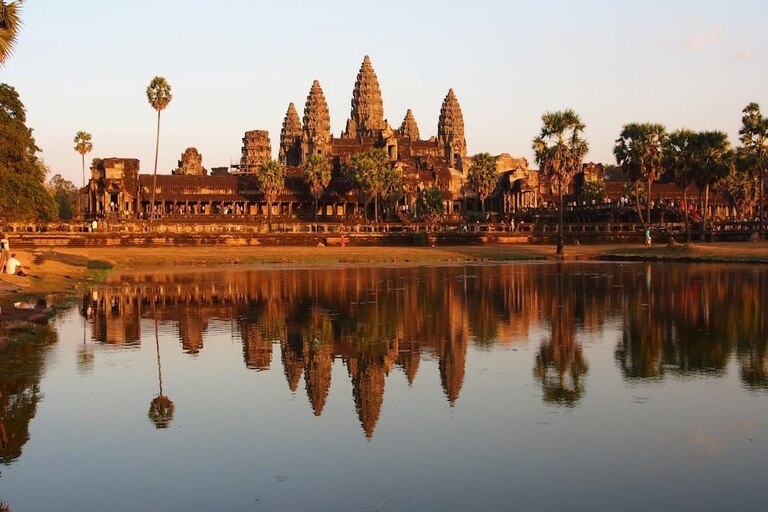
Walk Through the Timeless Beauty of Angkor Wat Temples
0 0 Nestled deep within the lush, tropical forests of northwestern Cambodia lies one of the most remarkable and enigmatic architectural wonders of the ancient world— Angkor Wat. This colossal temple complex, built in the early 12th century, stands as […]

Why Palm Jumeirah Dubai Is a Must-Visit Destination
0 0 It is without a question that every Dubai holidays must include a trip to the grand Palm Jumeirah. Listed as one of the marvels of the 21st century, this man-made archipelago is the symbol of opulence that defines […]

10 Best waterfalls in Kerala 2026
0 0 Kerala comes to life during the monsoon season, when rivers nourished by rainfall turn into breathtaking waterfalls amid verdant woods, undulating hills, and mist-covered valleys. For those who enjoy the outdoors, the season offers the most striking sights […]
Kumbh Mela Nashik: Complete Guide to the Nashik-Trimbakeshwar Simhastha Kumbh
0 0 What is Kumbh Mela Nashik? Kumbh Mela Nashik, also known as the Trimbakeshwar Kumbh Mela, is held every 12 years. It is centred around Nasik and the nearby town of Trimbak. Millions of devotees and saints from India […]
Valley of flowers in Uttarakhand India
0 0 Valley of flowers trek in Uttarakhand 2026: Complete Travel Guide If you want to escape to the Himalayas, the Valley of Flowers hike in Uttarakhand will not disappoint. As you travel through colourful alpine meadows, each bend brings […]
Simhastha Kumbh Mela Explained: History, Significance and Rituals
0 0 The Simhastha Kumbh Mela should be on your travel itinerary if you want to see one of India’s most potent spiritual events. This remarkable festival, which takes place every twelve years in Ujjain along the holy Shipra River, […]
Naneghat Trek During Monsoon: Witness Maharashtra’s Famous Reverse Waterfalls
0 0 Experience the Reverse Waterfalls at Naneghat Trek Incredible India never fails to amaze you! You find places such as the reverse waterfalls at Naneghat, which emphasise why this country is so fascinating. The Naneghat waterfalls, located in […]
Monsoon in Goa 2026: Best Things to Do Beyond Beaches
0 0 Most people who’ve been to Goa have seen one version of it, i.e. the December version. Packed beaches, beach shacks, sunburn, New Year’s Eve countdowns, people dancing till sunrise, etc. That’s a vibe most people associate with Goa. […]

Help Me Pack for My Trip to Kerala Next Week: Complete Packing Guide
0 0 TLDR — What to Pack for Kerala Short on time? Here’s the 60-second version: Clothes: Lightweight cotton and linen. Quick-dry fabrics. A few layers for the hills. Modest outfits for temple visits. Footwear: Slip-on sandals, walking shoes with […]