 Call Us
 18002099100


Must-See Things to Do in Dubai: Top Adventures Beyond the Malls
By Thomas Cook Admin


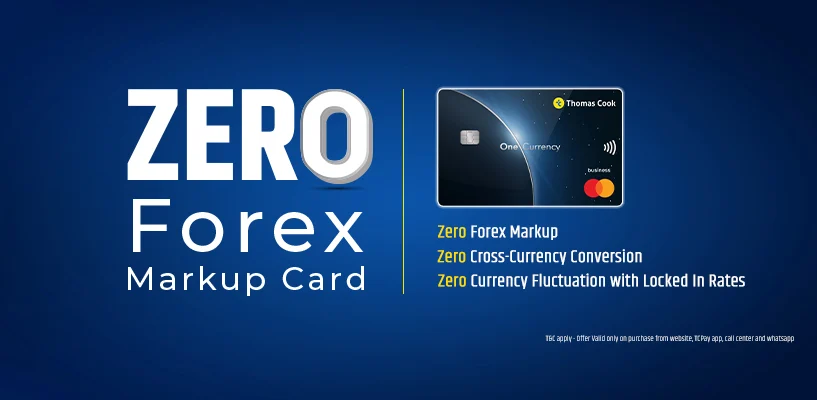
When you travel overseas, pay for online courses in dollars, or purchase on international websites, those little additional charges on your card can pile up over time. This is when a card with zero forex markup makes all the difference. You pay nearly exactly what the currency is worth on each overseas transaction rather than an additional 2 to 3.5 per cent.
Consider a zero forex card as a more prudent method of making international purchases. This is important right now because the rupee’s fluctuations make every percentage point significant, whether you’re a student paying tuition, a frequent traveller planning several trips this year, or someone subscribing to foreign tools.
A solid forex card saves you money without requiring any additional action, as it uses Visa or Mastercard exchange rates directly. Selecting the appropriate card might discreetly save you thousands of dollars if you’re organising a trip or even making frequent overseas purchases.
Simply put, a zero forex markup card allows you to make purchases in foreign currencies without the additional cost that banks typically impose on top of the conversion rate. The bank often adds a 2 to 3.5 per cent markup and translates the amount to Indian rupees when you swipe a standard forex card overseas or make an international payment. Most consumers are unaware of this hidden expense until they look at their statement.
In real life, it functions as follows:
Therefore, “zero” does not imply unrestricted currency conversion. It implies that the bank will not impose any additional fees. The network charge, which varies slightly every day, is still what you pay.
If you pay for international subscriptions, travel frequently, or study overseas, this is the ideal option for you. You can also use options like Thomas Cook Forex Cards to lock currency rates before travelling overseas if you prefer prepaid spending over credit-based payments.
One minor piece of advice: at checkout, always opt to pay in the local currency rather than Indian rupees. Many people lose money there without realising it.
The largest expense isn’t always clear when you’re travelling or even making a reservation in dollars. It’s the additional percentage that your bank discreetly adds. This is precisely the point at which a card with no foreign exchange markup begins to have a significant impact.
Let’s dissect it so that it truly aids in your planning:
That additional fee is practically nonexistent when using a zero forex card. You can spend that money on a different activity, dinner, or hotel upgrade.
Now consider more than just one trip. These savings keep recurring silently if you travel twice a year, pay for classes, subscriptions, or make overseas purchases.
Another little yet crucial factor that most people overlook is:
Even incentives are insufficient when using a standard card. The 3%+ fee means that even with a 1% cashback, you are still paying extra. Any incentives you receive on a card with no currency markup remain significant.
Additionally, whenever you have the opportunity, always elect to pay in local currency. Due to low conversion rates, paying with Indian rupees overseas frequently results in an additional hidden 3 to 7%. This isn’t a luxury feature if you expect to travel abroad frequently or are planning a vacation soon. It’s among the simplest methods to reduce needless expenses.
The main way that a 0% forex markup card differs from a standard one is when you make foreign currency purchases overseas or online. To assist you in making a decision, consider this simple side-by-side:
| Feature | Zero Forex Markup Card | Regular Card |
| Forex charges | With a 0 forex markup card, you pay nearly the actual exchange rate because there is no additional percentage added to foreign transactions. | A standard forex card often has a markup of 1% to 3.5%, which subtly raises your overall expenses. |
| Rewards value | Since there is no cost associated with rewards and rebates, they truly feel beneficial. | Foreign exchange fees can cancel out rewards, particularly when it comes to travel expenses. |
| Overall cost abroad | Your spending remains consistent and modest because you simply pay the network charge. | You pay markup and GST in addition to the exchange rate, which can quickly mount up on larger purchases. |
| Best use case | Perfect whether you study abroad, travel, or shop abroad, even a few times a year. | better suited for regular use and domestic expenditure in India. |
| Annual fees | Certain cards, particularly premium ones with travel benefits, could have additional fees. | Many standard cards are inexpensive or free for life, but they are less effective overseas. |
| Spending control tip | It functions best when you monitor exchange rates and make all of your payments in local currency. | frequently results in increased expenses if you make careless currency conversion decisions. |
These three options seem identical when you’re travelling overseas, but once you start spending money, they function rather differently. Here’s an easy-to-understand, practical comparison so you know what to utilise.
| Zero Forex Markup Card | Forex Card (Prepaid) | Debit Card |
| You can spend on credit and pay later with a zero forex markup card, which is useful for deposits or hotels. | Since a zero forex card is prepaid, you load funds ahead of time and only use that sum. | With a debit card, funds are taken straight out of your bank account. |
| uses real-time Visa or Mastercard rates, which are subject to daily fluctuations. | helpful if rates increase later because it locks the rate when you load money. | You end up spending more since it uses live rates but adds additional costs. |
| With a 0 forex markup card, you pay close to the actual exchange rate by avoiding the additional fee. | Typically, there is little to no markup, particularly on high-quality cards, but there can be loading or reload costs. | It is the most expensive choice, typically charging a markup of 2 to 3.5 per cent + GST. |
| High fees and interest from the start make it unsuitable. | For ATM withdrawals overseas, it is typically more affordable and useful. | It’s feasible, but costs can be expensive and erratic. |
| Perfect for earning rewards while swiping at hotels, airlines, and other purchases. | Ideal for budgeting and daily expenditures, particularly for students or extended travels. | Serves as a fallback in case other cards don’t work. |
Knowing RBI regulations will help you avoid unpleasant surprises when you plan to spend money abroad. These guidelines hold whether you use a zero forex markup card, or any other type of forex card.
The majority of individuals get confused at this point.
Crucial details: TCS is not an additional expense. When you file your income tax return, you can claim it back.
A little piece of advice: if you’re nearing 10 lakh, strategically schedule large payments across several fiscal years to prevent needless cash flow obstruction.
Although it’s not totally “free,” a card with no currency markup can save you a lot of money. If you’re not diligent, a few minor charges may still appear. In reality, you should keep an eye out for the following:
The machine could ask if you want to pay in Indian rupees when you’re overseas. Although it seems practical, it is a trap. A bad rate could cost you three to seven per cent. To truly profit from your card with no foreign exchange markup, always select the local currency.
Interest rates can be extremely expensive if you carry over your bill. That might wipe out all of your foreign savings.
Many people overpay without realising it in this situation. From the start, you will be charged a fixed price plus interest. Cash withdrawals are not intended for even the greatest forex card.
Certain cards aren’t really free. To avoid annual fees, you might have to fulfil expenditure requirements.
You pay the Visa or Mastercard rate, which could be marginally higher than the live market rate, even if you have a zero forex card.
A card with no foreign exchange markup is not necessary for everyone. It depends on how much you really spend when travelling elsewhere. Here’s an easy method to determine your fit.
In these situations, a card with no foreign exchange markup discreetly lowers expenses without altering your spending patterns.
If your objectives include regulated spending, fixed exchange rates, and budgeting, a zero forex card (prepaid forex card) would be more appropriate for you.
A straightforward mixture works best if you’re unsure. Use a currency card for regular travel spending and a card for reservations.
The 2 to 3.5 per cent bank fee is eliminated with a zero FOREX markup card, but other expenses remain. The Visa or Mastercard rate is still what you pay, plus occasionally a tiny margin. Thus, “zero” refers to no markup rather than total freedom.
Yes, but only in terms of fees. There is no GST on a 0 forex markup card because it has no markup. Nonetheless, annual fees, cash withdrawals, and any additional expenses are still subject to GST.
Your style will determine this. For rewards and flexibility, a forex card is preferable. If you want rigorous budgeting and stable rates, especially for longer journeys, a prepaid zero forex card is preferable.
Yes, in accordance with LRS regulations. TCS is applicable if your annual international expenditure exceeds ₹10 lakh. Whether you use a card or a foreign exchange card is irrelevant. It is refundable when you file your taxes.
Yes, and it’s a great way to shop abroad. You can avoid additional fees on such payments by using a zero forex markup card. Just make sure that when you check out, you pay in USD rather than INR.
You’ll probably have to pay more. The merchant sets a lower rate in what is known as dynamic currency conversion. Always select the local currency to save money, even if your card has no foreign exchange markup.
Not directly. Banks choose the markup, but the RBI uses LRS to regulate total foreign spending. Because of this, many cards have varying foreign exchange fees, including choices with no markup.
For normal Indian cards, the answer is usually no. Residents with Indian income and PAN are the target audience for the majority of forex card alternatives. Specialised cards connected to NRE or NRO accounts are usually required for NRIs.




0 0 Planning your international Dubai Packages? Here are the must see places in Dubai. Must Do Things in Dubai 1. Ride through the sunset on an at the picturesque Dubai creek, and all for just one dirham. Close your eyes […]

0 0 When God created the world, his most beautiful imagination led to the creation of flowers. If we take a close look at our lives we can see that the most special celebrations of our lives are adorned with […]
0 0 A Guide to Temples of Angkor Wat at a Glance Angkor Wat Cambodia is one of the world’s most remarkable temple complexes. It is also the world’s most famous historical landmark. There are hundreds of ancient monuments in […]
0 0 A Guide to Exploring Busan at a Glance Busan is known for: beaches, seafood markets, temples, colourful neighbourhoods and lively urban culture. Best places to visit in Busan: Haeundae Beach, Gamcheon Culture Village, Gwangalli Beach, Haedong Yonggungsa Temple, […]
5 0 Seven Wonders of the World at a Glance The seven wonders of the world are part of the history that everyone should witness at least once. Here’s some information about them: The 7 Wonders of the World: Great […]
0 0 From creamy northern risotto to spicy southern seafood, every area does its own food thing in Italy. It’s about simple, quality ingredients, eating together, and local rhythms. Skip tourist traps, eat what’s in season, and always save room […]
0 0 When you ask a novelist to weave a tale of romance or when a painter intends to bring the most romantic backdrop to his canvas, it is the image of Paris from which they draw inspiration. Intrinsically beautiful […]
1 0 Nepal is geographically small, but it crams ancient temples, Himalayan treks, jungle safaris, and mountain lakes into one trip. Indians don’t need a visa. Hit Kathmandu for culture, Pokhara for views, Chitwan for wildlife. Trekking needs a licensed […]
0 0 The Amazon has got a bit of everything – wildlife, river trips, jungle hikes, and some real cultural stuff too. Brazil, Peru, or Ecuador are your main entry points, so pick whichever lines up with what you want […]

0 0 Picture this: you’re running a little late for your flight. You leap out of the cab, collect your bags (with little or no grace) and walk into the airport, only to be hit by a wave of travellers […]

0 0 Ocean Park Hong Kong rolls theme-park rides, giant pandas, marine-life exhibits, scenic cable-car rides, and family-friendly stuff into one massive park. It’s split into the Waterfront and Summit, so you’ve got loads to get through in a full […]

0 0 If you call yourself a beer aficionado, you mustn’t miss out on Oktoberfest – the biggest beer festival in the world. Celebrated in Munich every year for 16-18 days, Oktoberfest marks the marriage ceremony of Prince Ludwig and […]

0 1 Best sections for first-time visitors: Mutianyu for scenery and a balanced experience, Badaling for accessibility, and Jinshanling for longer, quieter walks. Best time to visit: Spring and autumn offer comfortable weather and beautiful mountain scenery. Summer can be […]

0 0 The best travel memories do not begin with a checklist; rather, they begin with a moment that makes you pause and think, “I’m really here.” Imagine watching Dubai’s skyline glow gold from a beachfront café as the sun […]

0 0 The Indonesian island of Bali is one of the most popular tourist destinations in the world. Both adventure lovers and holiday mongers love visiting this beautiful island to spend a few days of fun and relaxation away from […]

0 0 Topping the world Happiness Index is something quite common for Nordic Countries today and as such, it is no wonder that the 2018 Annual Happiness Report saw Finland at the top. The country jumped from number five in […]

0 0 When it comes to travelling; tourists usually like to visit beaches, hill stations and places that are renowned for monuments and wonders of the world. But how many of you have visited world heritage sites? A world heritage […]
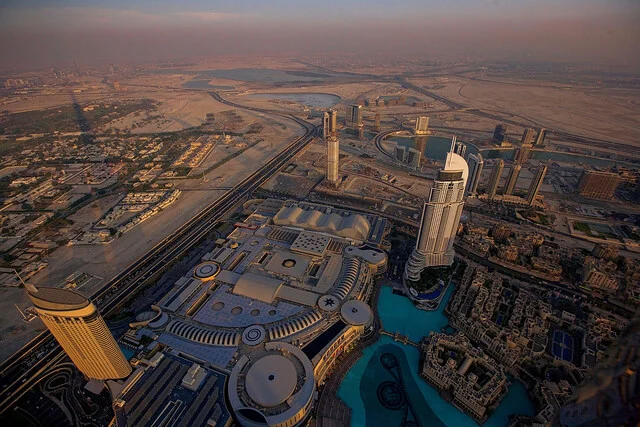
0 0 The soft golden sun and clear warm beaches of Dubai offer the most glorious sights that we can ever witness. Every year thousands of travelers flock in to this part of the world from across to globe only […]
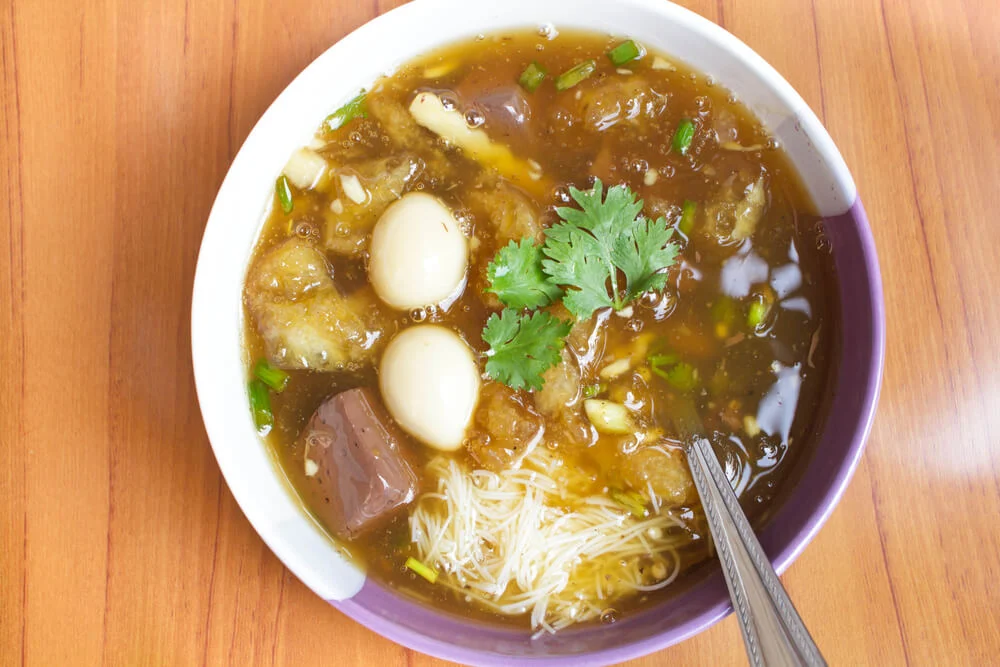
0 0 The touch of regality that comes along with Mesmerizing China essentially extends over its cuisine as well. Being dainty enough, Chinese Cuisine are huge favorites with people all over the world as they have transcended over geographical boundaries. […]
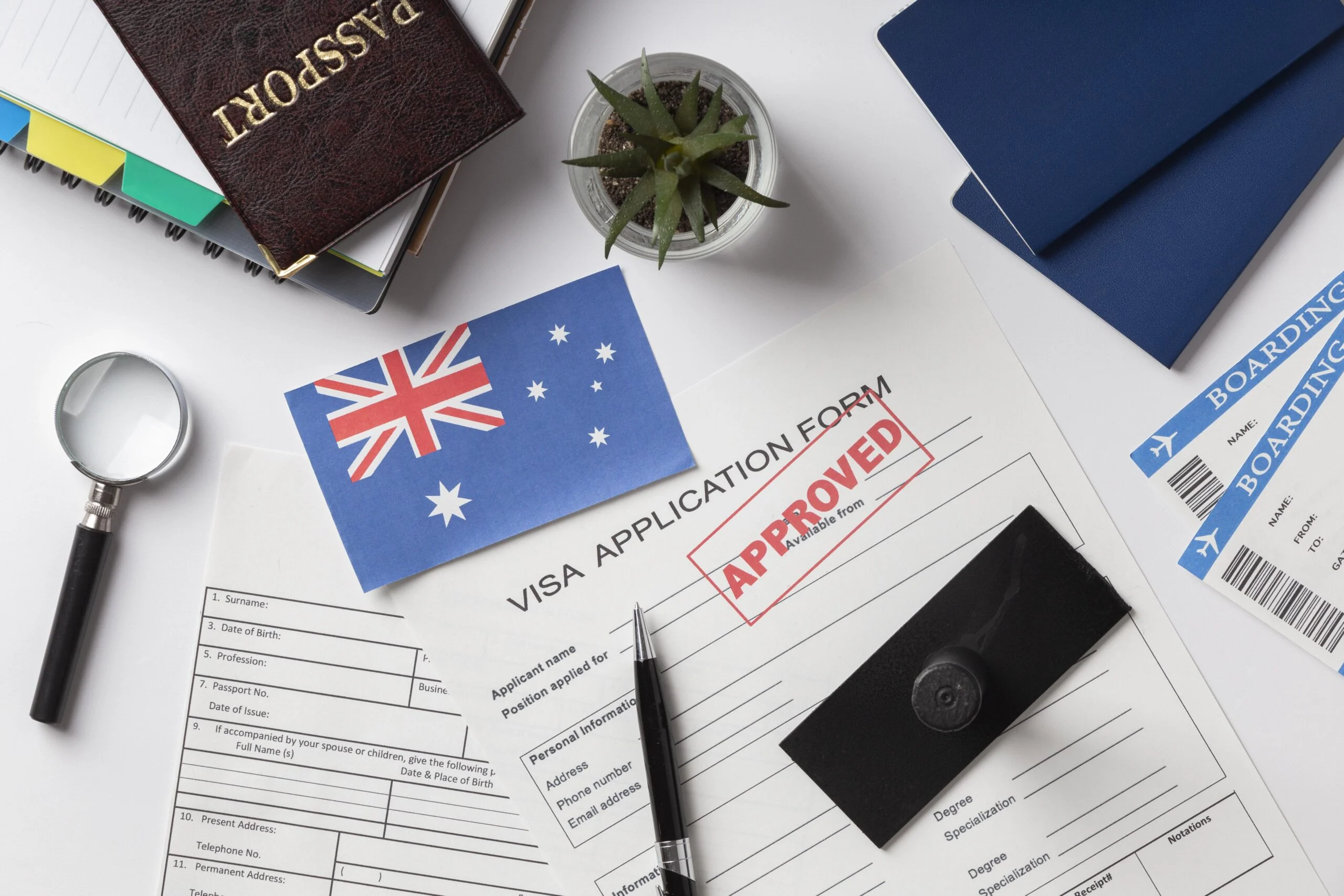
0 0 The Australia Student Visa, officially the Subclass 500, lets you live in Australia for your full course at a recognised institution, with limited work rights built in. Covers everyone from a bachelor’s student in Sydney to a vocational […]