 Call Us
 18002099100



Must-See Things to Do in Dubai: Top Adventures Beyond the Malls
By Thomas Cook Admin


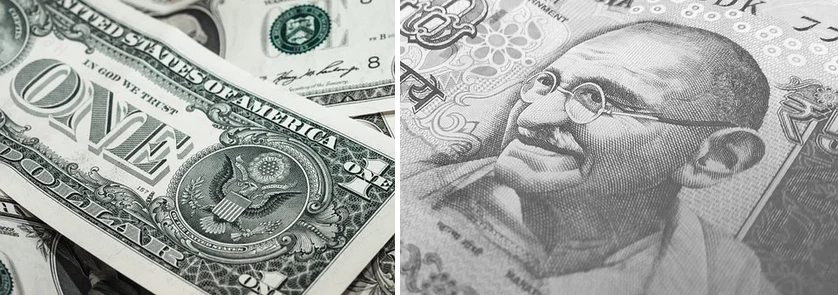
The dollar has never been cheap in rupee terms, not really. But it’s still wild to see how far the number has travelled since 1947, from under four rupees to close to a hundred. This walks through the actual USD to INR history year by year, why the rupee kept losing ground, and what today’s rate means if you’re travelling, studying abroad, or sending money home.
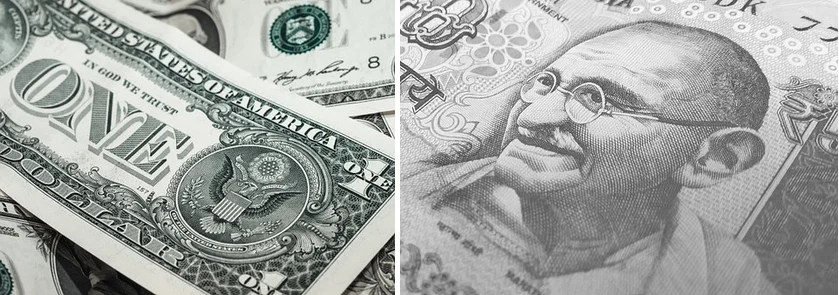
1 USD to INR in 1947 was around ₹3.30. That figure wasn’t India’s own doing. The rupee was pegged to the British pound under the Bretton Woods system, so its dollar value came from a chain of British and American arithmetic, not from any decision made in Delhi.
India had just come out of colonial rule, a world war, and Partition, all within a few years of each other. Not exactly a great time to be setting up a stable economy. There was no real independent monetary policy yet, and the Reserve Bank of India was still finding its footing. So while 1 USD to INR in 1947 is the number everyone searches for, it’s worth remembering it reflected Britain’s position more than India’s.
Here’s the US dollar to INR history in numbers, checked against RBI historical data rather than copied forward from an older table.
Year | Value |
1947 | 3.3 |
1950 | 4.76 |
1955 | 4.76 |
1957 | 4.76 |
1960 | 4.76 |
1965 | 4.76 |
1966 | 7.5 |
1970 | 7.5 |
1975 | 8.38 |
1980 | 7.86 |
1985 | 12.37 |
1990 | 17.5 |
1991 | 22.74 |
1995 | 32.43 |
2000 | 44.94 |
2005 | 44.1 |
2010 | 45.73 |
2013 | 56.57 |
2015 | 62.97 |
2016 | 66.46 |
2018 | 70.09 |
2020 | 76.38 |
2022 | 81.35 |
2025 | 88.72 |
2026 | ~95.56 (current) |
Notice the rate barely moved for sixteen years between 1950 and 1965, then nearly doubled overnight in 1966. Sixteen years flat, then bam. The dollar to rupee exchange rate history isn’t a smooth slide. It’s long flat stretches broken by sudden jolts, and each jolt has its own story.
Seven moments explain most of the movement dollar to rupee exchange rate history in that table.
This one didn’t actually touch the USD to INR history of the exchange rate. In 1957, India moved the rupee from annas and pies to 100 paise, a purely domestic counting change. Bit of a non-event on the FX side, honestly. The rate held at ₹4.76 before and after. It’s included here mainly because people often assume it was a currency shift, and it wasn’t.
After two wars and a brutal drought drained India’s reserves, the government devalued the rupee from ₹4.76 to ₹7.50 in June 1966. Almost a 57% jump in one move. It was a condition attached to further IMF and World Bank aid, and a hard admission that the fixed rate simply couldn’t hold anymore.
This is the real hinge point. By early 1991, India’s reserves could barely cover two weeks of imports, and gold was flown to London as collateral for an IMF loan (still hard to believe that actually happened, but it did). The rupee, near ₹17.90 going in, was devalued twice in July 1991 to around ₹25.80. By 1993 it had turned market-determined rather than government-fixed, settling near ₹31.40. Everything in the table about Us dollar to Indian rupee exchange rate history after this is really downstream of that one decision.
When the US Fed signalled it would wind down post-2008 stimulus, the “taper tantrum” pulled capital out of emerging markets fast. Really fast. The rupee, averaging ₹54 in 2012, briefly touched nearly ₹68 intraday in August 2013 before settling near ₹56-57 for the year.
The November 2016 note ban reshaped cash and banking overnight, but its currency impact was milder than people assume, which surprises a lot of people when they hear historical USD to INR exchange rate. The rate held around ₹66-68 before and after, drifting only slightly weaker through 2017 amid general policy uncertainty.
2018 was the year the rupee first crossed ₹70, closing at ₹70.09 against an opening near ₹63-64. Rising oil prices, a stronger dollar from Fed hikes, and a brewing US-China trade war worked against it all at once.
Covid-19 pushed the rupee from around ₹71 in January 2020 to a record ₹76-77 by April, as global trade froze and dollar liquidity got scarce. India’s forex reserves crossing $600 billion soon after cushioned what could have been worse.
The story since 2022 has been about the Fed as much as India. The rupee ended 2022 around Rs 81.35, crossing Rs 80 for the first time on Russia’s invasion of Ukraine, a rise in global energy prices and the sharpest series of US rate hikes in decades.
US rates attract global capital to dollar assets, and that pressure has not gone away. By 2025, the rate had reached ₹88.72, and current 2026 figures sit near ₹95.56, though that reflects where things stand now rather than a full-year average. This run has been steeper than most decades since 1991.
Half this story is really about the dollar, not the rupee. It’s the world’s primary reserve currency, so central banks hold it by default, and roughly 80% of global trade is invoiced in it. That’s a lot of built-in demand before anything else even happens.
US Treasury bonds are treated as one of the safest assets anywhere, so uncertainty tends to push money toward dollars regardless of what’s happening in India. Add higher US interest rates drawing in global capital, and the dollar stays strong almost independent of any one trading partner. This is why it’s worth comparing rates when you buy USD for travel, education, or other overseas expenses.
The US dollar to INR history chart matters because today’s rate shapes real decisions.
A weaker rupee means your travel budget stretches less. Check the exchange rate history USD to INR, and lock in a rate ahead of your trip rather than at the airport, which is almost always the worst deal.
For US-bound students, the exchange rate is often the biggest line item after tuition. A rupee that’s moved from ₹70 to ₹95 in under a decade means the same degree now costs families noticeably more, on top of tuition inflation itself. For everyday expenses after reaching the US, a Study Buddy Card can make managing funds more convenient.
India imports most of its crude oil and a large share of its gold, both priced in dollars. A weaker rupee makes both costlier at home, and that works its way into fuel and transport prices before long.
For NRIs, a weaker rupee is actually favourable, since the same dollar converts to more rupees. If you’re sending money home and want the practical side of holding dollars first, our guide on buying USD in India covers that.
Short answer: no. It’s less about economics than about how the number works. People treat “1 USD = 1 INR” as a kind of finish line, but the exchange rate is just a ratio shaped by dollar to rupee history, not a scoreboard. Japan’s yen trades in the hundreds per dollar, and nobody calls Japan’s economy weak for it.
What can genuinely improve is the rupee’s stability and gradual strength, if exports grow faster than imports and inflation stays controlled. That’s realistic. The headline digit crossing back below the dollar isn’t, and chasing it misses the point.
Rates vary more than expected between banks, airport counters, and forex service providers, sometimes by a rupee or more per dollar. Airports are almost always the costliest option. Booking online and locking in a rate ahead of time usually beats exchanging on the day.
Whether you’re booking a trip, planning tuition payments, or sending money home, the rate you get on the day makes a real difference. Thomas Cook provides live, competitive rates for USD to INR, the option to lock in rates in advance, and no convenience fees. Check today’s live USD to INR rate and book before it moves again.
1 USD to INR in 1947 was around ₹3.30. The number was more a reflection of Britain’s economic situation than India’s because at the time the rupee was pegged to the British pound and didn’t float on its own.
As of 2026, it is trading close to ₹95.56, even though it changes every day. Get a live rate card to know the exact amount right now instead of the annual average.
Looking at the US dollar USD to indian rupee INR exchange rate history overall, it comes down to persistent trade deficits, oil import dependence, higher domestic inflation than the US, and periodic capital outflows, layered on top of shocks like 1966 and 1991.
Not in the literal sense, and that’s fine, since the number itself doesn’t measure economic strength. Gradual stability and appreciation matter more than the headline figure ever will.
Compare banks and dedicated forex providers rather than exchanging at the airport, and lock in a rate ahead of travel or a remittance if you want to avoid daily swings working against you.




0 0 Planning your international Dubai Packages? Here are the must see places in Dubai. Must Do Things in Dubai 1. Ride through the sunset on an at the picturesque Dubai creek, and all for just one dirham. Close your eyes […]

0 0 When God created the world, his most beautiful imagination led to the creation of flowers. If we take a close look at our lives we can see that the most special celebrations of our lives are adorned with […]
0 0 A Guide to Temples of Angkor Wat at a Glance Angkor Wat Cambodia is one of the world’s most remarkable temple complexes. It is also the world’s most famous historical landmark. There are hundreds of ancient monuments in […]
0 0 A Guide to Exploring Busan at a Glance Busan is known for: beaches, seafood markets, temples, colourful neighbourhoods and lively urban culture. Best places to visit in Busan: Haeundae Beach, Gamcheon Culture Village, Gwangalli Beach, Haedong Yonggungsa Temple, […]
5 0 Seven Wonders of the World at a Glance The seven wonders of the world are part of the history that everyone should witness at least once. Here’s some information about them: The 7 Wonders of the World: Great […]

0 0 From creamy northern risotto to spicy southern seafood, every area does its own food thing in Italy. It’s about simple, quality ingredients, eating together, and local rhythms. Skip tourist traps, eat what’s in season, and always save room […]
0 0 When you ask a novelist to weave a tale of romance or when a painter intends to bring the most romantic backdrop to his canvas, it is the image of Paris from which they draw inspiration. Intrinsically beautiful […]
1 0 Nepal is geographically small, but it crams ancient temples, Himalayan treks, jungle safaris, and mountain lakes into one trip. Indians don’t need a visa. Hit Kathmandu for culture, Pokhara for views, Chitwan for wildlife. Trekking needs a licensed […]

0 0 The Amazon has got a bit of everything – wildlife, river trips, jungle hikes, and some real cultural stuff too. Brazil, Peru, or Ecuador are your main entry points, so pick whichever lines up with what you want […]

0 0 Picture this: you’re running a little late for your flight. You leap out of the cab, collect your bags (with little or no grace) and walk into the airport, only to be hit by a wave of travellers […]

0 0 Ocean Park Hong Kong rolls theme-park rides, giant pandas, marine-life exhibits, scenic cable-car rides, and family-friendly stuff into one massive park. It’s split into the Waterfront and Summit, so you’ve got loads to get through in a full […]

0 0 If you call yourself a beer aficionado, you mustn’t miss out on Oktoberfest – the biggest beer festival in the world. Celebrated in Munich every year for 16-18 days, Oktoberfest marks the marriage ceremony of Prince Ludwig and […]

0 1 Best sections for first-time visitors: Mutianyu for scenery and a balanced experience, Badaling for accessibility, and Jinshanling for longer, quieter walks. Best time to visit: Spring and autumn offer comfortable weather and beautiful mountain scenery. Summer can be […]

0 0 The best travel memories do not begin with a checklist; rather, they begin with a moment that makes you pause and think, “I’m really here.” Imagine watching Dubai’s skyline glow gold from a beachfront café as the sun […]

0 0 The Indonesian island of Bali is one of the most popular tourist destinations in the world. Both adventure lovers and holiday mongers love visiting this beautiful island to spend a few days of fun and relaxation away from […]

0 0 Topping the world Happiness Index is something quite common for Nordic Countries today and as such, it is no wonder that the 2018 Annual Happiness Report saw Finland at the top. The country jumped from number five in […]

0 0 When it comes to travelling; tourists usually like to visit beaches, hill stations and places that are renowned for monuments and wonders of the world. But how many of you have visited world heritage sites? A world heritage […]
0 0 The soft golden sun and clear warm beaches of Dubai offer the most glorious sights that we can ever witness. Every year thousands of travelers flock in to this part of the world from across to globe only […]

0 0 The touch of regality that comes along with Mesmerizing China essentially extends over its cuisine as well. Being dainty enough, Chinese Cuisine are huge favorites with people all over the world as they have transcended over geographical boundaries. […]

0 0 The Australia Student Visa, officially the Subclass 500, lets you live in Australia for your full course at a recognised institution, with limited work rights built in. Covers everyone from a bachelor’s student in Sydney to a vocational […]