Have Queries? Fill in the form below & get the best deals.
Please enter a valid Email-ID
Please enter mobile number
Please enter Holiday Type
Please enter the destination
Please enter hub

Ayodhya Tourism

The sacred city of Ayodhya in Uttar Pradesh is the birthplace of Lord Rama and is considered to be the epitome of sacredness in Hindu culture. It is the embodiment of dharma, virtue, and divine kingship. For centuries, Ayodhya has been a holy place of worship where pilgrims from all across the globe come to offer prayers. 

Today, because of the Ayodhya Ram Temple, the holy city is seen as a religious landmark. In Ayodhya, you not only see the grandeur of  Ayodhya temples but also experience the serene atmosphere of prayer, ritual, and sacredness. The ghats along the Sarayu River are beautiful at dawn and dusk, and devotional chants throughout the day create an immersive environment.

Ayodhya tourism goes beyond faith; it offers heritage, mythology, architecture, and cultural vibrancy. A journey to Ayodhya is a comprehensive experience, which is a blend of sacredness and an enriching experience. 

The Spiritual Significance of Ayodhya

Ayodhya is not just a city; it is a spiritual journey holding massive importance in Hinduism. It is one of the seven holy cities and is Lord Rama’s birthplace. According to the Ramayana, lord Rama’s life symbolised righteousness, sacrifice, and moral order, making Ayodhya sacred beyond measure.

The presence of Ayodhya ka Ram Mandir just adds to this significance. Devotees believe that a visit to the Ram Mandir will guide them spiritually and grant them divine blessings. There are other temples in the city, which are also religiously significant. Spirituality in Ayodhya is beyond measure. Morning prayers at the Ayodhya temple premises and evening aarti on the banks of the Sarayu River are life-altering experiences. You will also experience priests and pilgrims singing devotional songs in temples, adding to the Ayodhya bliss.

In a nutshell, Ayodhya tourism is so much more than just travel: it is a spiritual journey that one should definitely take once in their lifetime.

Geography, Location & Sacred Landscape of Ayodhya

Where Is Ayodhya Located?

Ayodhya is located in Uttar Pradesh, a state in Northern India. The city is situated near the banks of the Sarayu River, and is approximately 135 kilometres away from Lucknow, making the travel very easy. You can travel via road, rail or air to reach the land of Lord Rama.

You will witness many temples, shrines, and sacred water bodies in Ayodhya, enhancing the experience of Ayodhya tourism.

Sarayu River, Ghats & Pilgrimage Geography

It is believed that bathing in the Sarayu River purifies you and gets rid of your sins. It is said that one should bathe here before going to Ayodhya ka Ram Mandir to prepare themselves for darshan. Ghats like Ram Ki Paidi are where devotees gather for evening aarti.

The riverbank atmosphere is peacefully serene. On the riverbank, you will see lit lamps, chanting priests, and flowing waters, creating a deeply devotional setting. Just sitting here for 10 minutes will remind you why you decided to visit the Ayodhya temple.

About Ayodhya – History, Legends

Ayodhya in Ramayana & Hindu Scriptures

According to ancient scriptures, Ayodhya is believed to be a protected and prosperous city. Devotees believe that it is ruled by King Dasharatha. Lord Rama was born here and returned here after his 14 years of exile.

Lord Rama’s Birthplace & Ancient Kingdom of Kosala

Earlier, Ayodhya was the capital of Kosala. Kosala was an ancient kingdom that held a lot of cultural importance. The exact location of Ayodhya ka Ram Mandir is believed to be the accurate birthplace of Lord Rama. Hence, the visit here is an important element of Hindu culture.

Cultural Importance of Ayodhya in Indian Civilisation

Ayodhya not only influences how Hindus pray, but also impacts the Hindu art, dance, literature, and temple traditions. There are classical epics to devotional poetry based on Lord Rama’s life, adding so much depth to Indian literature. A lot of art is also inspired by important chapters of the Ramayana, such as Ram Darbar, Exile, Sita Haran, and the Battle with Ravana. 

Ayodhya Ram Temple – Architecture, Rituals & Darshan

History & Construction of Ayodhya Ram Mandir

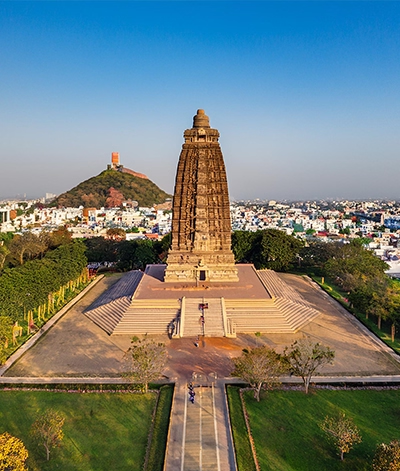
The grand Ayodhya Ram Temple is one of the most significant religious structures built in modern India. It rightfully symbolises devotion, heritage, and architectural revival. The temple is designed in a traditional North Indian style, combining modern engineering for durability and safety.

Red stone is used to build Ayodhya ka Ram Mandir, and it is the stone known for its longevity and aesthetic elegance. You will find intricate carvings on pillars depicting scenes from the Ramayana, floral motifs, and divine symbols. The temple's courtyards are really big, allowing thousands of devotees to gather comfortably to offer prayers.

For devotees, the temple is not just a site of worship but also a masterpiece of sacred architecture rooted in centuries-old tradition.

Inside Ayodhya Ram Temple – Garbhagriha & Idol Beliefs

Garbhagriha is the most spiritual space in the Ayodhya Ram Temple. It is the sanctum where Ram Lalla, the child form of Lord Rama, is placed. The Garbhagriha is designed to evoke spiritual intimacy and reverence. Inside the sanctum, you will witness devotional chanting and priest-led rituals enhancing the atmosphere.

Devotees believe that darshan here carries immense spiritual merit. The idol is worshipped as a living deity, and daily rituals such as awakening prayers, food offerings, adornment, and evening rest ceremonies are followed. These practices reflect that Lord Rama is treated and served like a beloved family member.

Once you are inside the sanctum, worshipping the idol, you will be deeply moved. For many devotees, visiting Ayodhya ka Ram Mandir represents the fulfilment of a lifelong sacred dream.

Temple Timings, Darshan Rules & Visitor Guidelines

The temple typically opens early in the morning and remains accessible until evening. Please keep in mind that temples will be closed in between for rituals. 

Ayodhya ka Ram Mandir is generally open for daily Darshan from 7:00 AM to 9:15 PM, with a temporary closure for Bhog from 12:00 PM to 1:00 PM. The temple offers three daily aartis: Mangla (4:30 AM), Shringar (6:30 AM), and Shayan (9:30 PM). You need to make prior registration if you wish to attend. 

Security at Ram Mandir is stringent to ensure safety and proper crowd management. Anyone visiting the temple undergoes screening. Certain items, such as electronics, large bags, and food, are restricted. You are expected to wear modest attire. 

Ideally, you should arrive early in the day to avoid large crowds. Senior citizens and differently-abled visitors may have separate arrangements there. Following guidelines ensures a smooth Ayodhya tourism experience.

Why Ayodhya Ram Mandir Is One of the Holiest Hindu Sites?

Ayodhya ka Ram Mandir is the birthplace of Lord Rama, one of Hinduism’s most worshipped deities. Rama’s life represents being an ideal son, husband, ruler, and protector of dharma. As a part of this belief, the temple symbolises moral order and divine presence.

Ayodhya Mandir Circuit – Major Temples & Sacred Sites

Hanuman Garhi – Guardian Deity of Ayodhya

Hanuman Garhi is one of the most important temples in Ayodhya. It is located on top of a hill, and you need to climb a few steps to reach it. This temple is dedicated to Lord Hanuman, and it is believed that Lord Hanuman is the protector of Ayodhya and the Ayodhya Ram Temple. It is said that pilgrims should first seek Lord Hanuman’s blessings before visiting Ayodhya ka Ram Mandir. 

At the temple, you will see a small idol of Lord Hanuman seated in devotion. The atmosphere is vibrant with chants, especially on Tuesdays and Saturdays. From here, you can also see panoramic views of Ayodhya’s temple.

Nageshwarnath Temple – Shiva Shrine of Ayodhya

Nageshwarnath Temple is dedicated to Lord Shiva, and it is believed that this temple was established by Kush, the son of Rama. The temple attracts large crowds during Mahashivratri.

Ram Ki Paidi – Sacred Bathing Ghats

Ram Ki Paidi is a series of steps along the Sarayu River. People bathe here before visiting the Ayodhya Ram Temple. Here you can attend evening artis, see illuminated steps, and sing devotional songs, creating a mesmerising spiritual scenery. 

What is Ayodhya Is Famous For?

Ayodhya is known for multiple things, and some of them are mentioned below:

Birthplace of Lord Rama

Ayodhya is the birthplace of Lord Rama, and is of utmost cultural and religious importance in Hindu culture. Lord Rama is one of the most worshipped deities in Hinduism. Diligent Hindu devotees believe that walking the streets of Ayodhya means walking the land once ruled by Rama himself, and it is something that means a lot to them as worshippers believe that Lord Rama’s life symbolised truth, righteousness, and moral duty. 

The presence of Ayodhya ka Ram Mandir at the birthplace makes the city a living symbol of faith. Some people also consider a visit here a spiritually transformative experience, as it connects them directly to Lord Rama. 

Ram Mandir & Global Pilgrimage Significance

The grand Ayodhya Ram Temple has made Ayodhya into a global religious site. The temple is massive and picturesque. It is built in a traditional architectural style, drawing devotees from across India and abroad. Ayodhya ka Ram Mandir not only represents faith but also revives Hindu culture, keeping the birthplace of Lord Rama intact.  Large crowds can gather in the temple premises to worship.

Sarayu Aarti, Festivals & Spiritual Energy

The Sarayu River aarti is an enchanting experience that one should definitely have when they are visiting Ayodhya. In the evening, you will see lit lamps, priests chanting prayers, and devotional music, adding to the liveliness of the atmosphere. The festive time in Ayodhya is a must-do experience as spiritual energy during these days is even higher than usual. 

Festivals & Cultural Events in Ayodhya

Ram Navami Celebrations

Ram Navami is the festival that is celebrated to mark the birth of Lord Rama, and is rightfully the most important festival in Ayodhya. On Ram Navami, the Ayodhya temple and its premises are decorated beautifully, and there are continuous prayers going on. Devotees come in large numbers, and sometimes the streets see them perform continuous recitations of the Ramayana. Thousands of people also gather at the Ayodhya Ram Temple to witness the festivities. The city’s spirituality peaks during this period, making it a perfect time for pilgrimage.

Diwali in Ayodhya – Deepotsav Festival

Diwali in Ayodhya is truly unreal. Widely known as Deepotsav, Deepwali is celebrated to celebrate Lord Rama’s return to Ayodhya after 14 years of exile. Pilgrims and devotees light millions of oil lamps, illuminating ghats, temples, and streets of Ayodhya. If you are going to Ayodhya to see Deepotsav, you will also witness cultural programs, fireworks, and devotional performances. The scale of Diwali celebration attracts global visitors and highlights the grandeur of Ayodhya tourism in a rightful fashion.

Kartik Purnima & Devotional Fairs

Kartik Purnima brings sacred bathing rituals at the Sarayu river, temple fairs, and devotional gatherings. Devotees believe that bathing during this full moon helps you achieve spiritual merit.

Best Time to Visit Ayodhya

Though you can visit Ayodhya any time of the year, the ideal time for Ayodhya tourism — and the Best time to Visit Ayodhya — is between October and March. It is because during these months the weather is pleasant, meaning it isn’t too hot or cold, making it perfect to explore Ayodhya ka Ram Mandir and other temples. Too much heat or cold can make it difficult to offer prayers without feeling uncomfortable.

During winter mornings, the ghats and aarti will be mesmerising, making it perfect for you to attend. While summers will also offer a devotional experience, it will be hot and humid. Festive occasions such as Ram Navami and Diwali bring out a vibrant side of Ayodhya, attracting heavy crowds. So, if you are seeking a quieter experience, prefer to visit in non-festive months.

How to Reach Ayodhya?

There are various ways to reach Ayodhya conveniently. How to reach Ayodhya is explained below:

By Air – Ayodhya International Airport

Maharishi Valmiki International Airport, AyodhyaDham connects Ayodhya with major Indian cities. It has made it very easy for pilgrims to come to offer prayers without much hassle. You can get cabs from the airport, too, very easily. 

By Train – Ayodhya Dham Railway Connectivity

Ayodhya’s railway station. Ayodhya Dham Junction railway station has strong connectivity to cities like Delhi, Varanasi, and Lucknow, making travel convenient and cost-effective.

By Road – Lucknow, Varanasi & Prayagraj Routes

Ayodhya is well-connected via road from cities like Varanasi and Prayagraj. Varanasi to Ayodhya is 220 kilometres, and Prayagraj to Ayodhya is 164 kilometres, making travel by bus, car or taxi easy. 

Accommodation & Facilities in Ayodhya

It is easy to get accommodation in Ayodhya in all budgets. The guide to it is mentioned below:

Dharamshalas & Pilgrim Guesthouses

There are many affordable dharamshalas in Ayodhya, providing basic stay near the Ayodhya temple. Such stays make it easy to visit the Ayodhya Ram Temple barefoot, as these are nearby. 

Mid-Range Hotels & Heritage Stays

Plenty of mid-range hotels are available in Ayodhya, providing comfortable rooms, modern amenities, and family-friendly services at affordable prices.

Food, Medical & Emergency Facilities

In Ayodhya, you will see many vegetarian restaurants offering delicious food. Some decent hospitals and pharmacies ensure devotees and travellers are safe in case of any emergency.

Responsible Tourism & Travel Guidelines for Ayodhya

It is important to be a responsible tourist when travelling to Ayodhya. Below are some different kinds of guidelines and travel tips that you should definitely know about:

Temple Dress Code & Behaviour Etiquette

You need to keep the following tips in mind related to dressing and behaving when visiting the Ayodhya temple:

  • It is important to wear modest, traditional, or fully covered clothing when visiting any Ayodhya temple.
  • Make sure to remove footwear before entering the temple premises.
  • It is important to maintain silence or speak softly when you are inside temple complexes.
  • Follow the priest's instructions during rituals and darshan to avoid any hiccup.
  • Avoid photography in restricted areas.
  • Do not touch idols or ritual objects unless permitted to avoid getting escorted out of the temple.

Crowd Management & Festival Safety

Keep the following safety and travel tips in mind when navigating through crowded areas in Ayodhya:

  • To avoid the crowd, arrive early during peak festival days.
  • It is important to follow the designated entry and exit routes at the Ayodhya Ram Temple.
  • Keep your identification and essentials secure to avoid any hassle.
  • Stay hydrated on hot days and avoid pushing in crowded spaces.
  • Use official help desks and police assistance if lost. It is important to be aware of your surroundings. 
  • Senior citizens should use priority lines where available to avoid long queues. 

Environmental & Cultural Sensitivity

It is important to be mindful of the culture and environment of Ayodhya, and you can do so by following the tips mentioned below:

  • Do not litter along the Sarayu ghats or temple surroundings. Keep the premises clean by all means.
  • Ideally, avoid plastic usage near sacred areas.
  • It is always a good thing to respect local customs, traditions, and devotional practices.
  • Do not disturb rituals or obstruct pilgrim movement in any way.
  • Support local vendors and traditional handicrafts responsibly if you want to shop.
  • Preserve the spiritual atmosphere by maintaining the cleanliness and decorum of all the temples. 

Why Choose Thomas Cook for Ayodhya Tourism?

You should choose Thomas Cook for Ayodhya Tourism because of the following reasons: 

Expert-Curated Ram Mandir Tours

Thomas Cook is a decade-old travel forum bringing expertise to every tour it plans. To ensure your visit to Ayodhya Ram Temple is smooth, meaningful, and well-organised, you should definitely rely on Thomas Cook to curate a package. 

This way, your travel itinerary can be customised as per your preference, keeping temple timings and crowd patterns in mind. Additionally, guided visits will help you understand the religious, historical, and cultural importance of each temple better, rather than just performing rushed darshan. The executives at Thomas Cook will also assist you with entry procedures, local coordination, and festival scheduling.

The Ayodhya itineraries often include the complete Ayodhya mandir circuit, Sarayu aarti experiences, and heritage walks. Such plans make Ayodhya tourism more enriching, especially for first-time visitors.

End-to-End Spiritual Travel Planning

Thomas Cook not only plans your trip but also handles transport, hotel bookings, local transfers, and temple visits. This helps massively in reducing logistical stress, allowing you to just relax on your trip and have a good time. Proper planning ensures minimal waiting time, safe travel routes, and reliable accommodations near major Ayodhya temple areas.

Exclusive Deals

Best time to visit in ayodhya

Things to do in ayodhya

How to reach ayodhya

ayodhya Images and Videos

Currency Exchange

Singapore Dollar

Unmatched Beauty and Unlimited Adventure at the Land of High Passes. The Land of High Passes, Ladakh, the newly created Union Territory in India (previously a part of Jammu & Kashmir), boasts a landscape that can leave you with your jaws dropped. It is a place where the landscape changes dramatically; it is truly astonishing to see the mountains, snow, cold desert, alpine meadows and lakes at a short distance from each other. Tourism in Ladakh is an absolute delight for nature lovers as well as adventurers...

ayodhya faq's

Best Domestic Packages

Best International Packages

The sacred city of Ayodhya in Uttar Pradesh is the birthplace of Lord Rama and is considered to be the epitome of sacredness in Hindu culture. It is the embodiment of dharma, virtue, and divine kingship. For centuries, Ayodhya has been a holy place of worship where pilgrims from all across the globe come to offer prayers. 

Today, because of the Ayodhya Ram Temple, the holy city is seen as a religious landmark. In Ayodhya, you not only see the grandeur of  Ayodhya temples but also experience the serene atmosphere of prayer, ritual, and sacredness. The ghats along the Sarayu River are beautiful at dawn and dusk, and devotional chants throughout the day create an immersive environment.

Ayodhya tourism goes beyond faith; it offers heritage, mythology, architecture, and cultural vibrancy. A journey to Ayodhya is a comprehensive experience, which is a blend of sacredness and an enriching experience. 

The Spiritual Significance of Ayodhya

Ayodhya is not just a city; it is a spiritual journey holding massive importance in Hinduism. It is one of the seven holy cities and is Lord Rama’s birthplace. According to the Ramayana, lord Rama’s life symbolised righteousness, sacrifice, and moral order, making Ayodhya sacred beyond measure.

The presence of Ayodhya ka Ram Mandir just adds to this significance. Devotees believe that a visit to the Ram Mandir will guide them spiritually and grant them divine blessings. There are other temples in the city, which are also religiously significant. Spirituality in Ayodhya is beyond measure. Morning prayers at the Ayodhya temple premises and evening aarti on the banks of the Sarayu River are life-altering experiences. You will also experience priests and pilgrims singing devotional songs in temples, adding to the Ayodhya bliss.

In a nutshell, Ayodhya tourism is so much more than just travel: it is a spiritual journey that one should definitely take once in their lifetime.

Geography, Location & Sacred Landscape of Ayodhya

Where Is Ayodhya Located?

Ayodhya is located in Uttar Pradesh, a state in Northern India. The city is situated near the banks of the Sarayu River, and is approximately 135 kilometres away from Lucknow, making the travel very easy. You can travel via road, rail or air to reach the land of Lord Rama.

You will witness many temples, shrines, and sacred water bodies in Ayodhya, enhancing the experience of Ayodhya tourism.

Sarayu River, Ghats & Pilgrimage Geography

It is believed that bathing in the Sarayu River purifies you and gets rid of your sins. It is said that one should bathe here before going to Ayodhya ka Ram Mandir to prepare themselves for darshan. Ghats like Ram Ki Paidi are where devotees gather for evening aarti.

The riverbank atmosphere is peacefully serene. On the riverbank, you will see lit lamps, chanting priests, and flowing waters, creating a deeply devotional setting. Just sitting here for 10 minutes will remind you why you decided to visit the Ayodhya temple.

About Ayodhya – History, Legends

Ayodhya in Ramayana & Hindu Scriptures

According to ancient scriptures, Ayodhya is believed to be a protected and prosperous city. Devotees believe that it is ruled by King Dasharatha. Lord Rama was born here and returned here after his 14 years of exile.

Lord Rama’s Birthplace & Ancient Kingdom of Kosala

Earlier, Ayodhya was the capital of Kosala. Kosala was an ancient kingdom that held a lot of cultural importance. The exact location of Ayodhya ka Ram Mandir is believed to be the accurate birthplace of Lord Rama. Hence, the visit here is an important element of Hindu culture.

Cultural Importance of Ayodhya in Indian Civilisation

Ayodhya not only influences how Hindus pray, but also impacts the Hindu art, dance, literature, and temple traditions. There are classical epics to devotional poetry based on Lord Rama’s life, adding so much depth to Indian literature. A lot of art is also inspired by important chapters of the Ramayana, such as Ram Darbar, Exile, Sita Haran, and the Battle with Ravana. 

Ayodhya Ram Temple – Architecture, Rituals & Darshan

History & Construction of Ayodhya Ram Mandir

The grand Ayodhya Ram Temple is one of the most significant religious structures built in modern India. It rightfully symbolises devotion, heritage, and architectural revival. The temple is designed in a traditional North Indian style, combining modern engineering for durability and safety.

Red stone is used to build Ayodhya ka Ram Mandir, and it is the stone known for its longevity and aesthetic elegance. You will find intricate carvings on pillars depicting scenes from the Ramayana, floral motifs, and divine symbols. The temple's courtyards are really big, allowing thousands of devotees to gather comfortably to offer prayers.

For devotees, the temple is not just a site of worship but also a masterpiece of sacred architecture rooted in centuries-old tradition.

Inside Ayodhya Ram Temple – Garbhagriha & Idol Beliefs

Garbhagriha is the most spiritual space in the Ayodhya Ram Temple. It is the sanctum where Ram Lalla, the child form of Lord Rama, is placed. The Garbhagriha is designed to evoke spiritual intimacy and reverence. Inside the sanctum, you will witness devotional chanting and priest-led rituals enhancing the atmosphere.

Devotees believe that darshan here carries immense spiritual merit. The idol is worshipped as a living deity, and daily rituals such as awakening prayers, food offerings, adornment, and evening rest ceremonies are followed. These practices reflect that Lord Rama is treated and served like a beloved family member.

Once you are inside the sanctum, worshipping the idol, you will be deeply moved. For many devotees, visiting Ayodhya ka Ram Mandir represents the fulfilment of a lifelong sacred dream.

Temple Timings, Darshan Rules & Visitor Guidelines

The temple typically opens early in the morning and remains accessible until evening. Please keep in mind that temples will be closed in between for rituals. 

Ayodhya ka Ram Mandir is generally open for daily Darshan from 7:00 AM to 9:15 PM, with a temporary closure for Bhog from 12:00 PM to 1:00 PM. The temple offers three daily aartis: Mangla (4:30 AM), Shringar (6:30 AM), and Shayan (9:30 PM). You need to make prior registration if you wish to attend. 

Security at Ram Mandir is stringent to ensure safety and proper crowd management. Anyone visiting the temple undergoes screening. Certain items, such as electronics, large bags, and food, are restricted. You are expected to wear modest attire. 

Ideally, you should arrive early in the day to avoid large crowds. Senior citizens and differently-abled visitors may have separate arrangements there. Following guidelines ensures a smooth Ayodhya tourism experience.

Why Ayodhya Ram Mandir Is One of the Holiest Hindu Sites?

Ayodhya ka Ram Mandir is the birthplace of Lord Rama, one of Hinduism’s most worshipped deities. Rama’s life represents being an ideal son, husband, ruler, and protector of dharma. As a part of this belief, the temple symbolises moral order and divine presence.

Ayodhya Mandir Circuit – Major Temples & Sacred Sites

Hanuman Garhi – Guardian Deity of Ayodhya

Hanuman Garhi is one of the most important temples in Ayodhya. It is located on top of a hill, and you need to climb a few steps to reach it. This temple is dedicated to Lord Hanuman, and it is believed that Lord Hanuman is the protector of Ayodhya and the Ayodhya Ram Temple. It is said that pilgrims should first seek Lord Hanuman’s blessings before visiting Ayodhya ka Ram Mandir. 

At the temple, you will see a small idol of Lord Hanuman seated in devotion. The atmosphere is vibrant with chants, especially on Tuesdays and Saturdays. From here, you can also see panoramic views of Ayodhya’s temple.

Nageshwarnath Temple – Shiva Shrine of Ayodhya

Nageshwarnath Temple is dedicated to Lord Shiva, and it is believed that this temple was established by Kush, the son of Rama. The temple attracts large crowds during Mahashivratri.

Ram Ki Paidi – Sacred Bathing Ghats

Ram Ki Paidi is a series of steps along the Sarayu River. People bathe here before visiting the Ayodhya Ram Temple. Here you can attend evening artis, see illuminated steps, and sing devotional songs, creating a mesmerising spiritual scenery. 

What is Ayodhya Is Famous For?

Ayodhya is known for multiple things, and some of them are mentioned below:

Birthplace of Lord Rama

Ayodhya is the birthplace of Lord Rama, and is of utmost cultural and religious importance in Hindu culture. Lord Rama is one of the most worshipped deities in Hinduism. Diligent Hindu devotees believe that walking the streets of Ayodhya means walking the land once ruled by Rama himself, and it is something that means a lot to them as worshippers believe that Lord Rama’s life symbolised truth, righteousness, and moral duty. 

The presence of Ayodhya ka Ram Mandir at the birthplace makes the city a living symbol of faith. Some people also consider a visit here a spiritually transformative experience, as it connects them directly to Lord Rama. 

Ram Mandir & Global Pilgrimage Significance

The grand Ayodhya Ram Temple has made Ayodhya into a global religious site. The temple is massive and picturesque. It is built in a traditional architectural style, drawing devotees from across India and abroad. Ayodhya ka Ram Mandir not only represents faith but also revives Hindu culture, keeping the birthplace of Lord Rama intact.  Large crowds can gather in the temple premises to worship.

Sarayu Aarti, Festivals & Spiritual Energy

The Sarayu River aarti is an enchanting experience that one should definitely have when they are visiting Ayodhya. In the evening, you will see lit lamps, priests chanting prayers, and devotional music, adding to the liveliness of the atmosphere. The festive time in Ayodhya is a must-do experience as spiritual energy during these days is even higher than usual. 

Festivals & Cultural Events in Ayodhya

Ram Navami Celebrations

Ram Navami is the festival that is celebrated to mark the birth of Lord Rama, and is rightfully the most important festival in Ayodhya. On Ram Navami, the Ayodhya temple and its premises are decorated beautifully, and there are continuous prayers going on. Devotees come in large numbers, and sometimes the streets see them perform continuous recitations of the Ramayana. Thousands of people also gather at the Ayodhya Ram Temple to witness the festivities. The city’s spirituality peaks during this period, making it a perfect time for pilgrimage.

Diwali in Ayodhya – Deepotsav Festival

Diwali in Ayodhya is truly unreal. Widely known as Deepotsav, Deepwali is celebrated to celebrate Lord Rama’s return to Ayodhya after 14 years of exile. Pilgrims and devotees light millions of oil lamps, illuminating ghats, temples, and streets of Ayodhya. If you are going to Ayodhya to see Deepotsav, you will also witness cultural programs, fireworks, and devotional performances. The scale of Diwali celebration attracts global visitors and highlights the grandeur of Ayodhya tourism in a rightful fashion.

Kartik Purnima & Devotional Fairs

Kartik Purnima brings sacred bathing rituals at the Sarayu river, temple fairs, and devotional gatherings. Devotees believe that bathing during this full moon helps you achieve spiritual merit.

Best Time to Visit Ayodhya

Though you can visit Ayodhya any time of the year, the ideal time for Ayodhya tourism — and the Best time to Visit Ayodhya — is between October and March. It is because during these months the weather is pleasant, meaning it isn’t too hot or cold, making it perfect to explore Ayodhya ka Ram Mandir and other temples. Too much heat or cold can make it difficult to offer prayers without feeling uncomfortable.

During winter mornings, the ghats and aarti will be mesmerising, making it perfect for you to attend. While summers will also offer a devotional experience, it will be hot and humid. Festive occasions such as Ram Navami and Diwali bring out a vibrant side of Ayodhya, attracting heavy crowds. So, if you are seeking a quieter experience, prefer to visit in non-festive months.

How to Reach Ayodhya?

There are various ways to reach Ayodhya conveniently. How to reach Ayodhya is explained below:

By Air – Ayodhya International Airport

Maharishi Valmiki International Airport, AyodhyaDham connects Ayodhya with major Indian cities. It has made it very easy for pilgrims to come to offer prayers without much hassle. You can get cabs from the airport, too, very easily. 

By Train – Ayodhya Dham Railway Connectivity

Ayodhya’s railway station. Ayodhya Dham Junction railway station has strong connectivity to cities like Delhi, Varanasi, and Lucknow, making travel convenient and cost-effective.

By Road – Lucknow, Varanasi & Prayagraj Routes

Ayodhya is well-connected via road from cities like Varanasi and Prayagraj. Varanasi to Ayodhya is 220 kilometres, and Prayagraj to Ayodhya is 164 kilometres, making travel by bus, car or taxi easy. 

Accommodation & Facilities in Ayodhya

It is easy to get accommodation in Ayodhya in all budgets. The guide to it is mentioned below:

Dharamshalas & Pilgrim Guesthouses

There are many affordable dharamshalas in Ayodhya, providing basic stay near the Ayodhya temple. Such stays make it easy to visit the Ayodhya Ram Temple barefoot, as these are nearby. 

Mid-Range Hotels & Heritage Stays

Plenty of mid-range hotels are available in Ayodhya, providing comfortable rooms, modern amenities, and family-friendly services at affordable prices.

Food, Medical & Emergency Facilities

In Ayodhya, you will see many vegetarian restaurants offering delicious food. Some decent hospitals and pharmacies ensure devotees and travellers are safe in case of any emergency.

Responsible Tourism & Travel Guidelines for Ayodhya

It is important to be a responsible tourist when travelling to Ayodhya. Below are some different kinds of guidelines and travel tips that you should definitely know about:

Temple Dress Code & Behaviour Etiquette

You need to keep the following tips in mind related to dressing and behaving when visiting the Ayodhya temple:

  • It is important to wear modest, traditional, or fully covered clothing when visiting any Ayodhya temple.
  • Make sure to remove footwear before entering the temple premises.
  • It is important to maintain silence or speak softly when you are inside temple complexes.
  • Follow the priest's instructions during rituals and darshan to avoid any hiccup.
  • Avoid photography in restricted areas.
  • Do not touch idols or ritual objects unless permitted to avoid getting escorted out of the temple.

Crowd Management & Festival Safety

Keep the following safety and travel tips in mind when navigating through crowded areas in Ayodhya:

  • To avoid the crowd, arrive early during peak festival days.
  • It is important to follow the designated entry and exit routes at the Ayodhya Ram Temple.
  • Keep your identification and essentials secure to avoid any hassle.
  • Stay hydrated on hot days and avoid pushing in crowded spaces.
  • Use official help desks and police assistance if lost. It is important to be aware of your surroundings. 
  • Senior citizens should use priority lines where available to avoid long queues. 

Environmental & Cultural Sensitivity

It is important to be mindful of the culture and environment of Ayodhya, and you can do so by following the tips mentioned below:

  • Do not litter along the Sarayu ghats or temple surroundings. Keep the premises clean by all means.
  • Ideally, avoid plastic usage near sacred areas.
  • It is always a good thing to respect local customs, traditions, and devotional practices.
  • Do not disturb rituals or obstruct pilgrim movement in any way.
  • Support local vendors and traditional handicrafts responsibly if you want to shop.
  • Preserve the spiritual atmosphere by maintaining the cleanliness and decorum of all the temples. 

Why Choose Thomas Cook for Ayodhya Tourism?

You should choose Thomas Cook for Ayodhya Tourism because of the following reasons: 

Expert-Curated Ram Mandir Tours

Thomas Cook is a decade-old travel forum bringing expertise to every tour it plans. To ensure your visit to Ayodhya Ram Temple is smooth, meaningful, and well-organised, you should definitely rely on Thomas Cook to curate a package. 

This way, your travel itinerary can be customised as per your preference, keeping temple timings and crowd patterns in mind. Additionally, guided visits will help you understand the religious, historical, and cultural importance of each temple better, rather than just performing rushed darshan. The executives at Thomas Cook will also assist you with entry procedures, local coordination, and festival scheduling.

The Ayodhya itineraries often include the complete Ayodhya mandir circuit, Sarayu aarti experiences, and heritage walks. Such plans make Ayodhya tourism more enriching, especially for first-time visitors.

End-to-End Spiritual Travel Planning

Thomas Cook not only plans your trip but also handles transport, hotel bookings, local transfers, and temple visits. This helps massively in reducing logistical stress, allowing you to just relax on your trip and have a good time. Proper planning ensures minimal waiting time, safe travel routes, and reliable accommodations near major Ayodhya temple areas.

Language Spoken

Hindi, Awadhi, Urdu, English

Currency used:

Indian Rupee (INR)

OCT-FEB 10 - 25oC
JUL-SEP 25 - 35oC
MAR-JUN 20 - 40oC

What People are Saying

  • International Honeymoon Packages
  • Popular Tourism Destinations
  • Most Trending International Holidays
have us call you back!
Please enter a valid Email-ID
Please enter a valid mobile number
You missed this
You missed this
I accept Privacy Policy and I authorise Thomas Cook Group Companies to contact me.