We use cookies to improve your website experience and provide more personalized services to you, both on this website and through other media. By continuing to use this website, you agree to our use of cookies as explained in our Cookie Policy. Please read our Cookie Policy for more information on how we use cookies and how you can disable them.
When we talk about India’s top-most sacred and historic cities, Ujjain comes to mind. Ujjain city is situated very close to the sacred shipra river, which is the famous river of Madhya Pradesh . Ujjain is famous for the Mahakaleshwar Jyotirlinga, which is one of the sacred 12 Jyotirlingas of lord shiva. Ujjain tourism has seen a tremendous uplift due to the rising number of pilgrims visiting the Mahakaleshwar temple and enjoying the very famous Bhasma Aarti.
Ujjain tourism is further boosted by the grand Kumbh Mela, which is considered the largest religious gathering in the world.
One of the most sacred and historically significant cities in India is Ujjain. The city has always been a centre of spirituality, learning and culture for more than 100 years. In past times, Ujjain was commonly known by the name of Avantika and is believed to grant salvation to the Hindu tradition.
The city of Ujjain is most famous for the revered Mahakaleshwar temple. Devotees and pilgrims from all over the world visit the holy jyotirlingas to seek the blessings of the divine shivling and witness bhasma aarti. Ujjain is also famous for the grand Kumbh Mela that is held every 12 years, attracting pilgrims and saints from all over the world.
Located in the western parts of Madhya Pradesh, in the central parts of India, Ujjain lies on the banks of the most sacred Shipra River, which is famous in Ujjain:
Geographically, Ujjain is located 55km north of Indore and approximately 190 km west of Bhopal. Since the city famous in Ujjain is located centrally, it is an important transportation and pilgrimage hub in the region.
There is a very deep connection between the sacred landscape of Ujjain and the holy Shipra River. These connections hold great spiritual importance in the Hindu mythology. The Shipra River is believed to purify the souls of devotees and wash away all sins. For more than 100 centuries, people have gathered on the bank of this river to take a holy dip, offer prayers and perform sacred rituals.
All the temples of Ujjain are closely linked with the sacred holy river. The very famous Mahakaleshwar temple is also located very close to this river and attracts millions of devotees every year.
The cultural and historical legacy of what’s famous in Ujjain dates back to approximately thousands years. Originally, the city was named Avantika and is considered one of the most important cities of the Malwa region. Over the past few years, Ujjain has developed significantly as a centre of trade, learning and spirituality.
The city saw its major growth during the reign of King Vikramaditya. A very famous Hindi poet, Kalidasa, is also known to have lived and worked in the city of Ujjain. Ujjain has also gained a lot of importance because it gradually became a centre of astronomy, because of the establishment of the renowned observatory Jantar Mantar 2 in the late 18th century.
Ujjain continues to preserve a remarkable cultural legacy with the mix of heritage, spiritual hubs and many cultural and historical spots. .
The kingdom of Avanti and the Vikramaditya era are considered the historical prestige of the city of Ujjain. The era of Vikramaditya is closely linked to many great artists and scholars. It is believed that the kingdom was the home to navratna (nine gems), which included the very famous poet, Kalidasa.
The city of Ujjain is very frequently mentioned in some of the famous Hindu scriptures, such as the Ramayana, the Mahabharata, and several other Puranas. In all these puranas, Ujjain is most commonly referred to as Ujjaiyni, depicting powerful spiritual energy and religious importance.
Ujjain is listed under the Sapta puri (seven holy cities) because it is believed to grant Moksha, which means liberation from the cycle of birth and death. The Sapta Puris are - Ayodhya, Mathura, Kashi, Haridwar, Kanchipuram, Dwarka, Ujjain, and there is a detailed history of these cities in the famous Hindi scriptures, such as the Garuda Puranas.
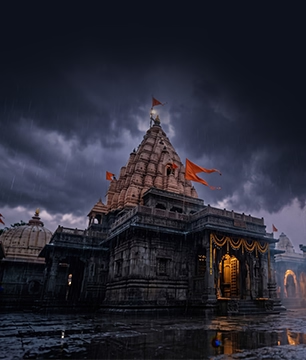
One of the oldest shrines of Lord Shiva is the Mahakaleshwara Jyotirlinga in Ujjain, and it holds great significance in Hindus. Located in the city of Ujjain, on the banks of the Shipra River, Mahakaleshwar Jyotirlinga is believed to be the most powerful manifestation of Lord Shiva.
Mahakaleshwar Jyotirlinga in Ujjain is one of the 12 Jyotirlingas of Lord Shiva and is considered one of the biggest and most worshipped Jyotirlingas in the Hindu mythology. It is a self-incarnated linga of Lord Shiva and is worshipped by millions of devotees every year. The famous bhasma aarti and sandhya aarti give an unforgettable divine experience to the pilgrims.
The temple of Mahakaleshwar Jyotirlinga in Ujjain is a blend of Bhumija, Maratha, and Chalukyan culture and was largely built in the 18th century. This temple was actually constructed in multiple levels, but the sacred linga of lord shiva is placed in an underground sanctum called Garbhagriha. Furthermore, there are spacious courtyards, carved pillars and newly constructed pathways that depict the architectural beauty of the city of Ujjain.
The temple is famous for religious rituals such as the famous bhasma aarti and grand festival celebrations during Mahashivratri and Kumbh mela.
The most distinctive and sacred ritual performed at the Mahakalleshwara temple is Bhasma Aarti. This special ceremony is considered to be the most important worship ritual to lord shiva and is done every day before sunrise.
The word Bhasma means ash. This aarti is performed to worship lord shiva with the holy ash, symbolising that ultimately one day everything will be turned to ashes! In Hindu mythology, ash symbolises the cycle of life, death and rebirth.
This bhasma aarti is known to have thousands of devotees every day who gather in the temple complex to witness the divine experience.
Temple timings:
Other than the famous Mahakaleshwar temple jyotirlinga in Ujjain, the city of Ujjain is home to many other important temples that prove the city’s deep connection with spiritual heritage and Hindu mythology.
This temple is dedicated to the famous GOD, kal Bhairav, the fierce form of Lord Shiva and is known for its famous ritual where the devotees offer liquor in prasadam form to the deity . This temple is considered one of the most powerful guardian temples of Ujjain.
Harsiddhi temple is another important Shakti peethas that is dedicated to Goddess Harsiddhi. The temple is known for its two tall oil lamps that are called Deep Stambhas, and these are very beautifully lit during the famous Hindu festivals such as Navratri.
This ancient temple that houses a very big deity of Lord Ganesha is famous for the fact that pilgrims visit this temple to get rid of all the worries and obstacles coming in their lives. The Ganesha here is considered to be self-manifested and is a very famous temple in Ujjain.
Another ancient Hindu temple in Ujjain, dedicated to lord shiva and considered a place of birth of Mars, is the Mangalnath temple in Ujjain. Located very close to the Shipra, pilgrims come here to wash away their sins and get rid of the mangal dosh.
Apart from the ancient and historical Jyotirlinga in Ujjain temples, Ujjain is famous for various cultural, historical and spiritual attractions:
Ram Ghat is a very sacred ghat famous in Ujjain, located on the banks of the Shipra River. People offer religious offerings, prayers and attend the auspicious shipra aarti when they visit Ram Ghat.
This is a very old Gurukul famous in Ujjain, and is said to be a place where Lord Krishna, Balarama and Sudama are believed to have received their early education from Guru Sandipani. This is another famous spot for the devotees who are keen to learn about Krishna’s childhood and ancient learning traditions.
Jantar Mantar, which is very famous in Ujjain, is also called Vedh Shala and is an ancient astronomical observatory which was built by Maharaja Jai Singh II in the 18th century. This observatory has many instruments that are used to study time, planetary movements and celestial positions.
Ujjain, being one of the seven holy cities, hosts many festivals and spiritual events that are famous all over the world. These festivals are most commonly associated with Lord Shiva and are celebrated in and around the sacred Shipra River.
The largest festival that is held in Ujjain every 12 years is the Simhastha Kumbh Mela. Millions of sadhus, saints, priests and devotees gather at the Ram Ghat to take a dip in the holy water. This spiritual event is characterised by large social gatherings, prayers and offerings.
A grand and the most important festival that is celebrated in the Mahakaleshwar temple of Ujjain is the Mahashivratri celebrations. On this auspicious day, devotees observe fasting, perform abhishekas, and attend the famous bhasma aarti. Thousands and millions of pilgrims gather together to celebrate Mahashivratri by chanting “om namah shivay”.
During the month of Shravan, the idols of lord Mahakal are taken out on the streets on every Monday through grand processions and festivities. All the devotees participate in this procession by dancing religiously, singing spiritual bhajans and songs, and devotional prayers, making it the city’s most vibrant festival.
Going to Ujjain is an experience filled with spiritual moments while exploring the cultural and historical significance of the city. The city is most famous for the Mahakal temple, which is one of the 12 Jyotirlingas of lord Shiva. Proper planning for Ujjain makes it easier to enjoy the temple darshans and also make the best out of your trip.
The best time to go to Ujjain is from the winter months starting from October and ending with March because of quite pleasant weather . During these months, there is no hassle of overcrowded temples and accommodations. Major festivals like mahakumbh mela and mahashivratri attract millions of devotees, so it is advised to make advance bookings during these times.
The best and ideal trip duration for your Ujjain trip is usually 1-2 days. The duration, however, depends on how deeply you wish to explore the temples and city excursions. Since Ujjain is a compact and small spiritual city, all the temple visits can be completed in a short trip.
Crowd levels in Ujjain during the months of Mahashivratri and Kumbh Mela are usually very high. The Shravan months, that is, from July to August, witness huge crowds with hotels reaching 80% occupancy.
During Mahashivratri, the city experiences an intense surge of tourism with over 5l pilgrims visiting the temple famous in Ujjain in a single day.
Simhashta kumbh mela is another global-level massive pilgrimage destination, so you must plan your visit accordingly.
Going to Ujjain or travelling to the city of Ujjain is very well connected with air, road and rail.
Indore airport is the nearest to Ujjain,, which is 55km away - Devi Ahilya Bai Holkar Airport. The travellers can take taxis from Indore airport to reach Ujjain in a maximum of 1 hour.
Ujjain Junction railway station is the railway station of Madhya Pradesh. There are several direct trains from Delhi, Mumbai and Bangalore.
Ujjain is a city that can be accessed through roads with developed highways and flyovers. There are regular state and transport buses that run to and fro on these road routes.
There is a wide range of accommodation facilities in Ujjain when you visit the famous temple in Ujjain, especially near the famous Mahakaleshwar temple. From simple dharamshalas to good luxurious hotels, the city has options for devotees of all kinds based on their budgets and preferences.
The most common and budgeted stay for pilgrims is a dharamshala. These rest houses are usually run on the basis of charity and provide basic living amenities to the pilgrims who visit the famous temple in Ujjain. They have simple rooms, clean beddings and basic facilities at a very affordable price.
There are many budget as well as premium hotels near the Mahakaleshwar temple and the railway station. These hotels have additional services such as room services, wifi, reception operations, etc.
When going to Ujjain, food in Ujjain is reflective of historical Malwa style and is mostly vegetarian. Tourists and devotees can enjoy simple, travel-friendly food and delicious street food.
While visiting the sacred city of Ujjain and the Ujjain temple in Madhya Pradesh, responsible tourism and general manners are very important. Visitors must respect the traditions and practices.
All the devotees must dress modestly and respect the temple's guidelines. It is important to preserve the sanctity of the place by maintaining silence during the players.
While communicating with the saints, priests, and other devotees, a pilgrim should be polite and respectful in his behaviour. It is always expected that a program should follow all the local traditions of the place and do the Darshan according to the guidelines of the famous temple in Ujjain.
Littering in and around the Shipra River, Ram Ghat and all the famous temples in Ujjain and Kumbh Ghat is strictly prohibited. Devotees should always use a dustbin to maintain the cleanliness of the place and maintain its religious importance.
Thomas Cook is an ideal travel platform to book your vacation - be it a luxury holiday package or a spiritual journey to some famous pilgrims of India. Thomas Cook has a reputable name in the field of travel and tourism and is known to serve and cater for millions of customers over the past 10 years.
Choosing Thomas Cook for Ujjain tourism is highly recommended because it is a one-stop solution that starts from hotels according to the budget, making arrangements for Ujjain travel from temple to hotels and exploring all the sightseeing, arranging for VIP darshans and sometimes also arranging for the food. Booking your Ujjain tourism through Thomas Cook ensures a stress-free darshan while enjoying all the nearby spots.
Ujjain is most famous for its Mahakaleshwar Temple and is the famous Ujjain Temple Madhya Pradesh. That is one of the 12th Jyotirlingas of Lord Shiva.
Mahakaleshwar Jyotirling is located in Ujjain.
The famous Ujjain temples in Madhya Pradesh are the Mahakaleshwar Temple, Har Siddhi Temple, Chintaman Ganesh Temple, and Kal Bhairav Temple.
The best time for Ujjain tourism is from October to March because the weather is pleasant during these months.
1 to 2 days are enough for a Ujjain Travel, if you only want to explore the spiritual temples and the Ujjain Temple, Madhya Pradesh of the city.
Ujjain is a highly safe city for pilgrims and families. Even for senior citizens and children, there are arrangements for VIP Darshan wheelchair facilities and medical rooms.
Before planning your trip to Ujjain, you must know the best time to visit Ujjain, the most suitable places for accommodation and the Ujjain temple, Madhya Pradesh, you need to visit.