How to Reach Ladakh
The quickest and simplest way to reach Ladakh is by air. It is also the only means of transport with year-round access to the place — exceptional circumstances, not withstanding. The only airport is located in the town of Leh, called the Kushok Bakula Rimpochee Airport. Many domestic airlines offer regular flights to Leh, from Jammu, Srinagar, Delhi, Chandigarh, Mumbai, Kolkata and from other urban hubs across the country. These include Go Air, Indigo, Vistara, Spice Jet and Air India. While shorter routes such as Jammu or Delhi have direct flights, longer routes could sometimes have a single stop along the way, usually at Delhi. The Leh airport is also a military base, so expect a higher level of security and carry printed copies of your documentation and paperwork for a hassle-free experience.
You wouldn’t usually opt for train travel to Ladakh since the nearest station is located 700 km away in the town called Tawi. Stations like Chandigarh and Pathankot are the other closest options, but they are even further away. Even if you do choose to take a train from your departure city to any of these stations, you’ll have to hire a taxi, jeep or private vehicle to complete the rest of the journey — which could take up to three days. It doesn’t sound ideal but can be a perfect adventurous start to your holiday.
Road travel is a popular means of getting to Ladakh, with spectacular views and adrenaline-rush moments promised along the way. The only catch is that the routes are only accessible during the months of May to October, while winter sees Ladakh cut off from most places outside.
You can opt for buses, cars or jeeps or even motorbikes, for a road trip to Ladakh.
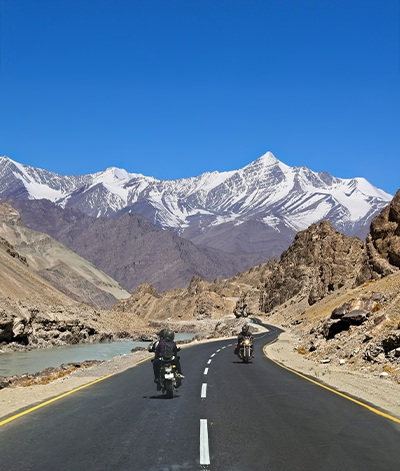
Bikes have become a favourite amongst those visiting the region, as it is said to be one of the more exhilarating journeys one can ever take. There are two possible routes — one from Srinagar and the other from Manali. The former is a distance of around 430 km, passing through some of the most majestic Himalayan vistas and scenic towns like Sonmarg, Drass, Kargil, Lamaruyu and the Zoji La Pass. The route from Manali is 490 km, passing through the Rohtang Pass, Keylong, Bharatpur, Upshi and Karu.
There is no way of reaching Ladakh by water.
Short on time? Here’s the rundown!
Two ways in: fly or drive. That's the whole menu.
Flying means Delhi to Leh in about 90 minutes, easily one of the best short flights in India.
Driving means Manali or Srinagar, two days each way, through some of the highest motorable passes on earth.
Best combo, and almost everyone who's done it twice agrees on this: fly in, drive out. Acclimatise first, road-trip later.
Best time to visit Ladakh: May to September. Outside that window, half the roads don't even exist as roads anymore.
There's a runway at Leh where the pilot banks hard right the second the wheels lift, because the mountain's just sitting there. First flight in, that turn genuinely makes your stomach drop a little. That's Ladakh's opening line, basically.
Everyone asks the same thing before booking anything else: How to reach Ladakh, and does the route actually matter? Short answer: yes, more than people think. Get it wrong and the first three days disappear into a headache. Get it right and day one already feels unreal.
Fly, or drive. Nothing else exists, no matter what some travel forum implies about "secret train routes."
Among the best options to reach Ladakh, flying wins on speed; driving wins on the story you'll still be telling five years later. A guesthouse owner in Leh's Changspa lane said it best over breakfast (toast, seven rupees extra for jam, worth it): fly one way, drive the other. Simple advice. Correct advice.
There's an old Ladakhi saying about this exact route, something like "the land is so harsh, only the best of friends or worst of enemies visit each other." Whoever said it clearly did the Manali road once and never forgot it.
Delhi is the main gateway to answer how to reach Leh Ladakh, full stop. Air India, IndiGo, SpiceJet, all running it, roughly eight flights a day each direction on a good week.
Left-hand window seat, always. That side catches the Himalayan wall properly, ridge after ridge of white, and near the end a lake so blue it looks Photoshopped even though nobody's touched it. It's honestly one of the best flights going anywhere in the country and somehow still feels underrated.
Couple of practical notes:
This is basically how to reach Ladakh from Delhi in one paragraph: early flight, window seat, don't overthink it.
Mumbai doesn't get Delhi's daily-direct treatment. Some seasons there's a direct flight; most of the time it's a Delhi layover tacked on.
How to reach Ladakh from Mumbai really comes down to checking both options the week you book, not trusting an old blog quoting flight numbers from three years back (seen it happen, the flight didn't even exist anymore).
Someone in a Nubra guesthouse mentioned IndiGo occasionally runs a direct Mumbai-Leh hop in peak season. Worth a search of “How to reach Ladakh from Mumbai” before assuming you're stuck with a connection.
So yeah, how to reach Ladakh from Mumbai isn't a 90-minute hop like Delhi; add the layover, and it eats most of a day. Plan accordingly, don't fight it.
Numbers lie a bit when it comes to Ladakh distance. A hundred kilometres in the mountains is not a hundred kilometres on the plains; everyone learns this the hard way once.
|
Route |
Ladakh Distance |
Time |
|
Delhi (air) |
~1,000 km |
~90 minutes |
|
Manali (road) |
473 km |
2 gruelling days |
|
Srinagar (road) |
422 km |
2 days |
None of that captures the actual feel of Ladakh distance though. Thirty kilometres past Sarchu once took two hours because a landslide crew was clearing rock by hand and everyone just sat in a truck queue eating biscuits. Nobody was even annoyed, weirdly; that's just how the road works.
The full name of the Ladakh airport is Kushok Bakula Rimpochee Airport. The runway sits around 3,500 metres, one of the highest operational airports on the planet, and that number is the actual reason day one should involve doing basically nothing.
This Ladakh airport shares the runway with the Air Force, so security's tighter than a normal domestic terminal. Print your ticket. A guard once waved off a phone screen at 6 am with zero interest and asked for paper instead; not the moment to argue.
Prepaid taxi into town, barely 4km, costs around 600 rupees. Some tout will absolutely try to quote double to a visibly jet-lagged tourist still catching their breath from the short walk to the taxi rank (yes, that short walk leaves you winded; it's not embarrassing, it's just the altitude).
And if you're wondering about the Ladakh nearest airport from anywhere else in the region, Kargil, Nubra, wherever, it's still this one. There's no second civilian airport hiding somewhere in the valley.
When you are exploring the option of how to reach Ladakh from Kashmir, you have to know the Srinagar-Leh highway runs roughly 422-434 km depending on which stretch gets measured, through Sonamarg, over Zoji La, down into Drass, which locals proudly call the second-coldest inhabited place on earth. Nobody's actually double-checked that claim recently, but the 6 am wind through the valley makes it entirely believable.
Overnight stop is usually Kargil, an ordinary-feeling town until you clock how close the drive gets to the Line of Control at points, which is a strange thing to realise mid-scenic-drive.
This is generally the gentler of the two roads in, which lines up with an NCBI survey on Acute Mountain Sickness: only 31% of tourists coming via Srinagar reported mild AMS, versus a rough 57% via Manali. Flying in sat at 22%, mostly because there's less time spent labouring at altitude, though the sudden jump brings its own risk.
That's the short version of How to reach Ladakh from Kashmir: slower ascent, gentler on the body, still a two-day slog either way.
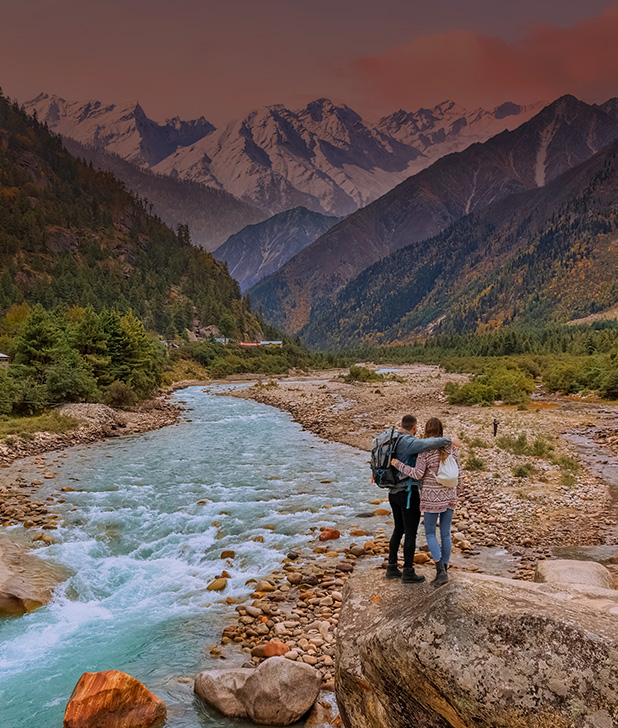
This is the one everyone photographs. Rohtang, Baralacha La, Taglang La, that last one topping out near 5,328 metres, the highest most travellers will ever stand without oxygen gear. 473 km, two exhausting days.
A pharmacist in Leh's main bazaar mentioned walk-in AMS cases spike hard during peak season, specifically among people who came straight in via Manali with zero acclimatisation days built in. Makes sense; unlike a flight, this ascent never really stops.
Camps at Sarchu handle the overnight, or Hotel Ibex in Jispa if the tents look a bit too exposed that particular night. Route's normally open June to October, sometimes closing early if the season's been heavy on snow.
So really, how to reach Leh Ladakh by this road is less a drive and more an event. Budget the extra day, don't rush it.
No direct train exists, and probably won't for years given the terrain. The closest thing to a way to Ladakh by rail means getting off at Jammu Tawi, about 663 km out, and finishing by road or a connecting flight.
Trains like the Uttar Sampark Kranti or Swaraj Express run into Jammu from Delhi regularly. It's not a shortcut really, more a way to break the trip into instalments if a straight flight feels like cheating on the dream of how to go to Ladakh.
Once you're through the how to reach Leh Ladakh part, this is what it was for:
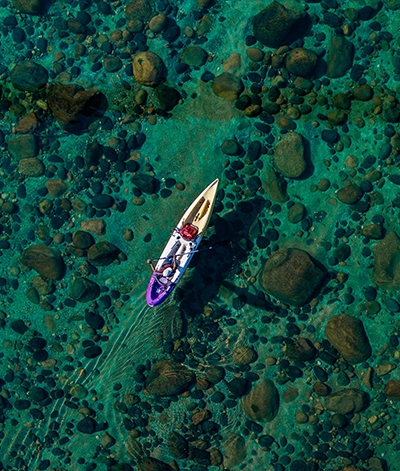
Impossibly blue, and yes, this is the lake from that 3 Idiots ending scene; people genuinely ask locals about it.
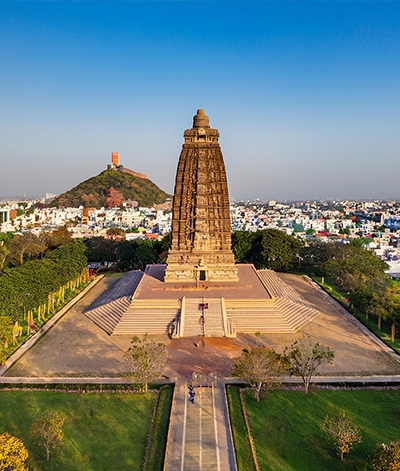
Worth it even if temples aren't usually your thing
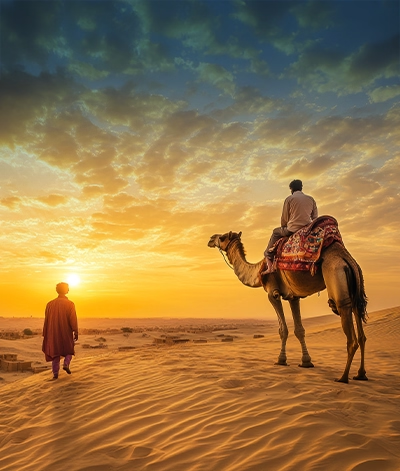
Sand dunes at 10,000+ feet, doesn't make sense on paper, works fine in person.
Skipped by most people short on time, honestly a mistake; the walk around Korzok at dusk with the Changpa herders bringing goats in is one of the last quiet moments left here.
Among places to visit in Ladakh, that last one rarely makes the top-five lists, and it probably should.
Ladakh tour packages, roughly 45,000 rupees/person for 5-6 days, upward of 80,000 rupees for the fancier stuff, bundle permits, jeeps, and the altitude planning most first-timers underestimate.
Separately, Ladakh trip packages built for bikers usually throw in fuel planning and mechanic contacts along the route, which matters way more than it sounds the first time a bike starts rattling at 4,800 metres with no workshop for eighty kilometres either direction.
Worth it or not really depends on your patience for chasing Inner Line Permits at the Leh DC office, which moves at exactly one speed, and it's not fast.
Once you have figured out how to go to Ladakh, the best time to visit Ladakh sits between May and September, when both overland roads are actually open. Winter Ladakh exists too, frozen Zanskar river trek and all, but that's a whole different level of preparation, not a casual add-on to a normal trip.
For broader Ladakh tourism, this window is also when every guesthouse, permit office, and jeep union is running at full tilt, so book ahead; don't wing it in June.
Flying is easily the fastest way to Ladakh. Delhi to Leh takes about 90 minutes versus two days by road.
Srinagar's gentler on altitude sickness; Manali's more scenic and dramatic. Most people do one each way.
Yes, but hire a jeep with a driver if you've never handled mountain roads before. It's not the place to learn.
At least one flight day plus one road day if doing the fly-in-drive-out combo, more if going overland both ways.
In winter, yes, weather-related delays are common. Summer flights are far more reliable.
No, it is strictly required only for specific areas like Pangong, Nubra, and Tso Moriri, not for the city itself.
Around 11,500 feet, roughly 3,500 metres, high enough that altitude sickness is a real, common risk.
Leh airport stays open year-round, but both road routes close due to snow, roughly November through May.
Neither is great, honestly. Postpaid connections work patchier than most people expect; prepaid often doesn't work at all in Ladakh.
After, ideally, doing the road trip once already acclimatised is safer and, frankly, more enjoyable than doing it as the entry point.