Get the Thomas Cook app
Save Up to 30% on holidays!

Recommended {{ navCityTitle }} Holidays
Thomas Cook Specials

escorted-tour-packages
Escorted Tour By Partners
Europamundo | Cosmos | Globus | Trafalgar & More.. View Morearrow
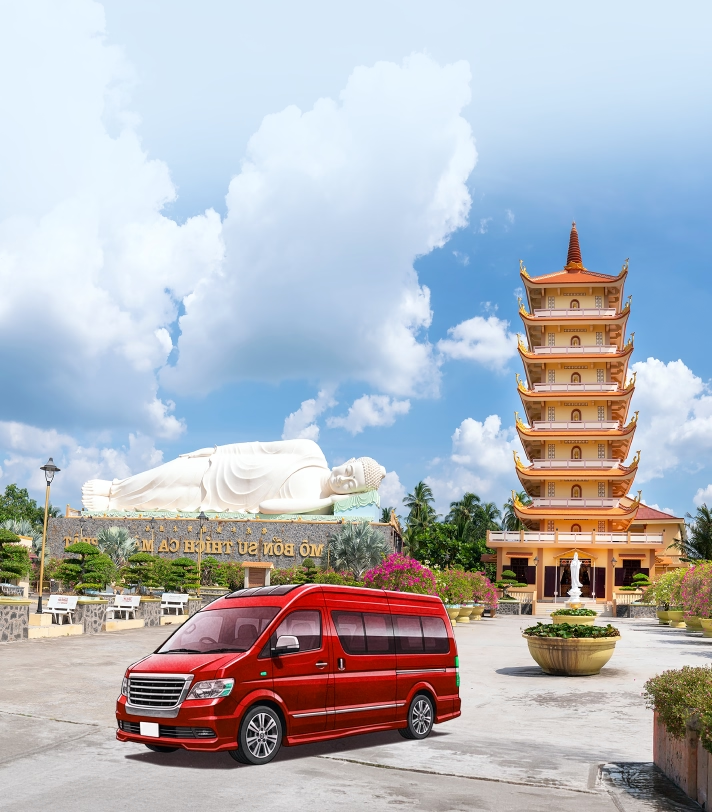
VAN Tours

VAN Tours

Your Family Holiday, Your Way Starting at ₹ 71 400.00 Read Morearrow

Thomas Cook Specials

Build Your Own Itinerary
Build Your Own Itinerary!
Customize your flights,hotels & sightseeing in just 10 minutes Explore Morearrow
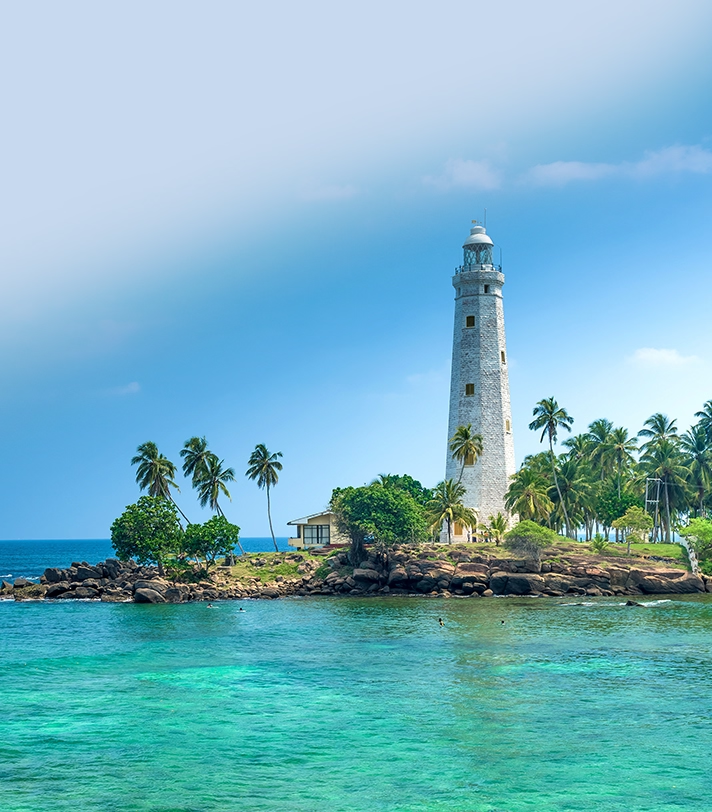
srilanka
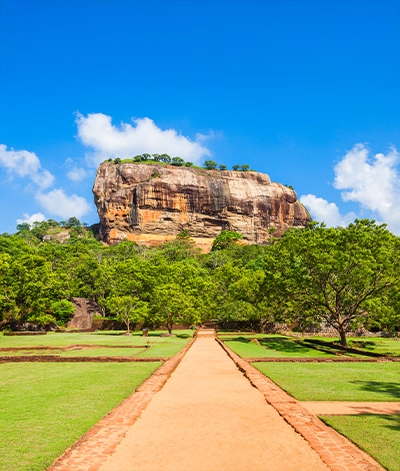
Sri Lanka
Wonder Woven into Every Journey
Starting at ₹ 27 500.00
Read Morearrow

International Holidays

Our Travel Blogs

Frequently Asked Questions

Yes, at night. Daytime Leh Temperature in June and July hits a comfortable 21-25°C, t-shirt weather in direct sun. But once the sun drops, it falls fast, often into single digits by 9 pm. Ladakh temperature in summer swings harder between day and night than most people expect, so a jacket stays useful even in the hottest month.

January and February, typically, feeding straight into Chadar Trek conditions on the frozen Zanskar. December can bring big early-season dumps too, though it's usually less consistent than the Jan-Feb stretch.

Yes, though it's a different trip entirely. Internal roads, including routes to Nubra and Pangong via Chang La and Khardung La, generally stay open, while the highways connecting to Manali and Srinagar shut down completely. Flights become the only reliable way in and out. A lot of hotels and restaurants close for the season, but every village still has somewhere to eat and sleep.

Not really, and this catches a lot of first-time planners off guard. Because of the rain shadow effect, Ladakh in monsoon only sees light, occasional rain, nothing like monsoon conditions elsewhere in India. Ladakh in July and August are actually peak tourist months precisely because it stays dry and warm while the rest of the country floods.

Srinagar-Leh usually opens in April, sometimes sliding into early May depending on snow at Zojila. Leh-Manali, via Rohtang and Baralacha, generally opens late May to early June. Both stay drivable through October, closing again as winter snow moves in through November.

June through September for the most reliable access and that famous turquoise-blue water, making it one of the best seasons to visit in Ladakh; September often gives the calmest, least crowded visit. Winter visitors can still reach it, minus the blue, plus a completely frozen lake instead. Different, but still worth seeing.

Mid-January through late February, once the Zanskar's ice sheet has thickened enough to hold a trekker's weight safely the whole route. Early January or March run riskier, thinner or less predictable ice.

Can be, with the right prep. It's genuinely demanding though: extreme cold, altitude, limited services, tough on families with young kids or anyone with health concerns. Couples drawn to the snow-covered quiet for a honeymoon often find it kind of magical, provided they're actually prepared for sub-zero nights and unpredictable flight schedules.

Late autumn (November) and winter, minus the Chadar Trek window, tend to have the lowest flight and hotel prices since demand drops off hard once the highways close. Shoulder months like May and late September also offer a decent balance between good Ladakh weather and lower rates compared to the July-August peak.

For July-August, three to four months ahead given how fast flights and popular Ladakh tour packages fill up. Shoulder-season trips in May, June or September can usually get away with three to four weeks' notice. Winter trips need less lead time for availability but should still carry a buffer for likely flight delays.

Call Us Quick Chat Get Quote